
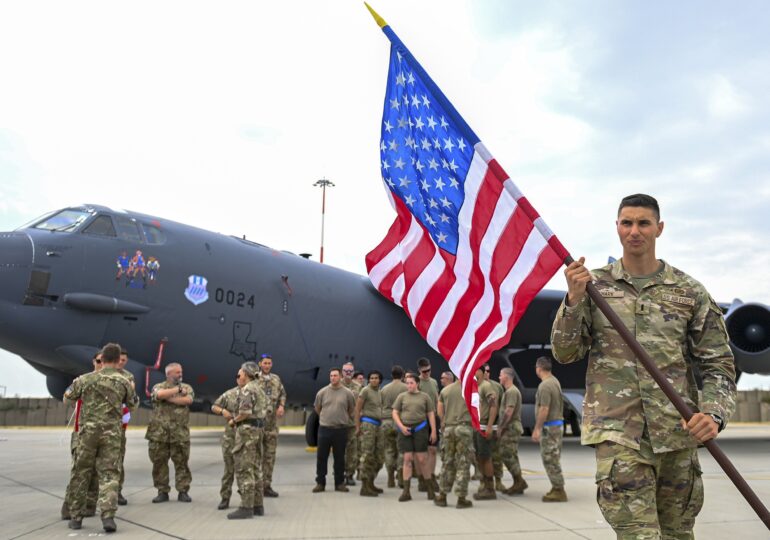
After more than two decades of war, occupation, withdrawal, and then return, the last American soldiers are leaving Iraq. By Wednesday, September 30, the US is supposed to close its last bases in the country, ending a military presence that began with the invasion in 2003.
For Iraq, the moment will officially mark a recovery of sovereignty. For Iran and armed groups close to Tehran, it is a strategic victory. However, there is also another fear: that the departure of the Americans leaves a security void that even the Islamic State could exploit.
The withdrawal, agreed upon by Washington and Baghdad in 2024 during the Joe Biden administration, is now being finalized by the Donald Trump administration in a regional context that is entirely different: the United States is at war with Iran, and Iraq has once again become one of the places where the confrontation between the two powers is playing out indirectly.
In recent years, around 2,500 American soldiers were still in Iraq.
A history that began with the 2003 invasion
Americans are leaving a country where approximately 4,500 of their soldiers have lost their lives since 2003. Back then, the US and their allies invaded Iraq and toppled Saddam Hussein's regime. American troops then remained in the country for years, engaged in a bloody conflict with the Iraqi insurgency.
Washington withdrew its forces at the end of 2011, but the return was not delayed. In less than three years, American soldiers returned at the request of the authorities in Baghdad to assist in the fight against the Islamic State, which had seized vast territories in Iraq and Syria.
The self-proclaimed caliphate of the jihadist group was territorially defeated, but the Islamic State has not disappeared.
Now, with the departure of the Americans, one of the important questions is whether the Iraqi forces can manage the threat on their own.
Iran gains ground
However, there is an even bigger stake behind the withdrawal.
For years, Iraq managed to maintain close political and military relations with both the United States and Iran, two countries in constant confrontation. At the same time, Iraqi territory has repeatedly become the scene of this confrontation.
In 2020, the United States killed Iranian General Qasem Soleimani in a drone strike near the airport in Baghdad. Iran-backed militias repeatedly attacked American bases in Iraq, and Washington responded with strikes against them.
The US withdrawal now eliminates one of the main military counterweights to Tehran's influence.
"Iran strategically benefits from the coalition's departure because a military presence that has served as a counterbalance to Tehran's influence in Iraq for years is disappearing," explains Jasim al-Bahadli, an Iraqi analyst specializing in Shiite groups close to Iran, to Reuters.
According to him, pro-Iranian militias will try to turn the departure of the Americans not only into a symbolic victory but also into greater influence over Iraq's political and security decisions.
Tehran does not hide the fact that it sees things the same way. Iran, which has long demanded the withdrawal of American forces from the entire Middle East, presents the withdrawal from Iraq as a victory for its so-called "axis of resistance."
"Turning a dark page"
Iranian-backed militias are also celebrating. Abu Mojtaba al-Yasiri, a commander in the Islamic Resistance in Iraq, a structure that brings together several armed groups close to Tehran, described the withdrawal as a "historic victory" and "a crushing defeat for the American project."
"On September 30, we will celebrate the return of a dark page in Iraq's history and the failure of the occupation to impose its will on our country," he told Reuters.
The departure of foreign troops is supported by a large part of the Iraqi population, but not everyone is convinced that the timing is right.
"We believe that Iraq is not yet fully prepared to take over the security dossier. All Iraqis want full sovereignty, and no one disputes that. But I think that the coalition's departure in this way and the creation of a void is what scares all Iraqis," says Abdulrahman al-Zobaie, the leader of a Sunni community in Fallujah, a city that was once one of the centers of resistance against the Americans.
Islamic State cells reactivating
The fears are not only about Iran. Officials from Iraqi security structures and the autonomous Kurdistan region warn that the withdrawal of the Americans could give the Islamic State the opportunity to reorganize. The group no longer controls the vast territories it held a decade ago but maintains a network of clandestine cells.
Kurdish commander Sirwan Barzani says that losing American support in terms of information, logistics, and drones will make it more difficult to combat the jihadists.
Moreover, he argues that in recent weeks, movements of Islamic State cells have already been observed after it became clear that the international coalition's withdrawal would end by the end of September.
Iraqi forces have also announced the discovery of a suspected cell preparing suicide attacks during the withdrawal period.
For Colonel Khalid al-Bayati, an official from the security services in Kirkuk, the Islamic State's intention is clear: the group is trying to show that "it is still strong and capable of launching bloody attacks."
An "Independence Day" with many unknowns
In Baghdad, the departure of the last American soldiers will be marked on Wednesday as "Independence Day," and Iraq enters a period of four days of official celebrations, according to Agerpres.
It is the symbolic end of a chapter that began in March 2003 when American troops crossed the Iraqi border to remove Saddam Hussein.
However, the end of the American military presence does not mean the end of the problems that have marked Iraq in these 23 years. Iran's influence in Iraq has greatly increased after the American invasion in 2003, and militias close to Tehran have become significant players in the country's politics and security, notes DW.
At the same time, although territorially defeated, the Islamic State continues to have active cells.
For Washington, the withdrawal closes one of the longest and costliest military chapters of the 21st century. However, for Iraq, the more difficult test begins: what happens after the last American soldier leaves.
G.P.