

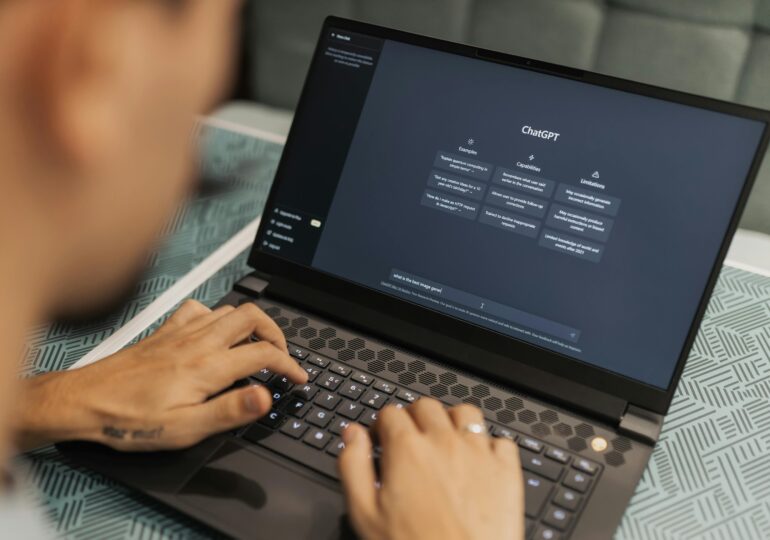
Artificial intelligence has quickly entered everyday life: 70% of Romanians aged between 18 and 65 say they use such tools. However, the spread of technology is not accompanied by the ability to identify its results.
Asked to distinguish a text written by a human from one generated by artificial intelligence, 52% of study participants attributed human authorship to AI.
The data appears in the "AI Adoption Report Romania 2026", conducted by the MKOR research agency on a sample of 1,000 people. The survey was conducted online, in two stages, in May and August.
Nine out of ten Generation Z youths use AI
The use of artificial intelligence varies significantly by age. Almost nine out of ten respondents from Generation Z, 89%, are active users.
The percentage drops to 72% for Millennials, 66% for Generation X, and 39% among Baby Boomers. Even in the case of the latter category, almost four out of ten people already use such tools.
Among all respondents, 19% have never tried artificial intelligence, 7% have tested it but gave up, and 5% claim they do not know what AI means.
The technology is used especially for leisure activities, mentioned by 83% of users. 58% also use AI at work.
ChatGPT is the most well-known application: 98% of respondents have heard of it. It is followed by Gemini, with 79%, and Claude, with 37%.
Among those who use artificial intelligence, 86% have used ChatGPT in the last 30 days. Gemini was used by 48%, Claude by 17%, and Copilot by 16%.
Human Contact Keeps Some at a Distance
Half of those who do not use artificial intelligence say they prefer to solve problems on their own or talk to real people.
Others have not found a practical reason to try such applications. A quarter of non-users fear this technology and consider it dangerous for society.
The study also included a test in which participants were presented with two short texts and asked to identify the one written by a human. Only 48% answered correctly, while 52% believed that the text generated by AI had a human author. The result suggests that frequent use of the technology does not automatically develop the ability to recognize its produced content.
AI Used Secretly in the Medical Office
Resistance becomes stronger when artificial intelligence intervenes in sensitive areas without people being informed.
Almost a third of respondents, 32%, say they would feel betrayed if they found out that the explanations received for medical tests were generated by AI.
Another 27% would have the same reaction if they discovered that they had talked, without knowing, to a psychologist or virtual counselor. Another 27% would be bothered if when calling the bank and thinking they are speaking to a person, their request is handled by a virtual assistant.
An emotionally supportive message generated by an algorithm would cause discomfort for 26% of participants. In the recruitment field, 24% would be dissatisfied if their CV were evaluated with AI without being notified.
There is also a more pragmatic category: 15% of those surveyed say they are not bothered by the use of undisclosed AI if it does its job very well.
"People accept new technology. Discomfort arises when they discover they have spoken with an AI only after a medical decision or a discussion about money. These are moments when any error costs. Hiding these tools breaks the trust bond," says Cori Cimpoca, founder of MKOR.
The study has a margin of error of ±3.1%, at a confidence level of 95%. The sample is presented as nationally representative and was weighted by gender and age. However, the research was conducted exclusively online and included only individuals aged between 18 and 65.