

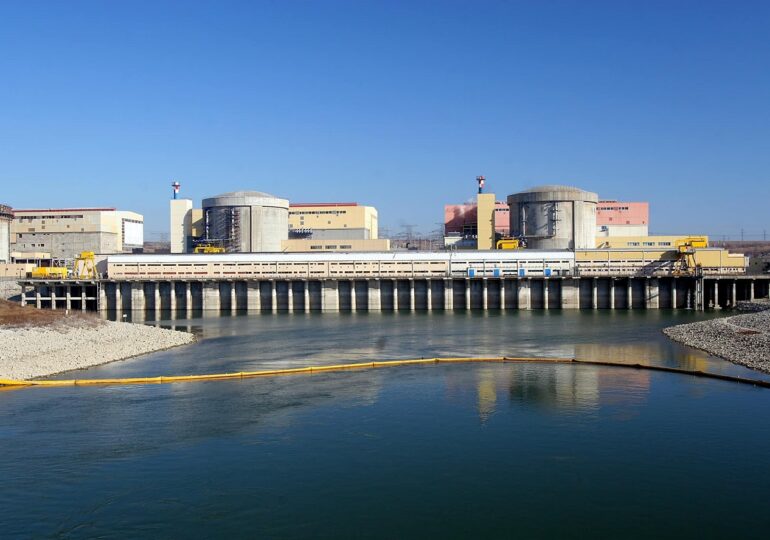
The European Commission has opened an in-depth investigation to analyze whether the financial support that Romania is preparing for the refurbishment and extension of the lifespan of reactor 1 at Cernavodă complies with EU rules on state aid.
Romanian authorities notified the Commission in January 2026 about the intention to support an extensive modernization program for Unit 1 reactor, so that it can maintain its current capacity of 706 MW and operate for another 30 years.
The reactor, commissioned in 1996, currently provides about 10% of Romania's electricity consumption and is set to reach the end of its estimated lifespan in 2027.
The project, valued at approximately 3.2 billion euros, is carried out by Nuclearelectrica.
According to the plan submitted to Brussels, the support is expected to include a grant of 600 million euros, state guarantees for loans, a 30-year contract for difference, and a mechanism to protect against legislative changes.
In its preliminary assessment, the European Commission indicates that the project seems necessary and the aid could facilitate economic activity, but raises several questions regarding full compatibility with EU rules.
"At this stage, based on its preliminary assessment, the Commission considers the project necessary and the aid facilitates economic activity. However, the Commission has doubts about the full compliance of the measure with EU rules on state aid," according to a statement released on Thursday.
The European Commission aims to verify whether the support package is proportionate, does not distort competition in the energy market, and the proposed mechanisms do not transfer excessive risks to the state or consumers.
Additionally, the Commission expresses reservations about how the contract for difference could affect economic incentives for the operation and maintenance of the power plant.
The opening of the investigation is not a final decision but allows Romania and other stakeholders to provide comments before a final ruling.
At the same time, the Commission reminds that Member States have the right to establish their own energy mix, but state aid must be necessary, proportionate, and not unjustifiably affect competition in the European energy market.