
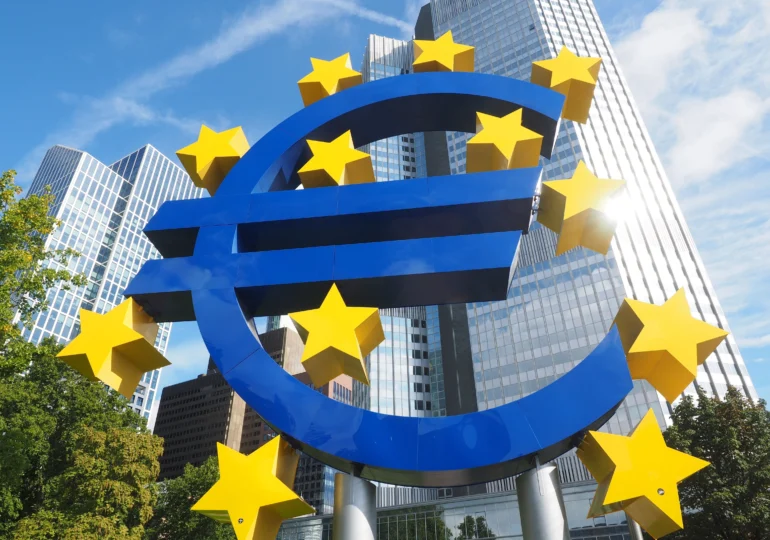
The European Central Bank warns that the global economy is entering a period of high risk, in which the conflict between the US and Iran, global trade tensions, and the high level of public debt could combine and trigger a new international financial shock.
In its financial stability report published on Wednesday, the ECB argues that these vulnerabilities can no longer be analyzed separately, as they can mutually reinforce and simultaneously affect financial markets, banks, and the real economy. Reuters notes that the European institution also warns of the risk of a sudden reassessment in bond markets and the increase in financing costs for states and companies.
ECB Vice President Luis de Guindos states that the Middle East conflict is already putting pressure on a financial system that was vulnerable before the outbreak of the conflict. "The current energy supply shock generates risks of inflation growth and risks of economic growth slowdown," the European official said.
ECB: Global risks can mutually amplify
The European Central Bank warns that the world is approaching a dangerous point where multiple overlapping crises can have a domino effect on the global economy.
The institution explicitly mentions the conflict between the US and Iran, persistent trade tensions, vulnerabilities in financial markets, the high level of public debt, and cyber threats. "The possibility of these highly interconnected risks materializing simultaneously, mutually reinforcing each other, increases the risks to financial stability," warns the ECB.
According to the institution, a prolonged conflict in the Middle East could cause new energy shocks, which would fuel inflation and slow economic growth in Europe and globally.
Financial markets accused of ignoring dangers
The ECB suggests that investors may underestimate current risks, despite the tense geopolitical and economic context.
The report shows that stock exchanges have remained at high levels, borrowing costs for companies are still low, and the differences in yields on eurozone government bonds remain low.
However, the central bank warns that the situation could change rapidly if investors lose confidence in the ability of heavily indebted states to support their public finances.
"A scenario of significantly weaker economic growth, associated with a more persistent energy shock, could lead investors to reassess fiscal sustainability and could cause sudden turbulence in government bond markets," the report states.
High costs of states increase pressure
The ECB warns that many European governments already require very large sums to finance urgent projects, which reduces their room for maneuver in case of a new crisis. The institution lists defense expenditures, green transition, and potential support schemes for the population and companies in the context of rising energy prices.
"The high financing needs of states will likely amplify medium-term pressures," warns the ECB.
The report also indicates that a sudden increase in borrowing costs could also affect companies, generating a vicious circle between financial markets and the real economy.
ECB also warns about trade tensions
The European Central Bank also warns about the effects of trade tensions and repeated changes in economic policy coming from Washington.
The institution argues that uncertainty regarding international cooperation and US trade policy risks fragmenting the global economy and exacerbating instability.
The ECB also warns that issues related to the sustainability of US public debt could have global effects.
"US bonds have been considered a safe haven, but doubts about the credibility of US budget policies could lead to a sudden change in perception, with global impact," the report states.
Cyber attacks and artificial intelligence, new causes for concern
The ECB report also signals the increasing cyber risks and hybrid threats to critical infrastructure and the financial system. The institution warns that new models of artificial intelligence could be used for more sophisticated and harder-to-detect cyber attacks.
At the same time, the ECB closely monitors the activities of non-bank financial institutions, considered more opaque and less regulated than traditional banks. According to the report, issues in these sectors could quickly transmit to the rest of the financial system, amplifying potential market turbulence.
G.P.