
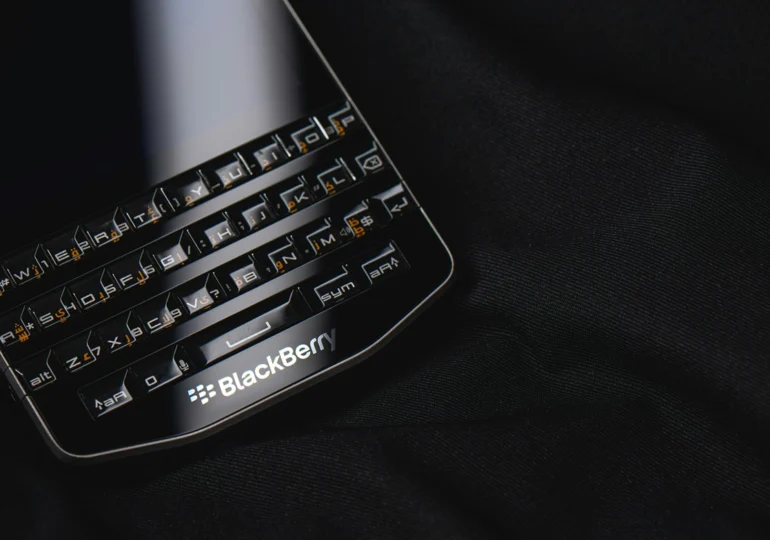
People have no idea how much they still use BlackBerry. Once on the verge of disappearing, the company is making money again with software hidden in 275 million cars.
John Wall has spent almost his entire career working for the same company. And when he tells people where he works, no one has any idea what he’s talking about. „If I tell them I work at QNX,” he said, „they don’t know what that means.”
But once he explains that, technically speaking, he works for the company that owns QNX, he knows exactly how they will react: Does BlackBerry still exist?
Yes, it does. And no, it doesn't make phones, writes The Wall Street Journal.
The Only Way to Make QNX Work Badly
The company, previously known as Research In Motion, abandoned portable devices a decade ago. But an astonishing number of people still rely on BlackBerry and are unaware of it.
The company's most profitable product is not hardware, but the software hidden in 275 million cars on the roads today. In fact, BlackBerry's essential technology can be found in all sorts of unexpected places, and you wouldn't find it even if you searched for it.
"You will never see the QNX logo on a car. What you will see is a better experience," said Wall, the division's president.
He likes to think of QNX engineers as plumbers and electricians responsible for things we need but never see. In a house, there are pipes and cables. In a car, there is software that underpins safety features we consider basic. QNX is, in essence, the operating system that enables all sorts of driver assistance functions: collision warnings, blind-spot notifications, adaptive cruise control, pedestrian detection, and lane-keeping when you're in danger.
"We are the foundation. Everything beautiful up top wouldn't work without a solid foundation," said Wall.
This fundamental software has never been more valuable. As cars become computers on wheels, QNX enjoys the trust of the world's largest automakers, as its simple, real-time operating system is designed never to fail. "The only way to make this software run poorly is to shoot a bullet into the computer running it," a user once told Fortune magazine.
With its resilient reputation, the software has spread to factories and other workplaces that value safety, precision, and technology that won't have issues. In hospitals, for example, QNX technology is embedded in surgical robots and dozens of medical devices, meaning patients regularly entrust their lives to BlackBerry's engineers and healthcare professionals.
The Success Story of a Company on the Verge of Death
QNX has even become the foundation of a company left to die.
The division that was once a rounding error on the balance sheet is the reason why BlackBerry is suddenly making money again, writes the American newspaper. QNX now accounts for half of BlackBerry's total revenue, and the company has posted four consecutive profitable quarters for the first time since its flagship product competed with the iPhone.
Since an optimistic earnings conference last month, shares have risen by 50%. Admittedly, they are still 96% below their peak. But after all the company's struggles, executives are sending a new message: BlackBerry is back.
"The BlackBerry story is now a growth story," said its CEO at that conference.
The story began in 2010 when QNX was acquired to help with the next generation of BlackBerry. But it was too late. The company's market capitalization had peaked two years earlier - at 83 billion dollars. Now the company is worth 3 billion dollars, and Apple makes more sales in a morning than BlackBerry does in a whole year.
QNX was founded in 1980, and John Wall has been working for the Canadian company since graduating from college in the early 1990s. After the 2010 acquisition, many engineers moved to RIM to build a mobile operating system for BlackBerry. Wall stayed put.
An Advantage that Changed Everything
While others worked on phones, his team continued to work on automotive software and kept their QNX email addresses.
For years, they enjoyed a fantastic competitive advantage: complete and total neglect. "No one paid attention to us," Wall recounted.
Left to their own devices, they made enough progress in auto infotainment systems that Silicon Valley began to take special notice.
Google unveiled its own Android infotainment system, then Apple hired QNX engineers to help them build an entire car. Once again, it seemed like BlackBerry was going to be destroyed.
But in 2014, as tech giants closed in, Wall made a crucial trip to Silicon Valley to see one of his favorite QNX clients. He saw then and there the future.
The head of engineering at Audi told him that the automaker was moving to Google for infotainment but not parting ways with Wall. The next generation of cars would need reliable safety features that didn't yet exist, he explained. Instead of fighting for control of the car's screen, Wall decided that QNX could own the software under the hood. It turned out to be the best decision of his life.
"The circumstances that led to the loss of infotainment steered the company in the right direction, whether we knew it at the time or not," Wall said.
What they knew for sure was that they had no choice. "There was no alternative," he said. "We had to take what we had and figure out: Where do we go now?"
From Cars to Medical Systems and Robotics
There was one place they could explore: much deeper inside the car.
And after proving its utility in the automotive field, the software found its way into medical devices, industrial automations, and robotics.
Expanding into multiple places did not lead to increased recognition for the software's plumbers and electricians, and that's why the world doesn't know they are using BlackBerry technology.
"The customer is interested in lane-keeping assistance," Wall said. "They don't care that the operating system below is 'blah, blah, blah.' Or that this 'blah, blah, blah' is produced by BlackBerry or QNX," he added.
T.D.