
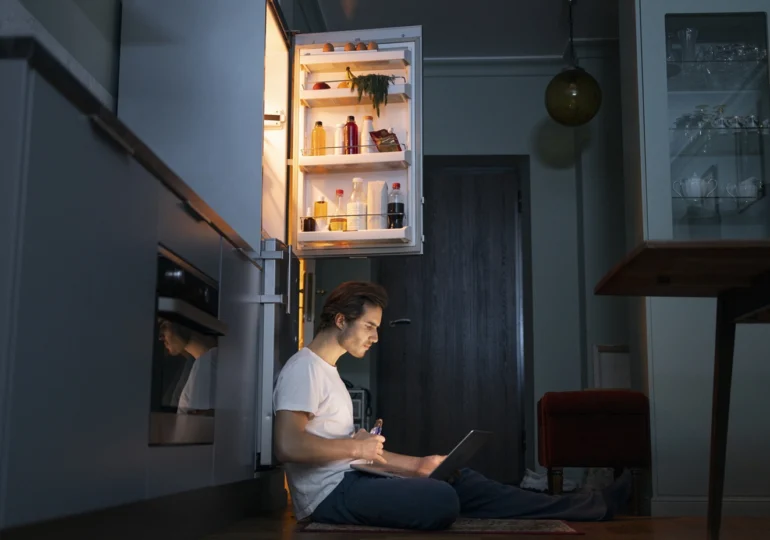
After the cyberattacks in France, internet-connected appliances seem even less attractive. Especially around the holidays.
Last month, the refrigeration systems in supermarkets across France were remotely shut down by Iranian terrorists. Other European countries have also been targeted by similar attacks, which sometimes lead to the need to discard food.
You might wonder how someone can hack a refrigerator. Well, industrial refrigerators, like those targeted in France, are controlled remotely via a computer.
To some extent, it makes sense for large commercial units, such as supermarkets, to have the ability to quickly adjust the temperature without needing to manually operate various buttons or controls.
However, internet-connected refrigerators are also available to regular consumers. Appliances from some well-known brands allow users to adjust the refrigerator temperature directly from a smartphone app.
Once again, technology tries to solve a problem that, in fact, does not exist, notes Dave Schilling, a writer and humorist based in Los Angeles, in an article published in The Guardian.
All we are doing is trying to approach a divine control over all things by simply pressing a button. The problem is this: if we are "God" to our machines, then there is also a "devil," and he knows how to write code, he writes sarcastically.
Perhaps there are some practical uses of this technology for those of us who are downright lazy, Schilling admits. Some refrigerators are equipped with cameras and artificial intelligence that tell you what food is inside, helping you maintain impeccable organization and even alerting you when products are about to spoil.
"As if your own eyes and hands wouldn't work! That old broccoli is there. Do I really need a computer to tell me what my nose already knows? Plus, it may have already become 'poisonous' after lying there for so many days, so you can smell it. Yes, it's spoiled food. Confirmed," he writes ironically,
Until a robot appears that takes out the food for us, takes it to compost, and washes the inside of the fridge with a jet of water, Schilling prefers to do without a "smart refrigerator."
The machines around us have become suffocated by computer technology, but the current situation seems much more sinister, observes Dave Schilling, advocating for the freedom to consume "unhealthy food" during the holidays, not to have the smart fridge tell you what you should and shouldn't eat.
"It's an existential matter. It goes beyond the simple need for food. It's my emotional support in times of hardship. If some malicious hackers shut down my fridge and ruin my food, I might start pulling my hair out or nibbling on some less essential finger. If my mouth isn't full of all sorts of sticky and soft mixtures, I might be forced to have a conversation with some uncle. Nightmares are made of such things," he explains.
"Disaster is approaching. Someone more skilled with computers will realize that the moment of maximum vulnerability for our society is right now, during the holiday season," he continues.
In his opinion, the only solution is to return to the switches, toggles, and physical buttons that once supported our civilization. Otherwise, we risk spending the holidays without chocolate chip cookies and parmesan crusts or other treats, he humorously warns.
T.D.