
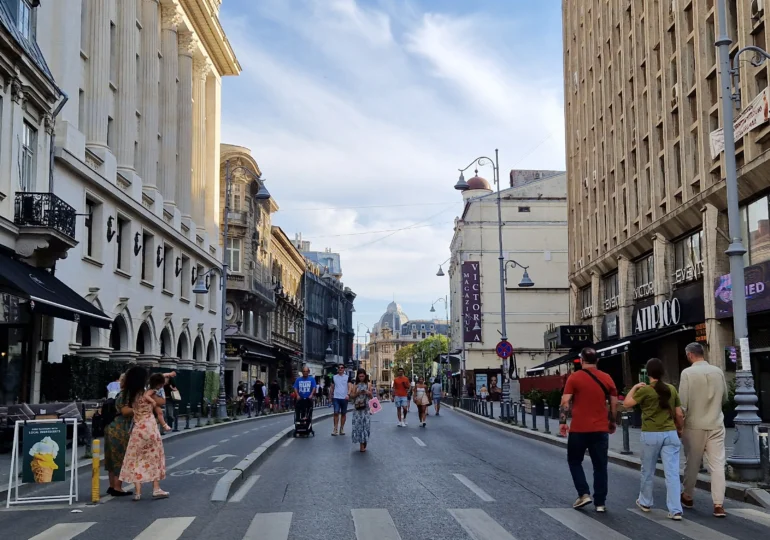
Bucharest ranks among the last in the global ranking of the happiest cities, as revealed in the 2026 edition of the Happy City Index.
The capital of Romania holds the 247th position out of the 251 cities analyzed, being surpassed by almost all major European cities and placing itself near the bottom of the ranking.
The study, presented in London, is one of the most comprehensive analyses dedicated to urban life quality. This year's edition evaluated 251 cities based on 64 indicators grouped into six main categories: citizens, governance, environment, economy, health, and mobility. The research involved hundreds of experts and analyzed approximately 150,000 datasets globally.
Northern Europe dominates the ranking
The top positions are held by cities in Northern Europe, considered models of urban development and life quality. Copenhagen ranks first, followed by Helsinki and Geneva. The top 10 also include Uppsala, Tokyo, Trondheim, Bern, Malmo, Munich, and Aarhus.
The index authors emphasize that the purpose of the ranking is not to designate a "best city in the world," but to identify localities that successfully combine economic development, sustainability, good governance, and quality of life in a balanced manner.
Bucharest, among the bottom ranked
On the contrary, Bucharest is among the last five cities in the ranking, alongside Indianapolis, Dallas, Nashville, and Guadalajara. According to the data published by the organizers, only a few cities scored lower than the Romanian capital.
Being positioned so low in the ranking suggests the existence of persistent issues related to infrastructure, urban mobility, environment, public services, and residents' satisfaction, criteria that carry significant weight in the evaluation.
A tool for administrations
According to the organizers, the Happy City Index is designed as a tool for comparing cities and a guide for administrations aiming to improve residents' quality of life.
"There is no perfect city," state the study authors, but the experience of localities at the top of the ranking can offer models of best practices in areas such as public transportation, green spaces, health, sustainability, and urban governance.