

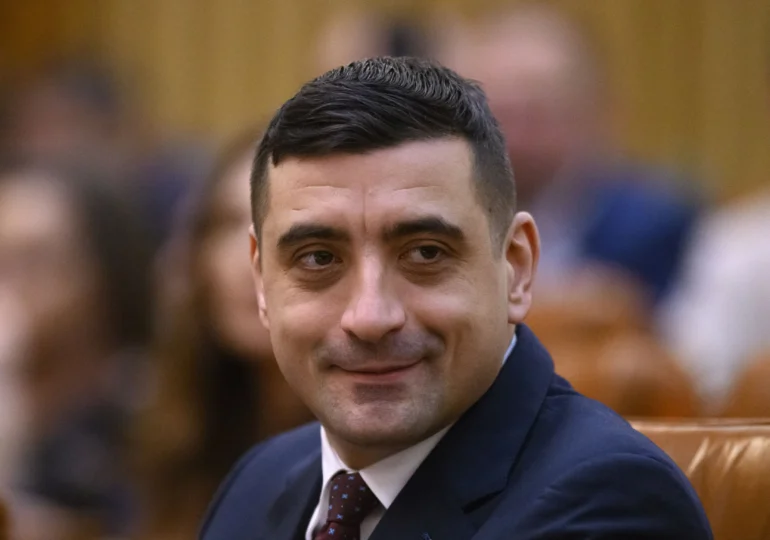
During the video interview, analyst Cristian Hrituc details the role of PSD in the current impasse, puts forward a scenario for parliamentary representation from the 2028 elections, and explains why he believes that Nicușor Dan’s mandate has already become irrelevant. From his point of view, the real question is no longer whether, but how we will go through an AUR governance.

AUR electorate does not confuse with AUR leaders
Cristian Hrituc clearly separates the two categories: at the top, AUR has leaders who have demonstrated their extremism through speech violence and physical violence – the scenes from Parliament, those from the streets in 2025. The electoral base is different, consisting of frustrated people, revolted by the transition years, with communist nostalgia, for whom extremism sounds like a revolt against the system, not a danger.
Partially different causes in Eastern Europe compared to the West
In Germany, the Netherlands, or Italy, migration directly fueled the extremist current, a factor that Romania did not have. However, the common background is economic and social: decreasing purchasing power, erosion of the middle class, the pandemic, inflation, the war in Ukraine, energy prices. Above all, a democratic system that, according to the analyst, is showing its limits.
AUR score no longer declines from the Opposition
Even if we have elections tomorrow or in two years, they will produce the same result. Votes cannot migrate to pro-European parties, but only to even more radical areas - the case of the Șoșoacă party. The only options left are a visibly good governance or exposing AUR to power.
PSD, the communicating vessel that sustains AUR growth
PSD is a party that "fights for survival" and expects to reach 10–15%. PSD chose deadlock instead of embracing the Bolojan reforms. Parliamentary fragmentation allows for "blocking games," and the tacit approach to AUR is real. For 2028, a bloc of AUR at 35–40%, PNL-USR at 30–35%, and PSD as a hinge party, naturally pushed towards AUR, is anticipated.
The president steps out of the equation, and demobilization is the real danger
In the analyst's opinion, Nicușor Dan has lost both the credibility of the "Honest Romania" promise and the strength of his discourse. However, the major risk is not the president, but the demobilization of the modernist electorate once it enters the opposition. Low voter turnout will automatically favor an AUR electorate, constantly mobilized by frustrations, the media, and social networks.

Representative Quotes
"The AUR electorate should not be confused with the AUR leaders… For these people, extremism sounds like a revolt against the system and not like something bad…”
"Both tomorrow and in two years, AUR will get the same score, in two years it may even get a little more… We can no longer say that AUR will not be the country's first party, with the highest chance of appointing the Prime Minister of Romania in two years…”
"AUR and PSD have become brothers. Underground, there, they cook many things together. Simion saves Grindeanu when needed…”
"Nobody believes Nicușor Dan's promises anymore, because the main promise was the Honest Romania. And the Honest Romania was dishonest from the first month of the mandate…”
"I don't think Romania can afford to miss the chance to go through an AUR governance… I think we rather need to make a guide: how we will resist in such a governance and how we will resist in case Simion breaks that leash with which he is held by the intelligence services…”
Solution
In conclusion, AUR's growth can no longer be stopped by the political tools used so far, and postponing the elections does not buy time, but only extra percentages for the Opposition. The moment when AUR could have been exposed by bringing it into government - a method that worked in the Netherlands with Wilders - was missed.
In the short term, unlocking depends on appointing an acceptable prime minister, and the only formula with real chances would be an authentic technocrat government, which the analyst describes as a compromise solution, not a good solution for the country. In the long term, the stake is no longer to prevent AUR, but to maintain the mobilization of the pro-European electorate and prepare an institutional response for the scenario of an AUR government.