
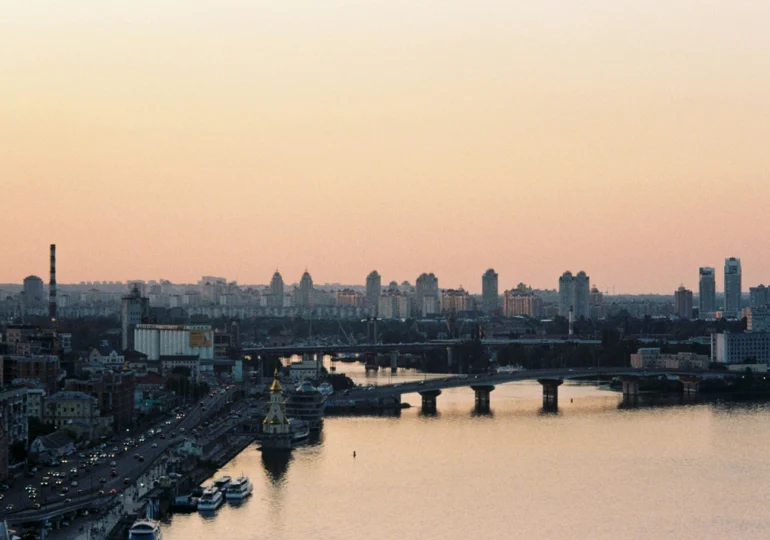
Russia has shifted from concentrated nighttime bombardments to nearly continuous attacks using faster jet-propelled drones. The campaign aims to exhaust air defense systems, disrupt activities and transportation, affect commercial logistics, and exert constant psychological pressure on the city that Moscow has failed to conquer.
Russia failed to capture Kyiv in 2022. Now, it is attempting to dictate how the people in the Ukrainian capital sleep, move, and work, as analyzed by Kyiv Post.
For most of the war, the air alert routine in Kyiv followed a grim but predictable pattern: Russian drones arrived at night, missiles struck before dawn, and the city would resume its activities in the morning.
How the Kremlin's Strategy Has Changed
Currently, Russia is using smaller groups of drones, both day and night. Many of these are jet-propelled models that fly faster and are much harder to intercept than the propeller-driven Shahed drones used in the initial stage of the war.
Data published by Kyiv Post confirms an escalation in jet-propelled drone attacks:
- Over 100 jet-propelled drones headed towards Kyiv within a 12-hour period.
- In August, Russia launched over 2,800 jet-propelled drones against Ukraine – an average of around 90 per day, according to Ukrainian Air Force spokesperson Yuriy Ihnat. Their use increased fivefold in July compared to June.
- Over a four-day period towards the end of August, Russia launched nearly 1,500 drones, with over half being jet-propelled. Kyiv and the surrounding region were targeted for attacks for five consecutive days, disrupting traffic and halting metro operations during alerts.
Between August 27 and September 1, Kyiv experienced over 60 air alerts, totaling 52 hours. The city was on alert for over two full days within a six-day span.
The Institute for the Study of War (ISW) estimated that Russia hasn't necessarily increased the total number of drones used in each campaign. Instead, Moscow has spread a comparable number of aircraft over a longer period to amplify exhaustion and economic disruptions.
A single drone approaching Kyiv can trigger citywide sirens, disrupt public transportation, and send employees to shelters. Once the all-clear is given, another group can resume the cycle, explains the Ukrainian publication.
Time Has Become an Economic Target
Each alert carries an economic cost. Beyond physical damage, sirens result in employee delays, production interruptions, store closures, delivery suspensions, and disruptions to public transportation.
Schools relocate students to shelters, while medical and emergency response teams must continue their operations under the threat of new attacks.
Russia also targets the logistical infrastructure that supplies Kyiv and other Ukrainian cities.
Minister of Agriculture Taras Vysotsky estimated at the end of August that Russian attacks had destroyed about 90% of the food supply logistics capacity for major retail chains, leading to temporary shortages of milk, sugar, fruits, and vegetables in Kyiv supermarkets.
The attacks targeted sorting centers of Nova Poshta, distribution centers of supermarkets, bookstores, and consumer goods warehouses. Russian strikes also affected food depots in Odesa and destroyed Epicentr hypermarkets.
In August, air alerts accounted for 21.8% of the planned operating schedule of shopping centers in Ukraine. Essentially, stores lost over an hour out of every five they were supposed to be open.
How Kyiv Responds
The government's response illustrates the scale of the problem. Ukraine has implemented a two-tier alert system:
- Yellow alerts will signal drone threats. Commercial units can remain open if employees and customers have access to shelters. Authorities recommended keeping the Kyiv metro fully operational.
- Red alerts will signal missile threats, including ballistic missiles and large-scale complex attacks. Commercial activity must be suspended, and people must seek refuge in shelters.
"The economy must continue to function, taxes must reach the budget, and people must receive their salaries," stated Prime Minister Serhiy Koretsky.
Additionally, Kyiv is shortening the duration of nighttime traffic bans and adjusting transport norms to limit the economic damage caused by prolonged alerts.
A Remote Siege
Kyiv Post writes that the current situation in Kyiv somewhat resembles the siege of Sarajevo in the '90s. However, Kyiv is not under a physical siege comparable to that of the Bosnian capital. During the Bosnian War, Sarajevo was besieged and subjected to 1,425 days of bombardments and sniper fire in a campaign deemed by international courts as targeting the terrorization of the civilian population.
Kyiv remains connected to the rest of Ukraine. The flow of goods, weaponry, and people continues. Russian artillery does not encircle the capital.
The similarity lies in using a constant state of peril to control civilians' lives.
Russia cannot establish checkpoints around Kyiv, but it can use air raid alerts to disrupt traffic.
It cannot physically shut down every factory, but it can force repeated interruptions of activities.
It cannot occupy the capital, but it can make normal life depend on the timing of the next drone launch.
What Happens Beyond Psychological Warfare
The exhaustion of the civilian population is just one of the campaign's effects. The continuous waves of drones also force Ukrainian anti-aircraft defense crews to operate in extended shifts, leaving less time for rest, repositioning, and equipment repairs.
By combining relatively inexpensive drones with ballistic and cruise missiles, Russia compels Ukraine to decide when to use its most advanced and scarce interceptors.
Patriot systems are crucial for countering ballistic missiles, but they cannot be cost-effectively used against every drone penetrating Kyiv's airspace.
Defending the capital also requires a strategic compromise. The radars, launchers, and interceptors allocated to Kyiv cannot simultaneously defend power plants, airfields, arms factories, and other Ukrainian cities.
Therefore, Russia generates costs even when most of its drones are intercepted because Ukraine needs to consume ammunition, keep its crews on permanent alert, and defend an increasing number of potential targets.
Preparations for a Winter War
Witkoff and Kushner arrived in Kyiv after over three hours of discussions with Putin in Moscow. They described the talks with Zelensky as substantial and mentioned "significant progress" towards restarting trilateral negotiations, although no dates or locations were announced.
The core issue remains the same. Russia demands that Ukraine cede the territories it still controls in Donbas. Kyiv refuses, while frontline analyses suggest it could take Russia years to conquer the rest of the Donetsk region, given the current pace.
According to European officials cited by Bloomberg, Putin plans to intensify attacks on Ukraine during winter to test the country's resilience and the determination of Kyiv's allies.
In these conditions, Zelensky prepares for the possibility of the war continuing into winter. During an online meeting of the so-called Ramstein format, with nearly 50 countries participating, on Tuesday, Ukraine urgently requested allies to send 300 Patriot interceptor missiles from existing stocks before Russia escalates attacks on cities and energy infrastructure this winter. The list also includes 500 air-to-air missiles that can intercept cruise missiles, portable anti-aircraft defense systems, and $2 billion for drones.
Additionally, Ukraine needs separate production lines for drones and ballistic missiles. Zelensky stated that 67 Ukrainian companies are working on systems capable of intercepting jet-propelled drones, although only between three and five have shown results.
Kyiv also requested US permission to manufacture anti-ballistic and interceptor systems. In July, Donald Trump stated that Washington would authorize Ukrainian production of Patriot interceptors, but later seemed to backtrack on this position.
However, State Secretary Marco Rubio stated last week that negotiations regarding the licensing agreement are still ongoing. Even if an agreement is reached, experts estimate that starting production would require at least a year.
Moscow's goal is not surrender
The air campaign should not force Kiev to surrender to impose strategic costs. Its immediate effect is to make daily life as complicated, less secure, and more costly.
When trains stop, depots burn, stores close, and employees spend hours in shelters, Russia inflicts damage without advancing on the ground. By compelling Ukraine to consume interceptors and concentrate its air defense around the capital, Moscow reduces resources available to protect other cities, infrastructure, and the front line.
The air campaign has already caused civilian casualties, disrupted transportation, affected commercial logistics, and forced Ukraine to rethink its warning system.
Combating this will require more than Patriot missiles. Ukraine needs cheaper anti-drone interceptors, dispersed depots, alternative transit routes, more shelters, and geographically precise warnings to prevent a situation where a single drone paralyzes a city with millions of inhabitants, concludes Kiev Post.
T.D.