
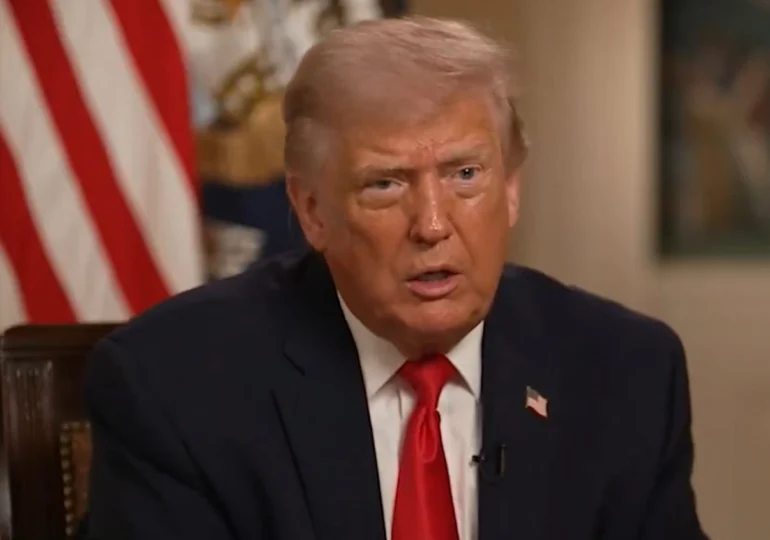
American President Donald Trump is facing a paradoxical phenomenon: the conspiracy theories he has fueled for years are starting to be used against him.
Some influential voices within his camp have begun to promote narratives that question his credibility and loyalty, as shown by an analysis from CNN.
Although the rift is not widespread, those distancing themselves from Trump mainly come from the most conspiracy-prone area of his supporters.
From "stolen elections" to suspicions about their own leader
Trump has played a major role in popularizing conspiracy theories in American politics, starting from the period when he promoted false claims about former President Barack Obama's birthplace.
Later on, he repeatedly claimed that the 2020 elections were "stolen" and launched various other theories, some of them bizarre. Around him, a network of supporters and influencers has amplified these messages.
However, now some of these allies are turning their weapons and promoting theories that target Trump himself.
The 2024 assassination attempt at the center of new conspiracies
The most widespread theory at the moment revolves around the assassination attempt in 2024, from Butler, Pennsylvania. There is a growing suggestion online that the incident may have been staged.
These claims are usually packaged in an apparently neutral formula, such as "just asking questions" – a strategy frequently used by Trump in the past.
Joe Kent, a former official in the Trump administration, stated that the investigations were "suspiciously" limited.
Marjorie Taylor Greene, on the other hand, wrote on social media: "I'm not saying Butler was a hoax, but there are many questions that deserve public answers."
Podcaster Tim Dillon went further and said: "I think it might have been staged."
Israel, the "preferred" explanation in the new theories
A recurring theme in these narratives is the idea that Trump may have been influenced or "compromised" by Israel.
Tucker Carlson suggested that the lack of a more thorough investigation into the Butler case could indicate Israel's influence over the American government.
In another context, Carlson stated about Trump: "I feel sorry for him, just as I do for all slaves. He is not free at this moment."
Podcaster Theo Von also made similar accusations, commenting on the war in Iran: "I don't understand. This is what our president does, and it's damn confusing. And he's sick. It seems like he's been compromised by Israel. It's very dark."
- Wall Street Journal writes about demons and fears of Trump. The moment he shouted for hours on end at the White House advisors
From political theories to extreme scenarios
Some of the recently emerged theories go even further, entering the realm of religion. The idea that Trump could be the Antichrist – a figure from Christian theology associated with deceiving people before the second coming of Jesus – is starting to be discussed in certain online circles.
According to CNN's analysis, such questions are already being raised by influencers with significant audiences.
Controversial figures and increasingly elaborate theories
Nationalist Nick Fuentes has launched a theory that Vice President JD Vance was installed to serve the interests of tech industry groups.
His messages were shared by Sarah Palin, who later clarified that she did not intend to endorse the theory.
At the same time, conspiracy theorist Alex Jones, who previously supported Trump, is now attacking him, accusing him of trying to help the Democrats take over the InfoWars platform.
A phenomenon that may spiral out of control
CNN's analysis shows that these theories are gaining ground even among popular podcasters like Dillon or Von, reaching a less politically involved and sometimes more easily influenced audience.
Meanwhile, Republican Party leaders have largely avoided publicly combating the rise of anti-Israel sentiments and conspiracy theories within the party.
This lack of reaction could have consequences, as the same mechanisms that fueled conspiracies in the past are now being used against Trump.
G.P.