
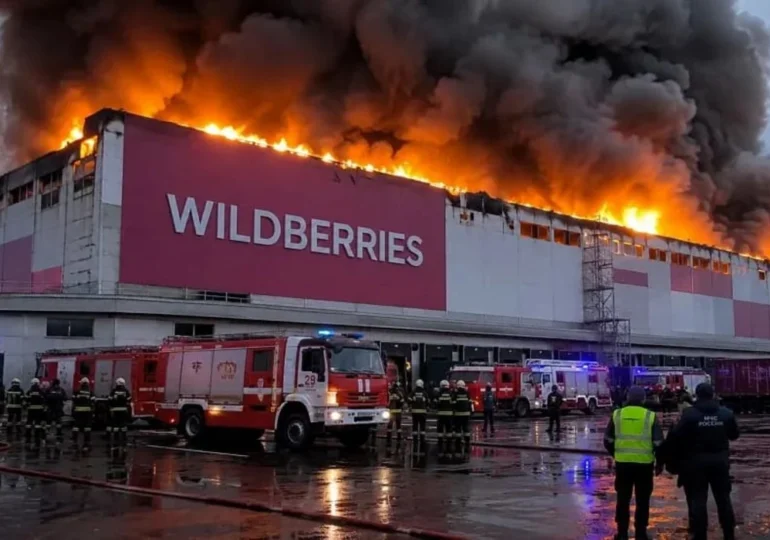
Russian President Vladimir Putin has signed a decree granting the government the power to temporarily take control of „critical infrastructure” across the country in case private company owners fail to protect it against increasingly intense Ukrainian attacks.
Decree No. 604 states that the new measures are introduced „due to the growing threats to the security of critical infrastructure targets in the Russian Federation.” The measure targets a range of sectors, including energy and fuel infrastructure, communications, as well as transportation and logistics facilities.
If owners do not take sufficient measures to ensure the "security" of such installations or to quickly restore their operation following attacks, the government can decide to establish "temporary administration," the decree specifies.
This measure effectively gives the Russian state control over the property, property rights, and shares held by the owner, as reported by CNN.
The Owners Are to Blame
The decree comes as Moscow and Kiev intensify their aerial campaigns, with Ukrainian strikes deep into Russian territory causing fuel shortages and bringing the war closer to the daily lives of ordinary Russian citizens.
In recent days, Kiev has stepped up its strikes on the logistical centers of the Russian company Ozon - a competitor of the e-commerce giant Wildberries, frequently targeted by attacks - in an attempt to undermine Russia's economy, which is geared towards supporting the war effort.
Kremlin spokesperson Dmitry Peskov stated on Tuesday: "Quite often, business owners do not pay due attention to security measures, including security against drones."
When asked to name companies that could fall under the decree, Peskov told journalists that the situation would be "analyzed primarily by the government and the relevant agencies." "Where security measures are not taken in critical areas, appropriate proposals will be put forward," he added.
Masked Nationalization
On paper, the measure provides companies with a strong incentive to invest more in protection and quick repairs. However, it does not define what the sufficient level of protection against drones is or how quickly a damaged facility should be rebuilt, according to Kyiv Post.
Practically, if it decides that an owner has not ensured adequate protection of a facility against Ukrainian drones or has delayed its reconstruction, the Russian state can take control of the assets of that owner, which would amount to a masked nationalization, the publication notes.
This gives the Kremlin a broad margin of appreciation to decide if a company has failed to protect its infrastructure.
"Temporary administration" can target a holder's properties, stakes in a company, securities, and other assets.
Usually, Rosimushchestvo takes control of the assets, but the Kremlin can designate another entity - possibly even a direct competitor. An undesirable owner could be removed without any official change in property rights, according to the Ukrainian publication.
Moreover, the decree does not set a deadline for the state to take control - only the Kremlin decides when the "temporary" administration ends.
T.D.