
Europeans, adrift between Russia and the United States, are experiencing a persistent state of anxiety regarding the war in Ukraine, President Trump’s hostility, threats from Moscow, and their own weak economies, exacerbated by the impact of the war in Iran.
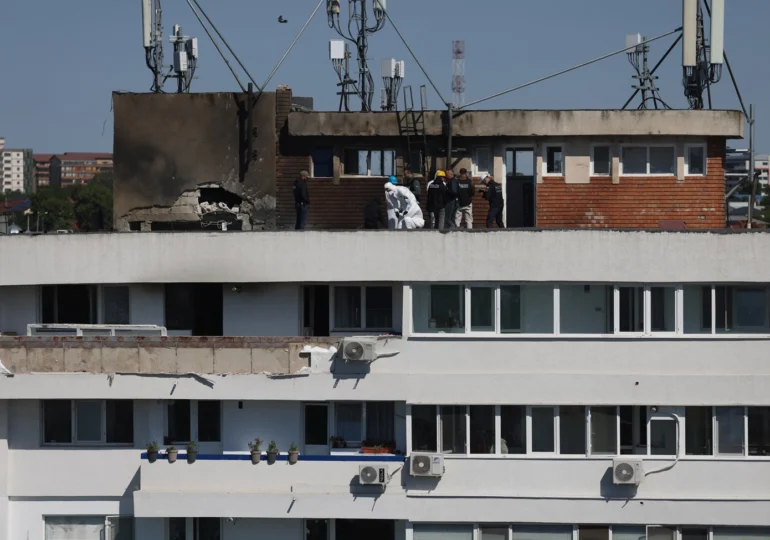
The drone that hit an apartment building in Romania on Friday morning, injuring two people on NATO territory, could have been an accident. However, it only served to amplify the caution felt by Europeans as the war in Ukraine drags on, entering its fifth year, writes journalist Steven Erlanger in an analysis published by New York Times.
Stalled on the front lines, the Russians seem to be taking more risks and escalating their threats against countries supporting Ukraine. European leaders warn of a militarized Russia capable of attacking NATO in the next three to five years, while Donald Trump continues to cast doubt on America's commitment to European security.
The doubts sown by Russia in Europe
The drone that hit Romania was not the beginning of an attack. However, European leaders reacted harshly to Russia's imprudence and their commitment to collective defense, notes the journalist.
This has inevitably raised new questions about NATO's ability to protect its own territory, despite efforts to create "drone walls" and the organization of Operation Eastern Sentry, launched in September 2025, following a broader and deliberate intrusion of Russian drones into Poland.
All these doubts serve the interests of Russian President Vladimir Putin - dividing NATO, unraveling the transatlantic alliance, and encouraging Washington to bring its troops and missiles home, leaving Europe more vulnerable.
But Russia also has an immediate objective, analysts suggest. By escalating attacks on Ukraine and warning that the embassies of allied countries in Kiev are in danger, the Kremlin is also trying to change the course of the war against Ukraine.
"Russia's war is not going well, and the campaign of deep attacks into Ukraine inside Russia is causing more and more problems for Moscow, so Russia is intensifying its warnings about escalation towards what it calls the strategic hinterland, meaning the countries supporting Ukraine," said Hanna Notte, a Russia expert at the James Martin Center for Nonproliferation Studies.
Russia's recent and massive attacks on Kyiv, the capital of Ukraine, including with a high-tech Oreșnik missile, along with warnings to Western ambassadors, also represent an attempt to regain the attention of a Trump administration that pays less attention to Ukraine and has become concerned with Iran, she suggested. If Russia cannot win the war soon, she said, "its only hope is to bring Trump back to the negotiating table and increase pressure on Ukraine to settle the war on Moscow's terms."
The game Russia is playing
Through its frequent threats, aerial intrusions, and campaign of cyber attacks and sabotage against critical infrastructure in NATO countries, Russia is trying to divert attention from the situation on the Ukrainian front, argued Jan Techau, director for Europe at the Eurasia Group.
"Russia wants to expand the issue, increase pressure on internal debates in our countries, try to emphasize that Ukraine cannot win, and that it is time to push Kyiv to the negotiating table," he said. Moscow hopes that the vulnerability felt throughout Europe and speculation about Trump's hostility towards NATO and friendship with Russia will help this strategy succeed.
Ivo Daalder, former US ambassador to NATO, said that the Russians are trying "to escalate to de-escalate, to restore a form of dominance so they can negotiate a conclusion in Ukraine from a position of strength."
Trump echoes Putin's tune
Both the recent statements and actions of the Trump administration significantly contribute to European anxiety, notes the author of the analysis. Furious over his own impasse with Iran regarding the Strait of Hormuz, the US President strongly criticized NATO countries, calling the alliance "a paper tiger." Secretary of State Marco Rubio, a staunch historical supporter of NATO, stated that if NATO countries do not allow their bases to be used for an American war, then he questions the purpose of NATO.
American officials have warned Europeans that they must take responsibility for their own conventional defense, while Washington shifts troops and equipment to the Indo-Pacific region. But they are withdrawing faster than Europeans expected. Just last week, Alexander Velez-Green, a Defense Department official, told NATO allies that the Pentagon is significantly reducing the forces it planned to send to Europe in a crisis, including long-range strike forces and air-to-air refueling aircraft.
This was added to Mr. Trump's sudden decision to withdraw 5,000 troops from Germany, including an armored brigade combat team that had already started rotating there. The move came after Germany's Chancellor, Friedrich Merz, criticized Trump's tactics in Iran. German officials fear that the President will also cancel a plan to station long-range Tomahawk missiles in their country.
A possible miscalculation by Trump
After the Pentagon announced the cancellation of another armored brigade in Poland, Trump stated that he will send another 5,000 soldiers to Poland because he likes the Polish President, further increasing European confusion about American policy.
Julianne Smith, former US ambassador to NATO, noted that there are "so many contradictions at this moment," leading to a potentially dangerous miscalculation by Putin, who believes he can be more aggressive as the alliance is at a weak point.
The shortage of air defense missiles, partly due to their extensive use in the Middle East conflict, means that Ukraine and NATO allies cannot even buy what they need for their security, she said. Coupled with the American announcement of troop withdrawals, she said, "I wonder if Putin will take even more risks, which only increases anxiety."
Russia is not subtle at all. Steven Erlanger mentions in conclusion the statement by Dmitri Medvedev, the former Russian president used by the Kremlin to issue extreme and provocative threats: "You should realize that your authorities have unilaterally entered into a war with Russia. So be vigilant and do not be surprised by anything. The peaceful sleep is over."
T.D.