
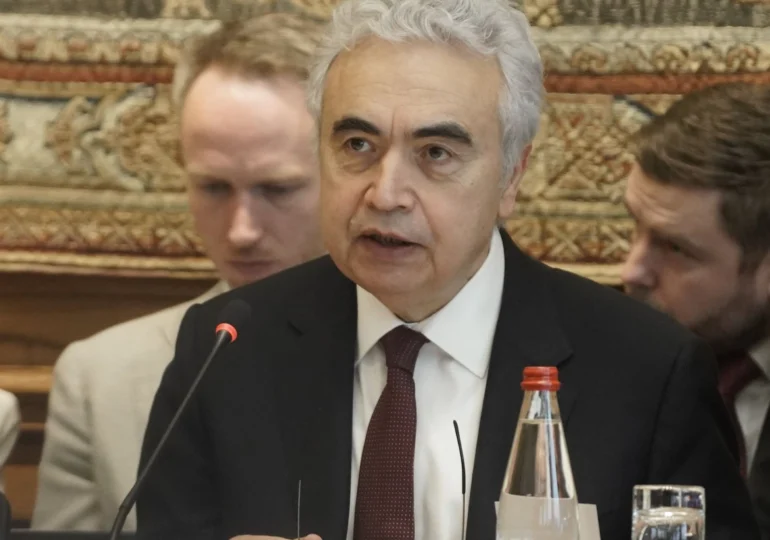
The European Union would make „a major mistake” if it were to relax sanctions on Russian energy, warns the director of the International Energy Agency (IEA), Fatih Birol. The US and the UK have already done so.
In the context of Europe facing a new energy shock caused by the closure of the Strait of Hormuz and the surge in oil and gas prices, Birol stated that reverting to dependence on Russian energy would mean repeating the mistakes made before the 2022 crisis, following Russia’s invasion of Ukraine.
"Europe paid for its excessive dependence in 2022. Making a mistake once is one thing, but doing the same thing twice is no longer a mistake," said the IEA chief in an interview with Euronews.
He warned that "knocking on Russia's door again would be a major mistake" and emphasized that Europe has "many other safer options" in terms of energy security, foreign policy, and defense.
The statements come after the International Energy Agency released a comprehensive report warning of the "largest energy security crisis in history."
The current crisis has been exacerbated by the effective closure of the Strait of Hormuz by the regime in Tehran in March. The maritime route is essential for the global market, transporting approximately one-fifth of the global oil supply.
According to estimates by the European Commission, turmoil in the Middle East has led to a 65% increase in oil prices, while gas prices have doubled.
Despite economic pressures, Brussels has ruled out any possibility of relaxing sanctions on Russian energy, including through third countries. European Commissioner for the Economy, Valdis Dombrovskis, stated that financing Moscow through energy purchases would contribute to prolonging the war against Ukraine.
However, tensions among member states are rising amid high energy costs. Last week, Italian Prime Minister Giorgia Meloni told the European Commission that the current energy crisis is as important as defense and requested exemptions for energy measures from EU rules on deficits and public debt.
Meanwhile, the United States recently announced a 30-day extension of waivers on sanctions applied to Russian oil transported by sea, arguing that the measure helps poorer states affected by rising energy prices. The UK has also relaxed some restrictions on imports of refined fuel from Russian oil through third countries, although London insists that the main sanctions remain in place.
Fatih Birol believes that the current crisis will have lasting effects on Europe and that the continent's energy future depends on electrification and reducing dependence on fossil fuels.
"Europe's competitiveness and sovereignty will critically depend on its energy strategy. In my opinion, Europe's energy future is electrification, and we must electrify our economies as much as possible," he stated.
The IEA chief added that nuclear energy will play an important role during the energy transition period.
"Europe has not always made the right choices and has made many mistakes. Now we need to be very clear and make the right energy decisions. It is a matter of the continent's sovereignty," Birol concluded.
B.B.