
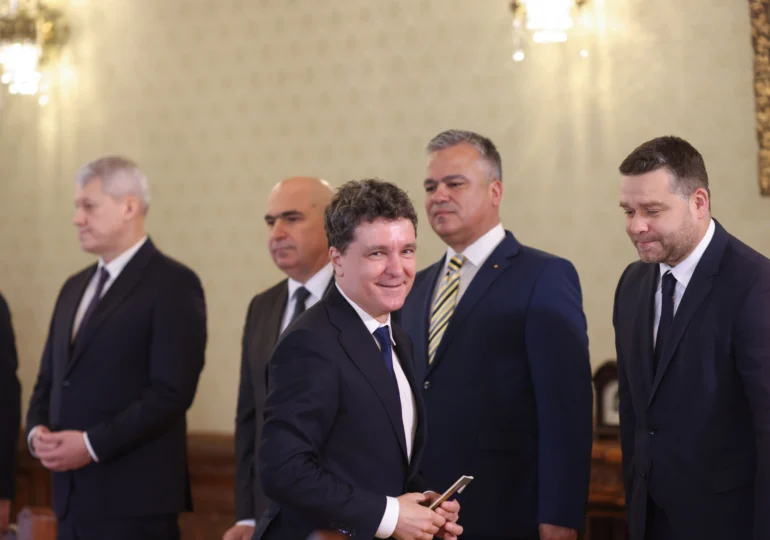
President Nicușor Dan is once again calling on party leaders to the Cotroceni Palace for discussions regarding the new Law on Public Sector Salaries. A new round of negotiations is scheduled for Thursday, according to official sources speaking to News.ro.
The discussions come at a time when the deadline for adopting the law is becoming increasingly short. Salary reform is a milestone in the PNRR, with the end of August being the target date, and approximately 770 million euros being tied to its fulfillment.
Leaders of the PSD, PNL, USR, and UDMR are expected at Thursday's meeting – Sorin Grindeanu, Ilie Bolojan, Dominic Fritz, and Kelemen Hunor.
The Project Has Not Yet Reached the Parties
The new round of discussions is taking place after the negotiations in recent weeks did not lead to a final version of the project.
Sorin Grindeanu stated on Monday that the PSD has not yet received the document or the requested simulations during the discussions at Cotroceni. "I don't have any project. Nothing has changed. They haven't sent us anything. I was, I think, on Tuesday, I hope I'm not mistaken, on Tuesday, at Cotroceni, at that meeting. Today, we are almost a week later, it's Monday. I have no project, no simulations, as I and Kelemen Hunor requested, I have nothing to give my opinion on," said the PSD leader.
Technical discussions continue these days, and the parties are expected to receive a new version of the project before Thursday's meeting. If party leaders reach an agreement on the main provisions, the project can then proceed to Parliament.
Parliament Could Be Convened in an Extraordinary Session
The PNL has already announced its support for convening Parliament in an extraordinary session during the period of August 24-28. The leader of the liberal deputies, Gabriel Andronache, says this is the solution for timely adoption of the law and avoiding the loss of the 770 million euros from the PNRR.
The pressure is even greater as the current government is interim and has limited powers.
The Presidential Administration has taken on a mediating role, and one of the options is for the form agreed upon by the parties to be submitted to Parliament as an initiative of the deputies and senators.
Salaries in Education and Healthcare Among Sensitive Issues
One of the issues complicating the negotiations is how the new grid will modify the incomes of different categories of public employees, especially in Education, Healthcare, and administration.
The PSD has warned that it will not support a version that would lead to income decreases in these areas.
A similar message has come from Cotroceni. Eugen Tomac, advisor to President Nicușor Dan, stated that the head of state will never promulgate a law that would reduce the salaries of doctors or education employees.
"The salary law is necessary for the Romanian administration, but here I want to be as direct as possible: the President of Romania will never promulgate a salary law that cuts the incomes of doctors or those in education. Here things are very clear, but this law is needed," Tomac said on B1 TV.
Why Is Closing the Reform So Difficult?
The new Salary Law should correct the accumulated imbalances in the public system and introduce a more coherent grid among different categories of employees.
The Ministry of Labor and experts from the World Bank have worked on the new grid versions, but negotiations have faced very high costs. Requests from the system and unions exceeded, according to data previously presented by authorities, 20 billion lei, while one of the negotiated options reduced the budget impact to approximately 12.1 billion lei.
Authorities have maintained that the reform must be carried out without reducing existing salaries, with any differences to be managed through compensatory mechanisms.
However, time is very short. The announced deadline for adopting the reform is August 31, and failing to meet the milestone could cost Romania approximately 770 million euros from the PNRR.
G.P.