

Since the formation of the Hungarian minority movement at the end of December 1989, it has followed the political line from Budapest, not from Bucharest.
In the ’90s, because Hungary was much more advanced than Romania in terms of political institutions, appetite for democracy, and European integration, UDMR was a construction that inspired much of the liberal current in our country.
Over time, everything changed, and with Viktor Orbán’s second term as the leader of Hungary in 2010, UDMR became an annex of the USL (PSD-PNL), but also a structure supporting the illiberal policies promoted throughout Europe by the Hungarian prime minister.
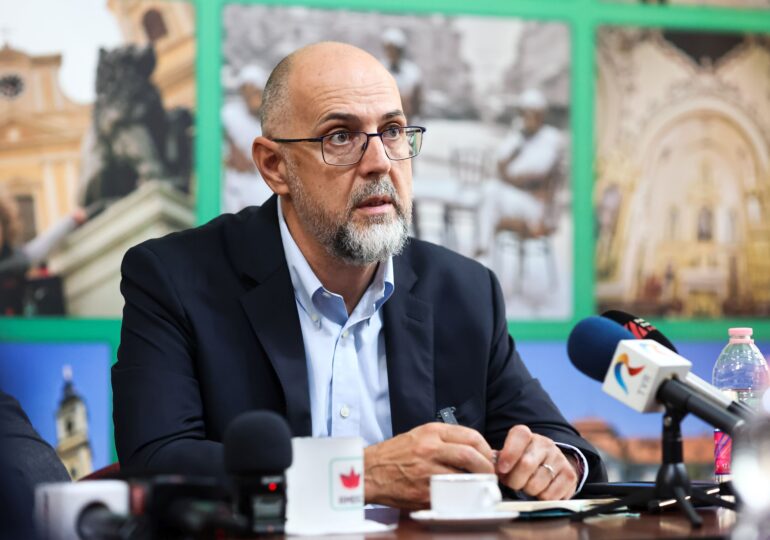
Since the recent change in the political regime in Budapest and Péter Magyar's leadership, Kelemen Hunor and the old UDMR team have a problem. In the Hungarian capital, they are seen as "untrustworthy," with strong voices calling for Hunor and his associates to be replaced.
In these circumstances, UDMR's departure from government, disconnecting the party from public resources in Romania and having its funding cut off from Budapest, Kelemen Hunor found himself vulnerable within the party he leads, while critical voices towards the leadership are becoming more prominent.
What was the solution proposed by the Hungarian leader? After exploring a political alliance with PNL and USR, realizing that it was not possible to form a parliamentary majority, and also being in open conflict with Nicușor Dan, Kelemen Hunor considered it safer to return to the arms of PSD, as the path to government seemed shorter.
It remains to be seen if he made the "right" decision for the party, but to cement the alliance with PSD, UDMR, through the vote of Csaba Asztalos from the Constitutional Court, offered Grindeanu Dominic Fritz's head on a platter.
What hides behind the good image of UDMR leaders
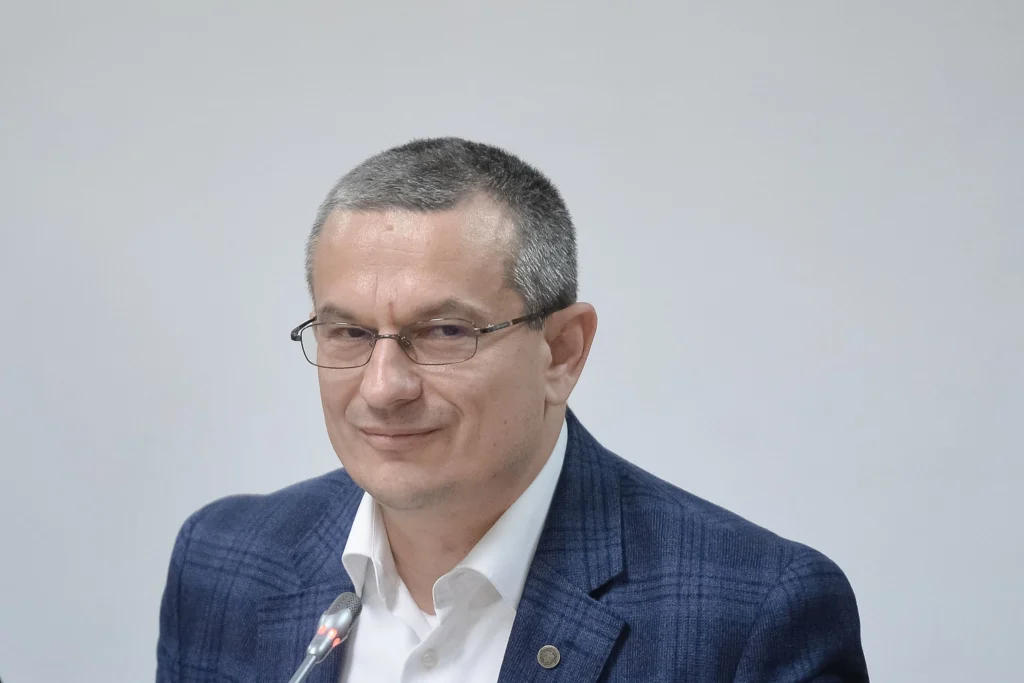
Asztalos is the legal arm of UDMR in the institutional system in Romania. For almost a quarter of a century, he worked at the National Council for Combating Discrimination, leading the institution since 2010.
During his long mandate, without making decisive decisions and actions, extremist, legionary, and anti-Semitic movements flourished in Romania, encouraged by the great political leader in Budapest, Viktor Orbán.
Simion, Șoșoacă, Georgescu, and many others appear and develop their anti-European and anti-democratic discourse during his mandate.
Over the last decade and a half, regardless of how you look at the situation, CNCD has done too little to discourage the illiberal discourse in Romania.
In 2025, Csaba Astzalos is proposed and supported by UDMR for the position of judge at the Constitutional Court, which, at the time, was applauded.
Paradoxically, the leaders of the Hungarian minority in Romania have always had a good image due to their civilized discourse and reluctance to engage in the noisy and sordid political debates in the country.
But beneath this image, UDMR has always pursued its interest, that of remaining constantly connected to public funds from Bucharest and Budapest simultaneously.
What matters most: The Constitution
On August 17, Csaba Asztalos took over as the reporting judge on the integrity law from Simina Tănăsescu, the President of the CCR, shortly after PSD caused a "public scandal" following the meeting between Tănăsescu and Prime Minister Ilie Bolojan.
Subsequently, his vote became decisive regarding the constitutional declaration of the "Fritz amendment," imposed in Parliament by PSD, which aims to politically compromise and dismiss the mayor of Timișoara, a USR leader.
Thus, an absurd situation has arisen where fundamental legal principles are violated only to destroy a political competitor.
It has already been mentioned that the CCR vote goes against the Constitution, which enshrines in its text the principle of non-retroactivity, indicating that a law can only have effects for the future.
But what does the Constitution and the law matter when it comes to the interests of PSD and those of the President of Romania, who, at any cost, want a new version of USL?
Certainly, Csaba Astzalos's vote and UDMR's position will be known in Budapest. There is a possibility, in the Hungarian desire to return to government, that they did not think too much about the consequences, but they will exist.
Furthermore, they will be used by Kelemen Hunor's opponents in the coming weeks to challenge his authority if he does not resolve the complex issues within the party.
The Luxury Prisoner
If it weren't so painful and threatening to the general public, this prolonged political crisis would have been the first good thing to happen in Romania in the last decade - one that would indicate the end of a corrupt way of doing politics in Romania, exclusively in the interest of groups that have parasitized the state in every possible way.
After the vote on the integrity law, the hope of many that an anti-PSD majority had formed in the Constitutional Court was shattered.
Such a thing does not exist because USL has not died, but it is still the hope of those in power, who control Romania institutionally and reject change and true democratization of society wherever it may arise.
Unfortunately, anyone who imagines that the country will reform without a determined political force that takes on the task of democratic reconstruction and convinces the majority of citizens of such a necessity is mistaken.
Nicușor Dan has become a luxury prisoner at the Cotroceni Palace because he fears risk and the possibility of suspension, and the current Parliament is blocked, unable to create and support a reformist political movement.
Change will never come from above, but from below, from those who are tired of the current sham of democracy.