
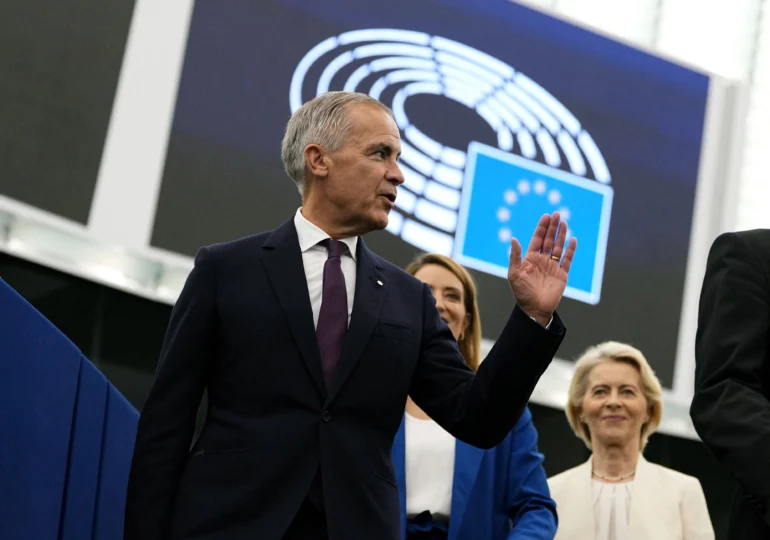
The European Union has abandoned the proposal to grant Canada the status of “associate member,” after several European countries, including Germany and France, opposed the idea. However, the two parties want to strengthen their economic and security relations at a time when Ottawa is trying to reduce its dependence on the United States.
The decision appears in the draft joint declaration prepared for the EU-Canada summit, which begins on Thursday in Montreal and is hosted by Canadian Prime Minister Mark Carney, reports Politico.
The proposal to grant Canada the status of “associate member” of the EU was made in September by the President of the European Commission, Ursula von der Leyen. The idea surprised several European governments, especially since such a status does not exist in Union legislation and has no precedent.
Germany, France, and Greece were among the countries that opposed including this formula in the joint declaration.
In an earlier version, the document stipulated that the EU and Canada would try to define by 2027 what the status of associate member would mean.
The new wording abandons this designation and speaks instead of an “ever closer partnership” between Canada and the EU, without the North American country becoming a full member.
The text still requires final approval and is scheduled to be made public on Friday.
Why Canada wants to get closer to Europe
Getting closer to the European Union is one of Prime Minister Mark Carney’s priorities, as he tries to reduce Canada’s economic and security dependence on the United States.
Relations between Ottawa and Washington deteriorated after President Donald Trump imposed tariffs on Canadian products.
A closer relationship with Europe could offer Canada new economic opportunities and greater autonomy from the US. At the same time, this rapprochement risks provoking new tensions with the Trump administration, while trade negotiations between the two countries continue.
The American president previously called the proposal for the neighboring country to become an associate member of the EU “ridiculous.” Trump warned that if he considered this rapprochement an “act of hostility,” the United States could halt trade exchanges with Europe in numerous areas.
Prime Minister Carney has tried to downplay the importance of the dispute over the name of the future partnership. “The good news is that specific names or nomenclature don’t matter. What matters is the difference it will make in the lives of Canadians,” he said on Tuesday.
Beyond economic and security cooperation, the joint declaration reaffirms the commitment of the EU and Canada to respect international rules. The document also expresses the deep regret of both parties over the sanctions imposed by the Trump administration on the International Criminal Court, based in The Hague.