
A small European country made up of over 1,500 islands is the unexpected recommendation of tourism experts for the year 2026. The country rich in natural beauty is not overrun by tourists. According to statistics, most tourists are British.
In 2024, 70,000 Britons visited Estonia, far below the 17.8 million who went to Spain, according to Express.
Estonia's Assets
Although not as sunny as Greece, Estonia has many other advantages.
First of all, it is a place with rich nature. Over half of Estonia is covered in forests and bogs, and the country has over 1,500 islands. Among the attractions is Naissaar, which hosts the ruins of abandoned Soviet military bases. It is located right next to the capital Tallinn, but is uninhabited in winter and has a wild atmosphere.
Another island is Hiiumaa, famous for lighthouses, beaches, and forests. It is a very peaceful place, with a slightly mystical atmosphere, perfect for cycling, birdwatching, and escaping the crowds.
Ines Santos from The Mirror visited one of Estonia's most famous islands last year.
"When I stepped off the ferry onto Estonia's largest island, Hiiumaa, all I could hear was birds. All I could see was trees. No big buildings, no tourist attractions - just space to breathe, untouched by mass tourism. I felt like a place still undiscovered. (And with the third smallest number of visitors in Europe, that's what it is)," she wrote.
The "Cousin" of the Nordic Countries
Ines quickly fell in love with Estonia, enjoying the pace of life and the attitude of those who live there.
"Life is relaxed. There is no 'hustle culture,' so people have time for hobbies, and visitors like me join in. The sauna culture in Estonia is woven into everyday life, just like in Scandinavia. In fact, the country feels like the laid-back cousin of the Nordics, with similar design, a love for nature, and a diet rich in fish - but shaped by a very different history.
The Old Town in Tallinn is full of cobblestone streets and medieval buildings that still bear traces of German and Soviet domination. Estonia only became independent in 1991 and still carries its freedom with quiet pride.
The next morning, we took the ferry to Estonia's largest islands: Hiiumaa and Saaremaa. There lies the true beauty of the country. The ferries here are spacious, modern, and impeccable - more like floating lounges than basic transportation. There are many indoor and outdoor viewing decks, a cafe, and even a shop on board," wrote Ines Santos.
The tourist also mentioned the activities visitors can do.
"My first activity in Hiiumaa turned out to be one of my favorites: a horseback ride along Käina Bay, a coastal bird paradise in the Kassari Landscape Reserve. I rode a horse named Custiv through wetlands and forests, and he was the best - didn't stray off the path and followed all my instructions," Ines Santos added.
Tallinn, Medieval Charm and Modern Creativity
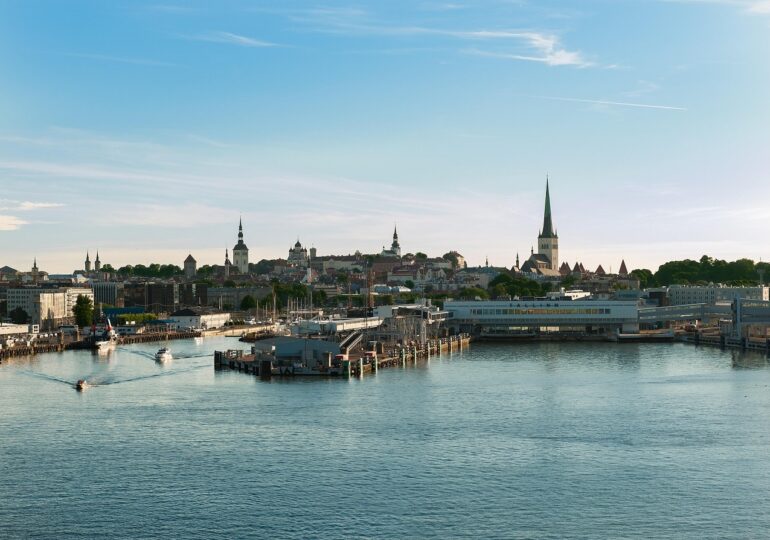
Tallinn boasts an impressive blend of medieval charm and modern creativity. The recommended starting point for visiting is Tallinn's Old Town, a UNESCO World Heritage site where cobbled streets, merchant houses, and towers lead to Toompea Hill for panoramic views of the city.
Culture enthusiasts should visit Kadriorg Park, an area with abundant greenery built by Peter the Great, and explore the elegant Kadriorg Art Museum. Nearby, the Seaplane Harbour Museum offers one of the most captivating maritime exhibitions in Europe.
To see modern Tallinn, tourists are advised to head to the Creative City of Telliskivi, full of street art, cafes, and independent shops.
The Best Time to Visit Estonia
Rummu Quarry is one of the most unusual places to visit in Estonia, combining natural beauty with a tumultuous history. A former limestone quarry and forced labor camp from the Soviet era, it was abandoned in the 1990s and gradually flooded, leaving buildings and machinery submerged under crystal turquoise water. Today, it attracts visitors for swimming, snorkeling, diving, as well as hiking on the surrounding hills. The contrast between the vibrant water, stark white limestone, and half-submerged ruins makes Rummu seem otherworldly.
The most accessible time to visit Estonia is from January to March, but for warmer weather, May is ideal.