
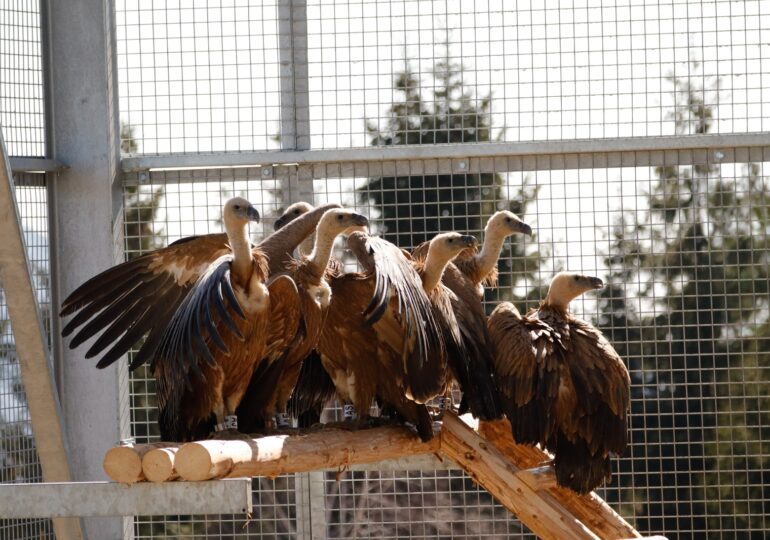
The first 25 specimens of griffon vulture (Gyps fulvus) have arrived in Romania and have been transferred to an acclimatization aviary built near the commune of Rucăr, Argeș County.
The birds are part of a long-term program aimed at reintroducing the species and establishing a stable population in the Făgăraș Massif, after more than 70 years of absence from the country’s fauna.
The initiative is carried out by the Conservation Carpathia Foundation together with the Milvus Group Association and a local consortium formed by the communes of Lerești, Rucăr, and Valea Mare Pravăț, in collaboration with the Argeș County Sanitary-Veterinary and Food Safety Directorate.
The project marks the first attempt to reintroduce the griffon vulture in Romania and is part of European efforts to restore vulture populations.
The birds were brought from Spain through a partnership with the Vulture Conservation Foundation, one of the most experienced organizations in Europe in conserving these species. The specimens are young and will form the nucleus of the future population in the Făgăraș Mountains.
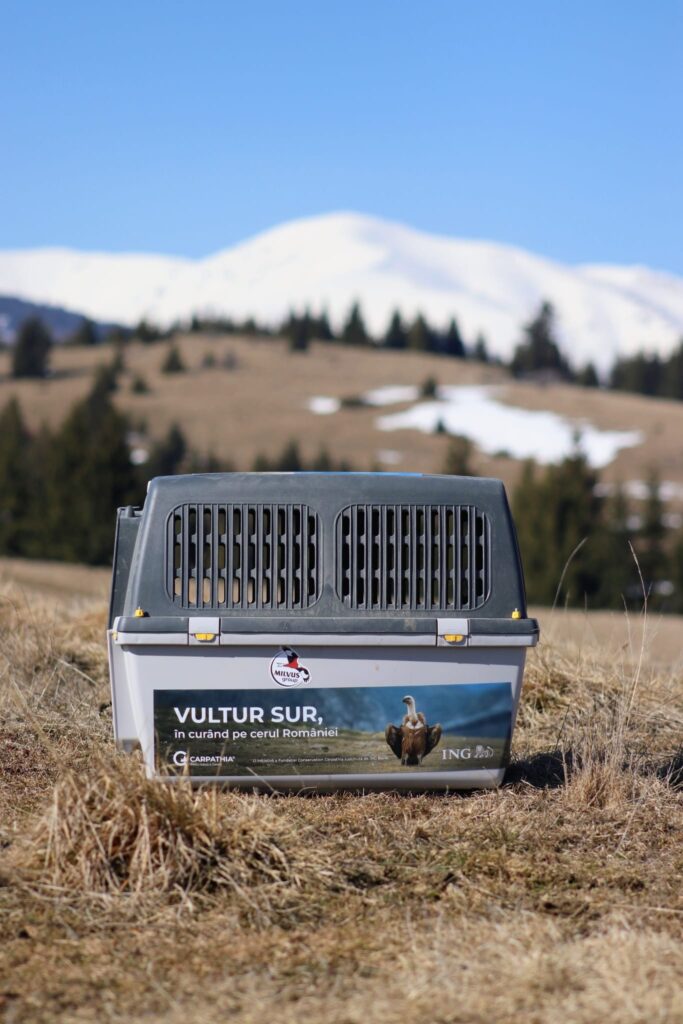
Why Did the Griffon Vulture Disappear from Romania
The species disappeared from Romania in the mid-20th century, mainly due to the use of poisoned baits intended to control predators such as wolves or bears, as well as direct persecution. Vultures were often collateral victims of these practices or were shot, being mistakenly considered harmful.
Their reintroduction plays an important role in restoring the natural balance, as griffon vultures are scavengers and feed exclusively on dead animals, thus contributing to the rapid removal of carcasses and the prevention of disease spread.
"The return of the griffon vulture to Romania means not only bringing back a species that has been absent for over 70 years but also the return of an essential ally for nature's health. It is a concrete step in reconstructing a functional landscape where nature and local communities coexist and support each other. This stage confirms that nature restoration becomes possible when there are strong partnerships and long-term commitment," stated Barbara and Christoph Promberger, the executive directors of the Conservation Carpathia Foundation.
First Days in Romania: Checks and Adaptation
After transport, the birds were examined by specialized veterinarians to check their health status and ensure that the journey did not cause them any injuries. Each specimen was equipped with an ornithological ring for future identification and then transferred to the acclimatization aviary.
Over the next two weeks, the project team will carefully monitor the vultures' adaptation to the new environment, a stage considered essential for the success of the reintroduction program.
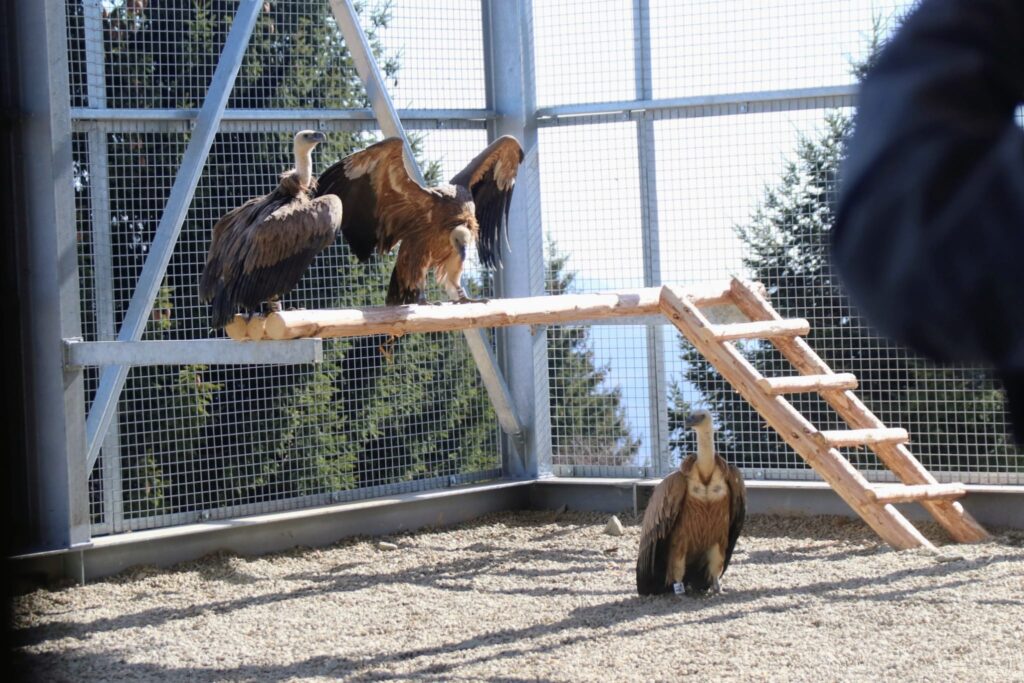
Acclimatization Aviary, the First Step Towards Freedom
The aviary is located in a mountainous area at approximately 1,150 meters above sea level, near the commune of Rucăr. The structure covers approximately 160 square meters and has a height of 6 meters, built of metal and wire mesh, with a wooden shelter area against the elements.
The construction is anchored by 44 foundation screws to withstand mountain conditions, and the area is under video surveillance. The site offers visibility to cliffs that could become nesting sites for birds in the future.
The acclimatization period is estimated to be approximately six months.
During this time, specialists will observe how the birds adapt, how they feed in groups, and how they interact with each other. Food is introduced through special openings, without visual contact with humans, to prevent the birds from associating human presence with a food source.
After release, each specimen will be monitored using transmitters to track movements and adaptation in the natural environment.
Tourism and Education for Local Communities
The project also includes a component dedicated to local communities. The Conservation Carpathia Foundation is preparing to open a new visitor center dedicated to vulture species, "House of the Vulture," in the Valea Mare Pravăț commune.
This will complement the network of nature information centers in the area, alongside the Beaver House in Rucăr and the Bison House in Lerești. The initiative aims to develop nature tourism and create new opportunities for local communities.
The Griffon Vulture, an Emblematic Species
The griffon vulture is one of the largest birds of prey in Europe. It can weigh between 6 and 11 kilograms, has a body length of 93–122 centimeters, and a wingspan of up to 2.8 meters.
The bird is characterized by its white head, broad wings, short tail, and a white feather collar at the base of the neck. The plumage is light beige, and the flight feathers are darker in color.
The species prefers open landscapes and mountainous areas, where it uses warm air currents to soar at high altitudes with minimal energy consumption. The female lays a single egg per year, and both parents participate in raising the chick.
The presence of the griffon vulture indicates the existence of healthy ecosystems and extensive habitats. Currently, specimens can only be occasionally observed above the Carpathians or in the steppe areas of southeastern Romania, without stable populations.