
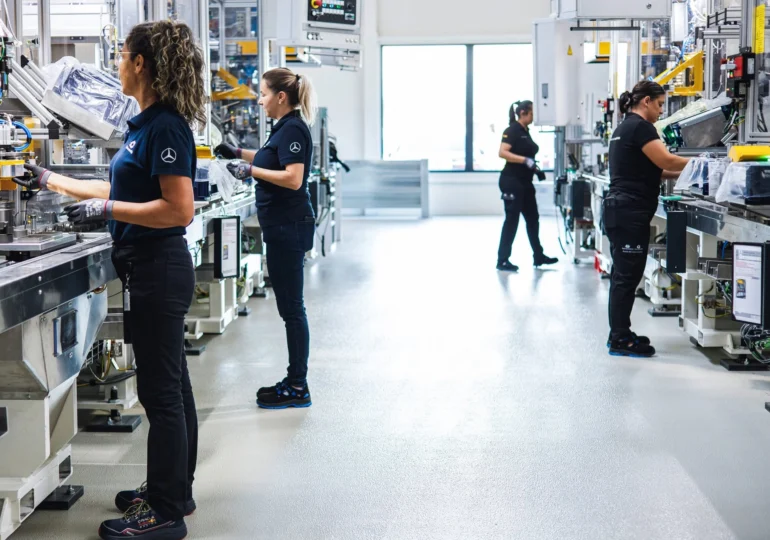
Mercedes-Benz presented to its employees in Germany a cost comparison of the group’s European factories to demonstrate how significant the difference is between the German plants and those in Eastern Europe.
According to the company’s calculations, the cost of one hour of work at the Mercedes factory in Cugir is 81.7% lower than in Germany. Thus, Romania has the highest cost advantage among the countries included in the comparison, as reported by Profit.ro, citing the German publication Merkur.
In Poland, the cost advantage is 76.5%, and in Hungary, it is 75%.
These percentages come from an internal analysis conducted by Mercedes and compare specific factories within the group.
Five extra hours without a salary increase
Mercedes management uses these differences to ask employees in Germany to accept cost reduction measures. One of the options under discussion is extending the workweek from 35 to 40 hours without a corresponding salary increase.
The company's message is that the German factories can be kept operational and jobs protected only if productivity increases and costs are reduced.
If employees and unions reject the proposed measures, Mercedes is considering closing a factory in Germany and expanding production in Eastern Europe. However, the company has not specified which German plant could be affected.
The IG Metall union has already rejected the proposal for the five extra hours of work. "Five extra unpaid hours of work would mean a total salary reduction of 20%," a union spokesperson quoted by Profit.ro said.
According to information previously reported in the German press, Mercedes management also aims to review certain benefits granted to employees, including holiday and Christmas bonuses. Employee representatives have described the prospect of production relocation as a form of pressure on staff.
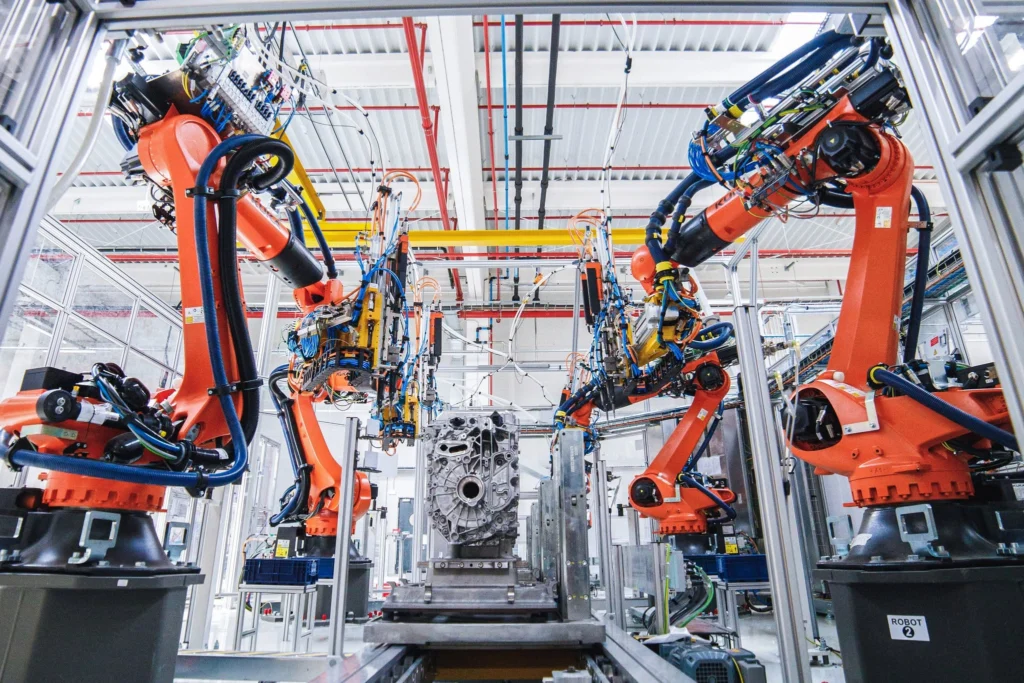
What Mercedes produces in Romania
Mercedes-Benz owns two factories in Romania: Star Assembly in Sebeș and Star Transmission in Cugir. Both are integrated into the global production network of the German group's propulsion systems.
Sebeș produces automatic transmissions, electric engines, and propulsion systems, while the Cugir factory delivers components for engines and transmissions.
Mercedes recently invested in a new production line in Sebeș, in a hall covering approximately 30,000 square meters. The investment received state support from the Government.
The plant will manufacture propulsion systems for the new electric Mercedes GLC, as well as electric engines for the company's commercial models. The factory will also continue to produce components for vehicles with internal combustion engines.
The two units in Romania have produced automatic transmissions 9G-Tronic and 8G-DCT, as well as components and hybrid versions of Mercedes propulsion systems.