

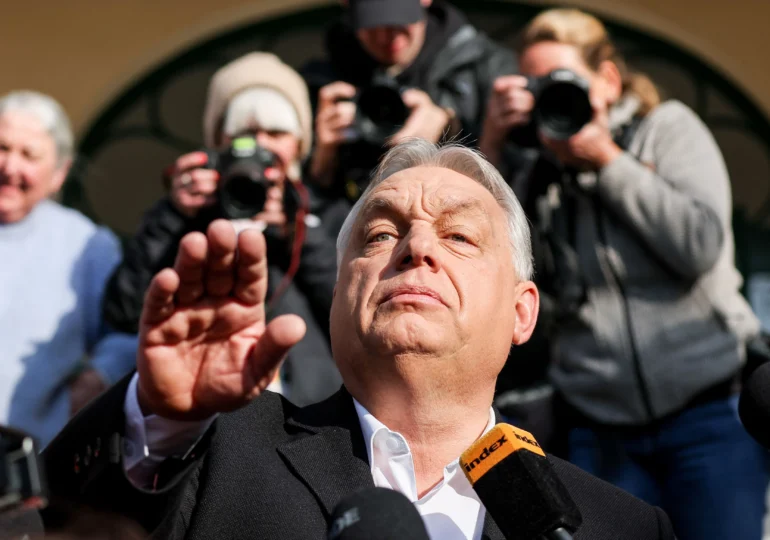
The surprising victory of Péter Magyar over Prime Minister Viktor Orbán was quickly hailed in Europe as a signal against right-wing populism. However, the interpretation is rushed and, for the most part, wrong.
An analysis by Politico shows that the outcome in Hungary rather tells a story about economics and power fatigue, not a major ideological shift.
Hasty Conclusions
German Chancellor Friedrich Merz described Magyar's victory as "a good day" and "a very clear signal against right-wing populism." Many European leaders followed suit.
However, the reality is more nuanced. The new Hungarian parliament remains right-wing, nationalist, and sovereigntist, and Magyar himself is not a classic liberal politician. His victory does not equate to a rejection of national conservatism, but rather a change in leadership within the same political spectrum.
Elections about Money and Corruption, Not Ideology
The electoral campaign in Hungary was not dominated by ideological themes, but by concrete issues: economy, standard of living, corruption. Magyar explained his success by what he called "a good type of populism."
After 16 years of Fidesz governance, voter fatigue became decisive. The vote was not for liberalism, but against a system perceived as blocked and inefficient.
Shock for Trump and the MAGA Camp
The result was a blow to Donald Trump and the MAGA movement, which openly supported Orbán. The American president publicly endorsed him several times and promised massive economic aid to Hungary in case of victory.
High-ranking officials also arrived in Budapest, such as Vice President JD Vance and Secretary of State Marco Rubio, a sign of the high stakes Washington places on these elections.
A Chatham House analyst succinctly summarized the importance of the election: "For MAGA, the two most important elections this year are those in Hungary and the midterm elections in the United States."
However, Hungarian voters were not convinced. And Trump's silence after the result was itself a strong signal.
Magyar's victory will undoubtedly be perceived as a setback for global populism. Orbán was considered one of the most influential leaders of this movement, a role model for similar parties across Europe.
Even warnings came from his camp before the vote. "It would be perceived as an ideological or intellectual failure if he were to lose," said Frank Furedi, a close associate of Orbán.
"We must remember that Orbán has a disproportionate influence on many political parties and leaders (...). A defeat would have at least a short-term impact on the political dynamics in Europe," he warned.
The defeat leaves Slovak Prime Minister Robert Fico isolated in the European Council and could demoralize other eurosceptic formations.
Economy Decides
However, the analysis emphasizes that elections do not necessarily follow global trends, but primarily reflect local realities. The message is a simple one: if you do not deliver economic results and do not address the concrete problems of people, you risk losing.
Magyar himself put this idea very directly: "You must stand by the people."