

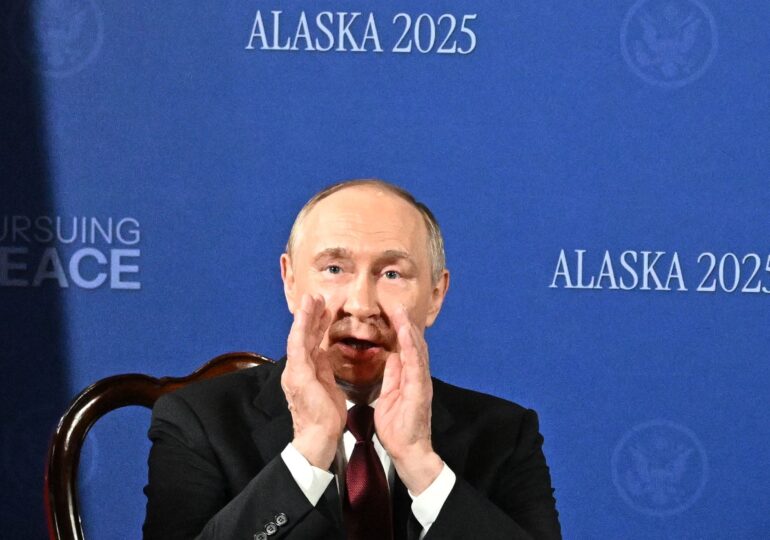
Every time negotiations between Russia, Ukraine, and the USA seem to progress, Moscow launches a new serious accusation – drone attacks, assassination attempts, nuclear plots, or acts of sabotage – that threaten to derail the process.
This pattern is described in an analysis signed by journalist Tim Zadorojnîi for Kiev Independent. The conclusion is clear: it’s not a coincidence, but a strategy.
A senior Ukrainian official familiar with the negotiations told the publication that "nonsense" like those spread by Russia are intended "to influence discussions and divert attention from Moscow's lack of willingness to compromise."
"The Valdai Drones" and the First Major Break
The first major episode occurred at the end of last year, after Washington pressured Kiev to accept an unfavorable agreement. After intense renegotiations, by the end of December, President Volodymyr Zelensky and President Donald Trump publicly suggested that about 95% of the revised peace framework was agreed upon.
Prior to a phone call between Vladimir Putin and Donald Trump, Russian Foreign Minister Sergey Lavrov claimed that 91 Ukrainian drones had targeted Putin's residence in Valdai.
Lavrov warned that Moscow would "reassess" its position in the negotiations in light of the alleged attack.
The timing was all the more suspicious as the accusation came just hours after high-level Zelensky-Trump discussions, which seemed to give a new impetus to the negotiations. Residents in the area later told independent Russian media that they had not seen drones and had not received any air alerts.
Zelensky described the accusation as "a lie."
Trump initially reacted strongly: "I don't like it. It's not good. You know who told me about this? President Putin told me about it... I was very angry about it."
When asked if the attack might not have taken place, he replied: "Are you saying maybe the attack didn't happen? It's possible. But President Putin told me it happened."
Later, after briefings from U.S. intelligence services, Trump tempered his reaction. However, the momentum of the negotiations faded.
Shootings in Moscow and Negotiations on the Verge of Collapse
On February 6, Russian Lieutenant General Vladimir Alekseev was shot in Moscow. Lavrov quickly accused Kiev of "provocations intended to destabilize the negotiation process." Kiev denied involvement.
The timing was delicate: Alekseev's superior had just participated in discussions in Abu Dhabi, where the most sensitive issue - the territorial question - was to be addressed in the next round. Ukrainska Pravda reported later that negotiations were on the brink of collapse after this incident.
Shortly after, Moscow reshuffled its delegation, and the leadership of the negotiating team was changed.
Lavrov Invokes "Agreements" and Rejects the 20-Point Plan
Between February 9 and 11, Lavrov publicly undermined optimism about a new round of negotiations. He invoked the so-called "Anchorage agreements," allegedly agreed upon by Putin and Trump, suggesting that these involved territorial concessions from Ukraine.
At the same time, he rejected the revised 20-point peace framework elaborated by the USA and Ukraine.
"All subsequent versions (of the peace plan) are the result of an attempt by Zelensky and (Europe) to nullify the American initiative," said Lavrov. "Now they are waving some kind of document with 20 points that no one has transmitted to us."
According to Bloomberg, the plan had nevertheless been transmitted to Moscow through diplomatic channels.
Lavrov also warned against an "enthusiastic perception" of progress: "Negotiations continue... there is still a long way to go." His statement contradicted Trump's claim that the parties were "closer than ever."
Nuclear Accusations and Threats to Pipelines
On February 24, the Russian foreign intelligence service claimed that France and the United Kingdom were working to supply nuclear weapons to Ukraine.
Zelensky rejected the accusation as "political pressure." "Usually, when Russia fails to win on the battlefield, it starts looking for nuclear weapons on Ukrainian territory," he said.
On the same day, Putin warned of alleged plans to sabotage the TurkStream and Blue Stream pipelines, claiming that such actions could derail the negotiations.
All these accusations emerged just before a new round of negotiations, later postponed.
"A Clear Pattern, Not a Coincidence"
Analysts quoted by Kiev Independent see a coherent strategy.
Daniel Fried, former U.S. ambassador to Poland, believes that these moves are intended to create divisions in the West and provide justifications for a potential escalation.
Iuliia Osmolovska, head of the Kiev office of the GLOBSEC think tank, states that Moscow is trying to influence American perceptions. "Russia needs to create something that will make Americans lean more towards the Russian position in negotiations and provoke disappointment towards Ukraine," Osmolovska said.
Orisia Lutsevich, Deputy Director of the Russia and Eurasia Program at Chatham House, says that the messages also have an internal purpose: "(Russia's goal is) to demonize Europe, especially the United Kingdom and France, and to show that Russia is not fighting with Ukraine but with the West."
Control of the Pace and Narrative
According to the analysis, Moscow's objective is not necessarily to abandon the negotiations but to control their pace, reshape the interpretative framework, and ensure that any failure can be attributed to others.
Each accusation serves multiple purposes: testing Trump's reactions, undermining Kiev's credibility, justifying Russian intransigence, and maintaining Moscow's image as a "reasonable" party seeking peace.
The conclusion is decisive: the pattern is clear - and, at least partially, it works.