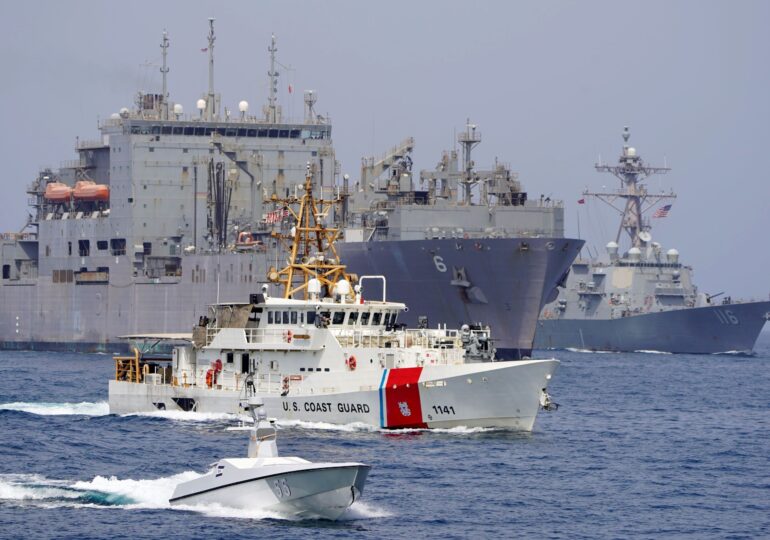
Germany is considering a possible naval deployment in the Strait of Hormuz amid increasing tensions in the region, Defense Minister Boris Pistorius stated.
The official mentioned, in an interview with the public broadcaster ARD, that authorities in Berlin have already entered a concrete planning phase.
Pistorius explained that all possible scenarios are being analyzed, including partnerships and how a potential mission could be organized. He admitted that it would have been a mistake for such preparations not to be already underway, but emphasized that the process is still in its early stages.
For a potential intervention, Germany would need several essential conditions: a stable ceasefire in the region, a legal framework in accordance with international law, and approval from the federal parliament, the Bundestag. "We are still far from that," highlighted the minister.
Germany's Role: Securing Navigation
The German defense chief insisted that any involvement would not be symbolic but would directly aim at protecting freedom of navigation in one of the world's most important trade routes. In this regard, he highlighted Germany's expertise in naval mine clearance operations, where Berlin plays an important role within NATO.
At the same time, Pistorius acknowledged that such a mission would require the redistribution of military resources. "We cannot use our equipment in more than one place," he said, suggesting that involvement in the Hormuz region would affect other commitments of the German navy.
"Unpredictable" Situation
The German minister described the situation in the Strait of Hormuz as unpredictable, noting that over 20 attacks on commercial ships have been reported.
In his opinion, an international mission could not be effective without the involvement of the United States. Pistorius believes that excluding the US would be "an unwise move" and would send a wrong political signal, considering that Washington has the best understanding of the situation in the region.
He reiterated that Germany does not see the conflict in the area as "its war," but emphasized that its effects are directly felt on the global economy and, consequently, on Europe.