

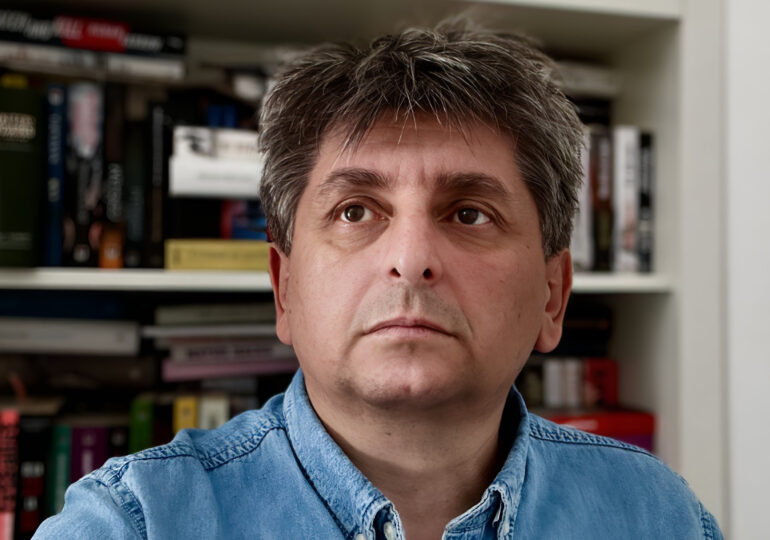
Three days after winning the parliamentary election, Peter Magyar (45 years old), the new Prime Minister of Hungary and leader of the conservative TISZA party, arrived at the President’s office, Tamás Sulyok, where he publicly announced that he „…is not worthy to represent the unity of the Hungarian nation. He is not suitable to fulfill the role of guaranteeing legality. He is not suitable to be a moral authority or a role model. After the formation of the new government, Tamás Sulyok must immediately leave his position,” according to the statement posted on network X.
Additionally, the new leader was invited to the main public television channel, a propaganda channel heavily used by Viktor Orban.
Peter Magyar, during prime time, announced that, after the formation of the Government, all state-controlled TV channels will be shut down „until the character of public service information is restored”.
In recent days, on social media, we have seen a series of critical positions towards the President of Romania, the Prime Minister, and, in general, towards the Romanian political system, accusing the fact that quick and radical decisions cannot be made following the popular vote.
"...after the elections in Hungary, the idea is being instilled that Nicușor Dan did not have the courage to make the parliamentary reforms he now promises Peter Magyar," wrote on Facebook Marius Gheorghe, a supporter of the President of Romania.
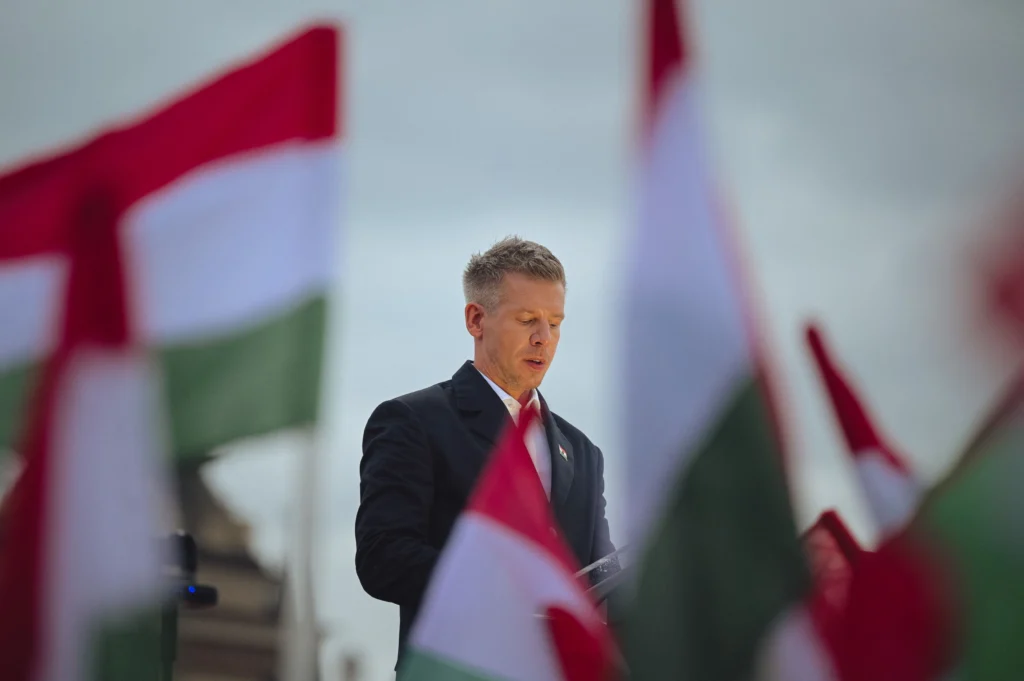
12 Prime Ministers in 16 years
In reality, although Hungary and Romania are democratic European states, the political systems of the two countries differ significantly.
And the differences are determined by the fundamental laws that establish the institutional framework, power relations within the state, how elections are conducted, and the duties of those who win them.
It may be little known, but Hungary did not adopt a new Constitution after the fall of communism in 1989. It functioned based on the old one, adopted in 1949, until 2011. It is true that in 1990, the new parliament voted with a large majority for 100 amendments that liberalized the communist Constitution.
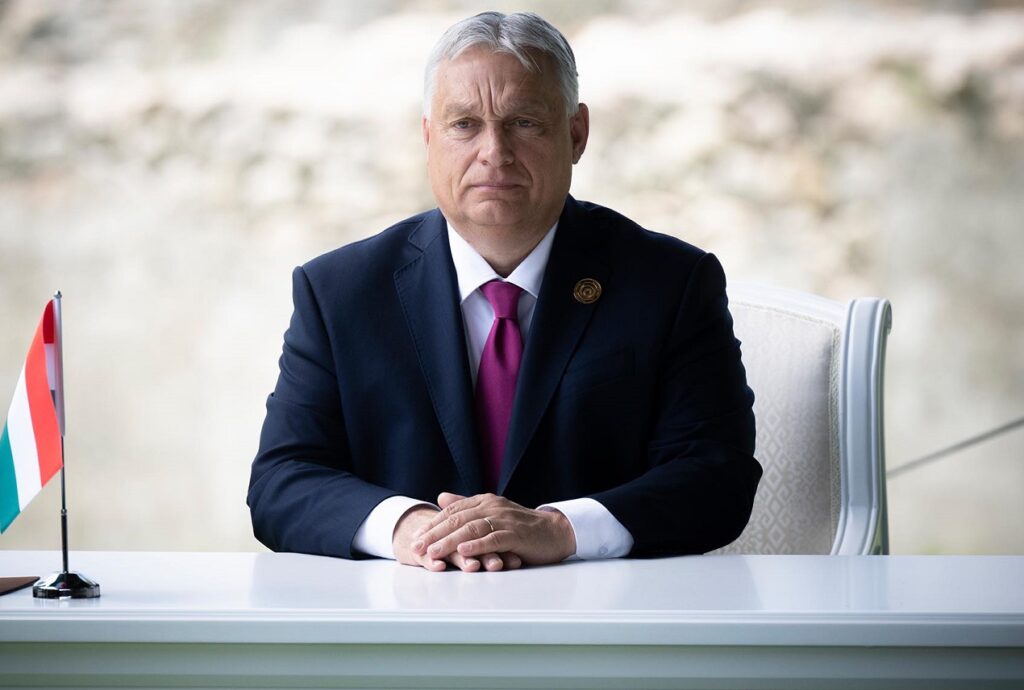
It should be noted that Viktor Orban, taking advantage of the victory in the 2010 elections when he returned to power, is asking Parliament to adopt a new fundamental law, one that will consolidate his power and help him retain the position of Prime Minister for 16 uninterrupted years.
To give you an idea of how different the political systems of the two countries are, in the same period of time, 2010 - 2026, Romania had 12 Prime Ministers.
Two Trends
The first Romanian Parliament was, in reality, a "Constituent Assembly," formed following the first free elections in May 1990.
Thus, in November 1991, following the vote in this parliament with limited powers to write and adopt a Constitution, Romanian citizens were called to a referendum to validate the new fundamental law.
The greatest concern of those who drafted the text of the Constitution was to reconcile two major trends in Romanian society that emerged after the fall of Ceaușescu's dictatorship:
- The popular desire to directly elect the President of Romania;
- The new fundamental law should not allow the emergence of a new authoritarian leader;
A Viktor Orban Cannot Emerge in Romania
This principle, ardently pursued throughout the years 1990 and 1991, led to the creation of a power system fragmented between two fundamental institutions - the president and the Parliament - both directly elected by citizens.
From this principle arose the continuous conflict between the head of state and the prime minister (the latter being the leader of the parliamentary majority formed after the elections), which created a politically unstable environment in the last 36 years.
However, although this conflict encourages confrontation and political volatility, the principle has achieved its purpose: in Romania, authoritarian leaders have not emerged, despite attempts, sometimes brutal, by certain parties, coalitions, and alliances.
Following the revision of the Constitution in 2003, the institutional conflict principle was maintained, further deepened by extending the term of the President of Romania from 4 to 5 years. Thus, the moment of electing the head of state is separated from that of electing Parliament, increasing the period of confrontation between political blocs that always seek to take over power in its entirety, both parliamentary and presidential.
The Major Difference Between Romania and Hungary
The political system in Hungary is much more stable than in Romania, but it generates dictatorship because the fundamental law encourages the formation of supermajorities in Parliament. The President of Hungary has limited and honorary powers, without being directly elected, so power is concentrated in the hands of a single person: the leader of the majority, namely the Prime Minister.
Due to the political system in Hungary, Peter Magyar is highly likely to become a second Viktor Orbán within a few years if the new parliament does not quickly amend the Constitution.
The major difference between Romania and Hungary is that in Bucharest, difficult and reformative political decisions are made slowly and rarely, only when the President and Prime Minister belong to the same political camp and enjoy broad support in Parliament. However, even in this case, the window of opportunity is small due to the inevitable conflict between the two, resulting from different agendas and political objectives.
Therefore, in Romania, the most important decisions for citizens are made under the pressure of major events that endanger the existence of the political system itself: revolts, wars, catastrophes, major corruption scandals, external threats, etc.
In Hungary, major political decisions are made quickly and easily, but in favor of a single political bloc, which quickly leads to authoritarianism and corruption.
There is no perfect constitutional system, there is no ideal democracy, and there are no savior politicians who do not quickly turn into dictators.
Although it is difficult to understand and accept, we live in the world we wanted, we voted for it, and it has been shaped by internal and external events we have generated through our interactions.
Each individual can consider themselves perfect or much better than others, but the social reality, with its good and bad aspects, is the result of collective behavior and has no connection to what we imagine at an individual level.