

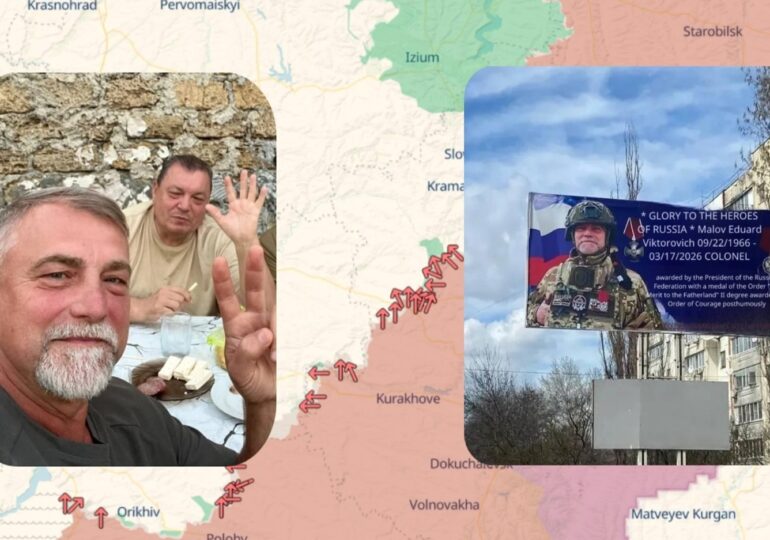
Volodimir Liapkin, a former general of the Ukrainian Security Service (SSU) who fled to Russia, has died fighting against Ukraine, as reported by the Russian press.
Major General Liapkin fled to Russia after the Euromaidan revolution in 2014 in Kiev. He was part of the Bars-33 unit of the Russian army and was killed in action in Ukraine on March 17, as reported by the independent Russian publication Mediazona.
The first information about Liapkin's death was published by former Ukrainian deputy Oleg Tsarov. Mediazona then independently confirmed the death, mentioning that a former officer of the emergency services in the Moscow region, Colonel Eduard Malov, was killed alongside Liapkin.
Liapkin held the position of head of the operational documentation department of the SSU during the presidential term of Viktor Yanukovych. According to Tsarov, the general's area of responsibility included "the invisible side of SSU activities - interceptions, external surveillance, and information collection."
Liapkin was promoted to major general in 2013 and took part in suppressing the protests in Kiev, according to Tsarov.
In February 2014, right after the victory of the protest movement, Liapkin was dismissed from the SSU along with other senior officers. He fled to Russia and settled in Crimea.
Following the Russian invasion and the occupation of Kherson, Liapkin was appointed deputy head of the so-called "State Security Service of the Kherson Region." The founder of this occupation structure was Liapkin's former superior in the SSU - Oleksandr Yakimenko, the head of the Ukrainian security service from January 2013 to February 2014, who also fled to Russia.
In 2025, the SSU compiled a report regarding suspicions of collaborationism against Volodimir Liapkin. According to the investigation, in his roles as deputy head and interim head of the "State Security Service," he was involved in "filtering measures" and repression against the civilian population. The SSU believes that following the official dissolution of the "State Security Service," its successor became the FSB department for the occupied Kherson region.