
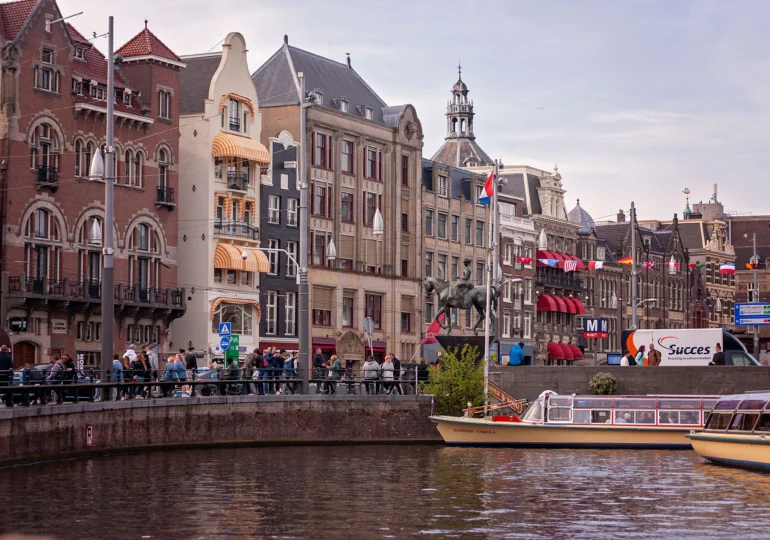
A city break in one of the most well-known European destinations will become considerably more expensive in the coming years. The tourist tax will gradually increase from 12.5% to 20%, making it one of the highest in the world.
This concerns Amsterdam, where the new local coalition formed by PRO Amsterdam and D66 has decided to implement the increase until 2031. Authorities are thus attempting to reduce the number of visitors and obtain a larger contribution from them towards the city’s expenses, as reported by the Dutch public post NOS.
The capital of the Netherlands has been trying for several years to limit excessive tourism, after the number of overnight stays consistently exceeded the municipality's threshold of 20 million per year.
Taxes will reach 41% of the accommodation price
The tourist tax is applied on top of the VAT for hotel accommodation, which increased this year across the Netherlands from 9% to 21%.
Therefore, the total taxation of a hotel room in Amsterdam will rise from 21.5%, as it was last year, to 41% in 2031. The tax burden will thus be almost doubled.
Amsterdam already has the highest tourist tax in Europe, with a rate of 12.5% of the accommodation price excluding VAT, according to a comparison made by the hoteliers' organization Koninklijke Horeca Nederland (KHN).
After the increase to 20%, the city will rank among the destinations with the highest tourist taxes in the world. Los Angeles currently applies a rate of 14%, and NOS indicates that Bhutan is expected to remain one of the few places where foreign tourists pay more. There, the tax is not a percentage but reaches, in most cases, $100 per person per night.
Hoteliers demand a national limit
The Dutch hotel industry opposes the increase. KHN has asked the Hague Government to set a nationwide limit for tourist taxes. The organization's representatives warn that the simultaneous increase in VAT and local taxes risks making the Netherlands less competitive compared to other destinations.
The Amsterdam City Council says it is aware of the hoteliers' concerns and is in discussions with sector representatives.
The effects are already being felt in Weesp, a town that will become part of the Amsterdam municipality from 2022, where the same tax is applied, although the area does not face an excessive number of visitors. The management of a local hotel claims that its occupancy rate has decreased by about 10% after the increase in tourist tax and VAT.
Neighboring cities, however, see a potential opportunity. Authorities in Amstelveen, where the tax is 4.75 euros per person per night, say that tourists wishing to visit Amsterdam may turn to accommodation units in nearby towns.
Amsterdam already accounts for a significant portion of the revenues obtained by Dutch municipalities from this tax. Out of the estimated 654 million euros for the whole year in the Netherlands, approximately 275 million euros – over 42% – go to the capital.
G.P.