
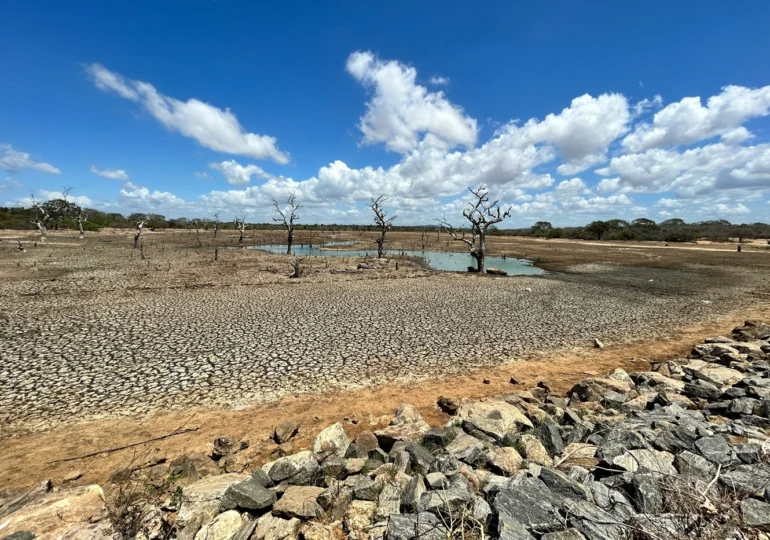
This year, El Niño could break records and have a major impact on the food sector, energy production, economies, and ecosystems.
Climatologists have warned that El Niño has officially begun. The natural phenomenon, which occurs irregularly every two to seven years, occurs when sea surface temperatures in the eastern Pacific Ocean become unusually high.
This can lead to global temperature increases, paving the way for extreme events. The last El Niño occurred between May 2023 and March 2024 and contributed to record temperatures that fueled a series of deadly heatwaves, fires, and floods worldwide.
It is already anticipated that 2026 will be one of the hottest years ever recorded. The latest seasonal forecast from the European Centre for Medium-Range Weather Forecasts (ECMWF) warns that temperatures will be higher than normal this summer and early fall, as reported by Euronews.
Europe has already experienced a deadly heatwave in May, while meteorologists warn that temperatures of 40°C and "tropical nights" in the Mediterranean Sea are expected in the coming days.
But El Niño doesn't just impact temperature. Experts from the IHE Delft Institute for Water Education in the Netherlands have warned that the climatic phenomenon can have severe secondary effects, triggering drought, food insecurity, and even electricity shortages, as reported by Euronews.
The Impact of El Niño on Clean Energy
Lack of precipitation and low river flows can cause widespread electricity shortages, especially in regions where hydropower has a significant share of the energy mix. This can lead to higher costs and CO2 emissions, as electricity providers rely on fossil fuel-based alternatives such as oil and coal.
Climate change has already turned this scenario into reality before the onset of El Niño. Norway, often considered the "battery" of Europe due to its extensive dam networks, has recorded the lowest snowfall levels in the past two decades due to a warm and dry winter.
Experts say this has created a deficit of about 25 TWh. That's enough energy to power approximately 2.5 million homes for a year and nearly a fifth of Norway's total hydropower production from last year.
What is The Solar Paradox
Extreme heat can also reduce solar energy production due to the so-called solar paradox.
"It's a common misconception that more sun always means more energy," said Ioanna Vergini, the founder of wfy24.com, a platform analyzing meteorological data and climate volatility trends, to Euronews.
"Photovoltaic (PV) cells are semiconductors and, like all electronics, lose efficiency as temperature rises."
For every degree above 25°C, the efficiency of solar panels decreases by approximately 0.4 to 0.5%.
How El Niño Will Affect Food Security
IHE Delft works in areas directly affected by El Niño and warns that food shortages could worsen in the next two years.
In Nicaragua, for example, key crops such as corn and beans may be lost in already fragile areas, leading to food insecurity and income losses.
Lack of rain and low river flows also mean that in Colombia, northeastern Brazil, and India, irrigated crops will face severe restrictions or will need to rely more on groundwater, which could lead to overexploitation.
This is a cause for concern for the EU, which annually imports about €188.6 billion worth of food from other countries. Staple foods such as wheat, corn, and cocoa are particularly vulnerable to failures in extreme climates.
Episodes of Severe Drought in Europe
Experts warn that El Niño is expected to trigger severe global droughts in 2026 and 2027, and Europe is not immune to this phenomenon.
"Warmer and drier meteorological forecasts for the Netherlands and across Europe will increase the risk of heatwaves and vegetation fires, which drought events like those in 2018 and 2022 have shown to have significant consequences on ecosystems and human health," warns IHE Delft.
Low river flows in Europe will reduce the availability of fresh water, which could lead to agricultural restrictions and limitations on water use for cooling in power plants.
"The upcoming El Niño is a reminder that drought is not just an environmental issue. It affects food systems, energy production, economies, ecosystems, and human well-being. Building resilience requires actions before a crisis occurs," says Dr. Micha Werner, a drought resilience professor at the Department of Water Resources and Ecosystems at IHE Delft.
Awaiting a "Super" El Niño
The impending El Niño phenomenon has drawn global media attention, with headlines declaring the imminent arrival of a "super" El Niño. However, this is not an official scientific category and is not used by NOAA.
Climatologists have also warned that experts are leaning towards the "Super El Niño model" instead of focusing on the connection to climate change.
Researchers at Columbia University stated in a recent paper that while the intensity and frequency of El Niño are important, particularly whether they are altered by global warming, a more critical issue is the "continuing, extraordinary acceleration of ocean surface warming."
Some meteorologists predict that a typical El Niño event tends to cause a temporary increase of 0.1-0.2°C in the global average temperature. This is not as significant as temperature increases driven by climate change due to human activity, which have raised global surface temperatures by about 1.3-1.5°C above pre-industrial levels.
"El Niño is a natural phenomenon. It comes and goes. Climate change, on the other hand, worsens as long as we continue to burn fossil fuels. Therefore, climate change is the reason we should be alarmed," says climate science specialist Friederike Otto from Imperial College London.
T.D.