
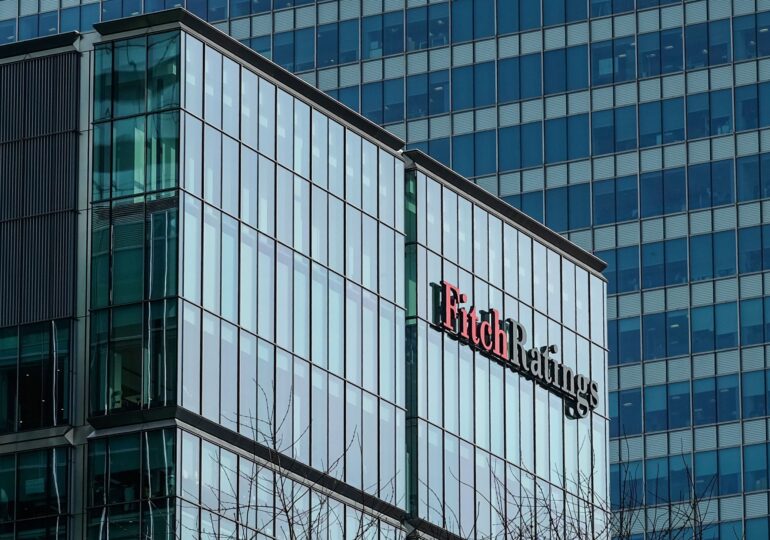
Romania risks losing its recommended investment rating if the current political crisis persists and the new government fails to quickly provide guarantees regarding the reduction of the budget deficit.
The warning comes from Malgorzata Krzywicka, an analyst at Fitch Ratings, in an interview with Bloomberg.
Fitch maintained Romania's sovereign rating at "BBB minus" with a negative outlook at the end of July, as reported by SpotMedia. This is the last step in the recommended investment category. The next evaluation is scheduled for January 2027.
Until then, the new government's ability to continue reducing the deficit and to present a credible budget for next year will be crucial in the agency's assessment. "The longer the crisis persists without a functional government, the more questions arise about fiscal predictability and the ability to make necessary adjustments," Krzywicka stated.
Each week of crisis raises the bar
Romania has had an interim government for over four months since the Cabinet led by Ilie Bolojan was dismissed by a vote of no confidence on May 5.
President Nicușor Dan designated European Parliament member Siegfried Mureșan as the Prime Minister on Thursday after consultations with parliamentary parties, as reported by SpotMedia.
Another failed attempt to appoint a government would bring Romania closer to the prospect of early elections. According to Bloomberg, such a scenario would prolong uncertainty and increase risks for the country's budget and rating.
Fitch warns that the threshold Romania needs to reach to maintain its rating increases with each week of political deadlock. "What was supposed to be a relatively short change of government when the Cabinet fell in the spring has extended beyond the summer. We are now already past the middle of September and still have no solution," Krzywicka said.
A further correction of 1.5% of GDP is still needed
Fitch estimates that Romania needs to further reduce the budget deficit by approximately 1.5 percentage points of GDP to stabilize the medium-term growth of public debt.
The agency anticipates a deficit of 5.9% of GDP for 2026, below the government's target of 6.2%. In the July assessment, Fitch warned that political instability reduces visibility on the fiscal strategy for the coming years and may delay the reforms needed to access European funds from the NRRP.
According to the agency's analysts, one of the main solutions to continue reducing the deficit is to improve tax and revenue collection. The possibilities for additional savings through spending cuts are limited after the austerity measures already implemented.
Krzywicka also rejected the idea that stronger economic growth could replace fiscal consolidation measures. "Those are marginal gains. They are far from the magnitude of adjustment that Romania needs to make. A stronger economic growth alone will not solve the problem of large deficits," Fitch's analyst stated.