

Europe is preparing for another decade of modest economic growth. According to the latest forecasts from the International Monetary Fund (IMF), the euro area’s economy will advance by an average of just 1.2% per year in the period 2027-2031, while that of the European Union by 1.4%.
However, there are a few exceptions. Five small European economies are expected to record growth rates over twice as high as the euro area average, according to an analysis by Euronews. These are Malta, Kosovo, Ukraine, Serbia, and the Republic of Moldova. In the case of Ukraine, the IMF’s forecast is based on the assumption that the intensity of the war decreases and the country begins its reconstruction.
### 1. Malta, the leader of economic growth in Europe
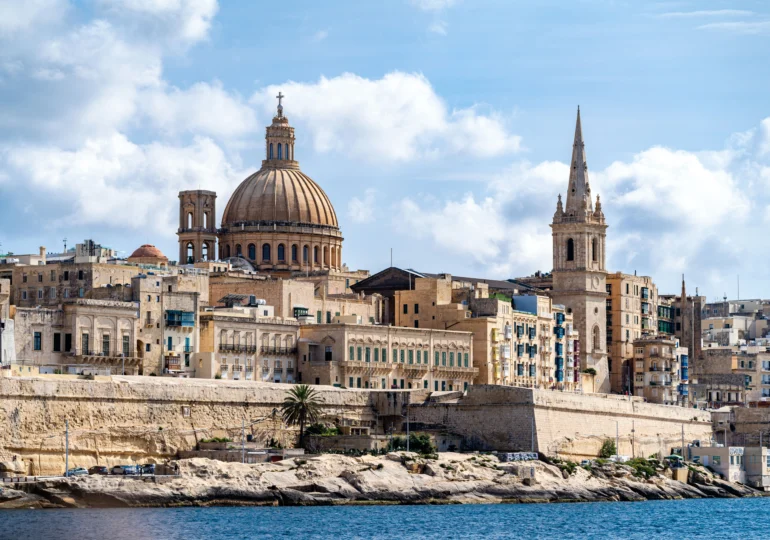
The IMF estimates that Malta will have the fastest economic growth in Europe over the next five years, with a pace close to 4% per year.
In the last decade, the island’s economy has developed spectacularly, with an average of nearly 7% annually, driven by tourism, online gambling industry, financial services, and professional services. The development has also been supported by attracting a large number of foreign workers.
However, this model is starting to reach its limits. Unemployment is close to historic lows, and the labor force shortage is increasing.
The IMF warns that the future of economic growth will depend less on expanding the labor market and more on increasing productivity, investing in infrastructure, education, innovation, and strengthening public finances.
### 2. Kosovo, supported by the diaspora and public investments
Kosovo is forecasted to grow by approximately 4% per year, placing it second in Europe.
The economy is mainly fueled by domestic consumption, public investments, and remittances sent by a large diaspora from Germany and Switzerland, funds that support both consumption and business investments.
The IMF believes that implementing the new European Growth Plan could further accelerate the economy.
At the same time, the institution draws attention to a significant vulnerability: the economy heavily depends on domestic demand and imports, with a limited export base.
### 3. Ukraine focuses on reconstruction
For Ukraine, the IMF estimates an average economic growth of 3.8% per year, with a peak of around 4.2% in 2028.
However, the forecast is based on the assumption that the war will decrease in intensity and that large-scale reconstruction will begin. According to World Bank estimates, the costs of rebuilding the country are already approaching $600 billion.
If this scenario does not materialize and the conflict continues, the perspective changes drastically. In the pessimistic scenario analyzed by the IMF, Ukraine’s economy would grow by only 1% in 2027.
The institution warns that the outlook remains extremely uncertain as long as the war continues to impact the economy and the population.
### 4. Serbia benefits from massive investments and Expo 2027
Serbia is credited with an average annual growth of 3.52%, mainly driven by public investments.
The main engine is the preparations for Expo 2027, which will take place in Belgrade and entail significant investments in highways, railways, and urban development projects.
These are complemented by the expansion of export-oriented industries and Chinese investments in copper mining.
The IMF appreciates that Serbia has strengthened its macroeconomic position after reducing inflation and maintaining fiscal discipline, but warns that political tensions ahead of the 2027 elections and the efficiency of public investments will be essential to maintaining the growth pace.
### 5. Moldova continues to focus on European integration
Moldova completes the ranking with an estimated average growth of 3.5% per year.
The economy is recovering after a challenging period marked by the war in Ukraine, energy crisis, and drought that almost completely halted growth in 2024.
According to the IMF, the recovery is supported by European funds and the reforms necessary for EU accession. Moldova obtained candidate country status in 2022, and accession negotiations began in 2024.
Population consumption, boosted by real wage growth and remittances from abroad, remains one of the main pillars of the economy, alongside the IT sector and services.
However, the IMF warns that the biggest risks remain the evolution of the war in Ukraine and a potential slowdown in the reforms related to the European Union relationship.
### Romania remains below regional leaders
At the other end of the ranking are the major economies of Western Europe. According to IMF forecasts presented by Euronews, Germany has the weakest growth prospects among European economies in the medium term, with an average annual pace of under 1% in the period 2027-2031.
Among the economies with the most modest outlooks are Austria, France, and Italy, all estimated to grow at a pace close to or even below the euro area average.
Although Romania is expected to grow faster than the euro area average, it is not among the economies with the fastest evolution in Europe. IMF estimates place Romania around an average annual pace of 2.5-2.7% in the period 2027-2031, well below the leaders of the ranking, approaching 4% per year.