
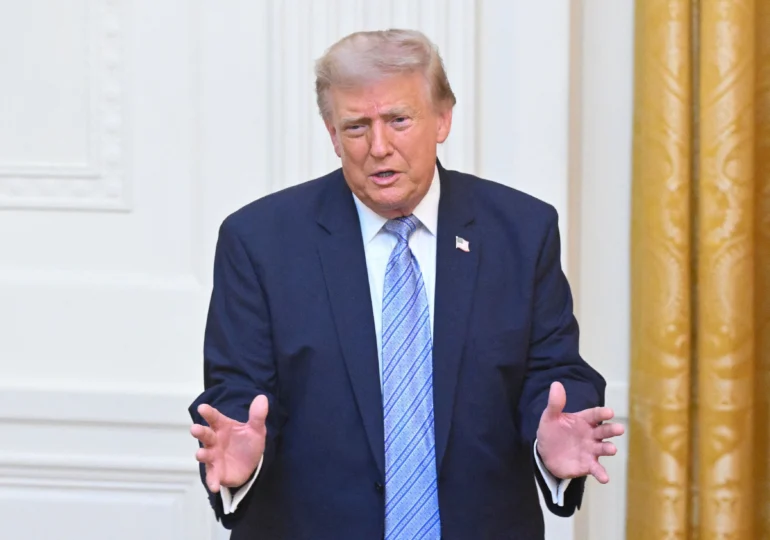
Almost five months into the war with Iran, the Donald Trump administration is trying to combine military pressure with diplomatic efforts, but with no visible results so far. Although American bombardments have been suspended to make room for negotiations, Washington warns that it is prepared for a new escalation if the discussions fail.
In an analysis published on Monday, CNN shows that the American president is facing an increasingly difficult dilemma: each new stage of the conflict narrows his options and increases the political and military costs.
Diplomacy at a Standstill
Although there are some signs of diplomatic activity - Iran has confirmed recent discussions with Oman at the level of deputy foreign ministers - there are no indications that the Islamic Republic would give up its main demand: control over maritime traffic through the Strait of Hormuz.
Stephen Collinson, the author of the analysis, says that Trump is once again trying to force concessions by escalating attacks, but this strategy is not yielding better results than in the early stages of the war.
A potential deployment of ground troops could leverage American military superiority, but it would involve the risk of significant losses in a conflict already unpopular among the U.S. public, where 18 American soldiers have already died, and over 600 have been injured.
The CNN analyst emphasizes that although Trump initially promised a war lasting only a few weeks, after almost five months of fighting, his room for maneuver has significantly diminished.
Pressure Mounts Domestically
According to the analysis, front difficulties are compounded by political and economic problems.
The recent rise in oil prices risks leading to higher fuel costs in the United States, at a time when the majority of Americans oppose the war. Additionally, Houthi rebels in Yemen, supported by Iran, threaten the alternative oil transportation route through the Red Sea, while global oil stocks are approaching critical levels.
All of this is happening ahead of the November parliamentary elections, where Republicans are already facing challenging prospects.
Even the White House Is Not Convinced that Escalation Will Work
Stephen Collinson notes that Trump could order new attacks on Iran's transportation and energy infrastructure, but even some of his close associates doubt that such a strategy would prompt Tehran to change its position.
CNN reports that in a meeting held at the White House on Friday, Vice President JD Vance and Chief of Staff General Dan Caine expressed concern about a potential escalation.
Furthermore, according to the American outlet, both the CIA and the Defense Intelligence Agency estimate that recent bombings are unlikely to alter Iran's position in negotiations.
The analysis also indicates that tightening the economic blockade against Iran would take months to have an effect and could prompt Tehran to resume attacks on tankers in the Strait of Hormuz, amplifying the conflict's impact on the global economy.
No Clear Way Out in Sight
Another option would be to resume the memorandum of understanding that led to a ceasefire in April. However, according to Collinson, Iran would likely only agree if granted the right to regulate and tax traffic through the Strait of Hormuz, which would represent a political defeat for Washington.
In this context, Republican Senator Bill Cassidy stated on Sunday to CNN that "something different" is needed and called for a national dialogue on the direction of the war.
However, the analysis's conclusion is grim: after five months of conflict, no one seems to have identified a realistic solution that would allow the United States to achieve its objectives without increasingly high political and military costs.
According to Stephen Collinson, Donald Trump has been trying for months to force Iran's capitulation without involving the United States in a new ground war in the Middle East. However, the experience so far suggests that this conflict may not be winnable within the limits he has set for himself, and each new escalation risks only bringing him back to the same dilemma, without a clear path to peace.
G.P.