
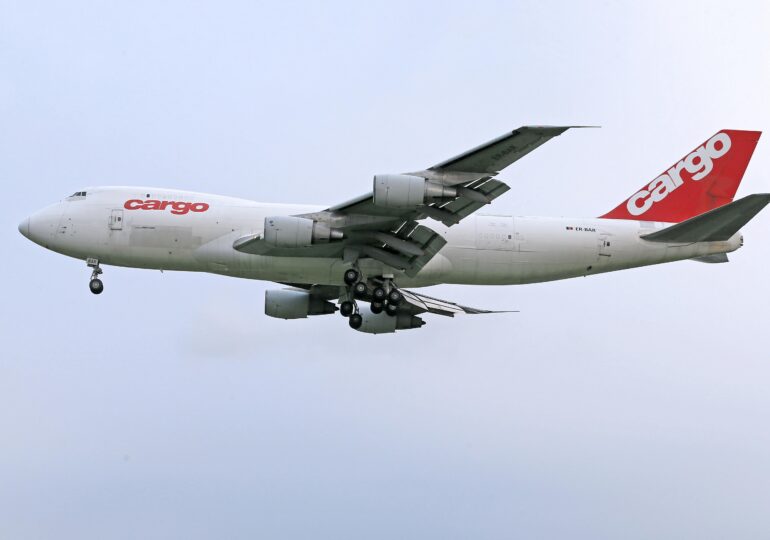
The escalation of the conflict in the Middle East is seriously disrupting global air cargo transportation, affecting supply chains for all kinds of products, from fresh fruits and medicines to aircraft parts.
The global capacity for air cargo transport has decreased by over a fifth in just a few days, and transport rates are already starting to rise, according to data cited by Reuters.
The closure of the airspace in the region and the suspension of many commercial flights have paralyzed one of the world's most important logistics hubs.
Gulf hubs paralyzed by conflict
The war initiated by the US and Israel against Iran has led to the cessation of numerous passenger and cargo flights throughout the Middle East region, including in major air hubs in Doha and Dubai.
According to data from the aviation and logistics consultancy firm Aevean, global air cargo transport capacity has decreased by approximately 22% from February 28 to March 3, compared to the four previous days in February, before the Chinese New Year.
"It's a complete stoppage of the supply chain to the Middle East," said Abdol Moaberry, director of the American company GA Telesis, specialized in providing parts and services for aircraft.
According to him, the company cannot send parts to the region, nor can it receive equipment that needs repair.
Global trade affected: from Apple to pharmaceutical products
Air cargo transportation represents about a third of global trade by value, according to the International Air Transport Association (IATA).
Among the products transported this way are electronics such as Apple products, medicines that require controlled temperature, fresh fruits, or auto parts. Many of these goods are transported either in the cargo holds of passenger aircraft or with dedicated cargo planes.
Airlines in the Middle East provide approximately 13% of global air cargo transport capacity, according to Aevean data, explaining the major impact of the regional blockade.
Europe and Asia most exposed to disruptions
The effects are particularly felt on commercial routes between Asia and Europe, which heavily rely on the Gulf hubs.
Brian Bourke, Chief Commercial Officer at SEKO Logistics, warns that Europe and the Asia-Pacific region will feel the disruptions most rapidly. "Companies in the US should be cautious. But the impact is not as immediate as when you are in Europe or in Asia or Australia," Bourke explained.
According to Aevean data, air transport capacity on the Asia-Middle East-Europe corridor has decreased by 39% since the start of the conflict.
At the same time, direct capacity between China and Europe has increased by 26%.
Advantage for Chinese airlines
One of the unexpected effects of the crisis could be the competitive advantage of Chinese airlines.
According to Joshua Ng, a director at Alton Aviation Consultancy, Chinese operators can continue to use Russian airspace, which is forbidden to many Western companies after the invasion of Ukraine. This route allows for shorter flights and lower operational costs.
Transport rates starting to rise
Amid the decrease in capacity, freight rates for air cargo transportation have already begun to rise.
According to calculations by the company Freightos:
- Rates from Southeast Asia to Europe have increased by over 6%, reaching $3.82/kg
- Transport from South Asia to Europe has become about 3% more expensive
- Rates to the United States have increased by about 5%
Joshua Ng warns that price increases could continue. "Whenever operational disruptions increase costs or reduce capacity, air transport rates tend to come under upward pressure. In the short term, shippers could start to see higher spot rates on the Asia-Europe corridor, especially if the disruptions persist," he said.
Aircraft parts stuck in the logistics chain
The issues are particularly sensitive in the aviation industry, where many critical components are exclusively transported by air.
The Swiss logistics company Kuehne+Nagel warns that delivery delays could occur as early as next week, especially for shipments from Southeast Asia and China to Europe and the United States.
In 2025, air transport of aerospace products to and from the Middle East accounted for 6.7% of the global total of such deliveries, according to the company.
Amyr Qureshi, Vice President of Aventure Aviation, explains that carriers urgently request parts to keep the aircraft ready for flight. "Even if the aircraft is not flying due to the war, it needs to be flight-ready for when the skies reopen," Qureshi said.
He warns that the lack of a single component can keep an aircraft grounded for a long time. "If the part does not arrive on time, the plane stays longer in the hangar," he explained, describing the situation as a 'domino effect'.