
Four years after the invasion of Ukraine, discontent is beginning to surface in Russia, against the backdrop of increasingly frequent issues with the Internet and the restrictions weighing on daily life. However, the Kremlin’s response is familiar: more control, more repression.
Internet problems in Russian cities have become more frequent and have started to provoke visible reactions among citizens. The disruptions affect online commerce, essential applications, and services, turning daily life into a constant exercise of adaptation, as shown in an analysis by CNN.
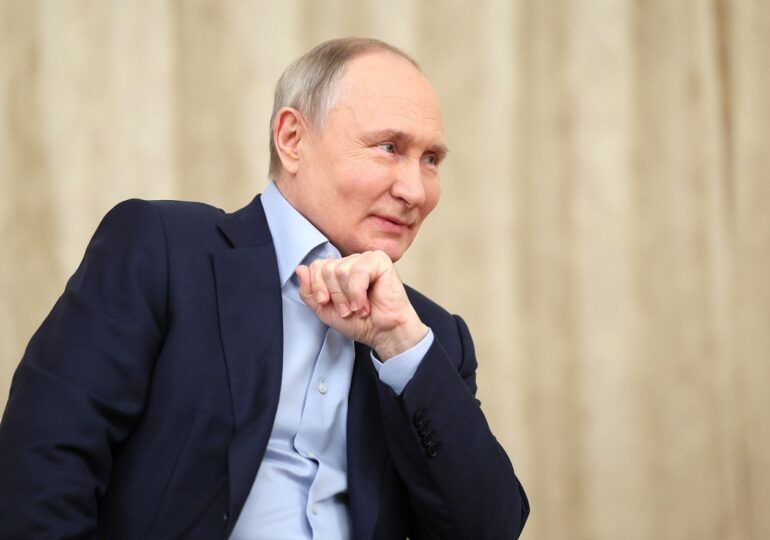
President Vladimir Putin acknowledged the situation but downplayed the impact, stating that such incidents are "rare" and are related to security measures to prevent terrorist attacks. At the same time, he suggested that the public should not be informed in detail to avoid compromising operations.
A new wave of arrests and political searches
In parallel with social discontent, Russian authorities have launched visible repressive actions in recent weeks: arrests, searches, and politically motivated investigations.
A recent case involves the publisher Eksmo, one of the largest in Russia, where investigators detained employees in a case of "LGBTQ propaganda." At the center of the investigation is a bestselling book about a relationship between two young people, published by the Popcorn Books imprint, already closed by the authorities.
This measure comes after, in 2023, the Russian Supreme Court declared the "international LGBTQ movement" as an extremist organization, significantly increasing the criminal risks for activists – or even for publishers.
Independent press pushed further to the margins
Repression does not stop at the publishing industry. Earlier this month, the police raided the headquarters of the independent publication Novaya Gazeta, in a new episode confirming the accelerated restriction of freedom of expression.
Journalist Oleg Roldugin was detained for questioning in a case involving alleged illegal handling of personal data, accusations he denied. Even though he was released, the intimidation effect is evident.
After the print edition was closed in 2022, following the invasion of Ukraine, Novaya Gazeta continues online, but the constant pressure further reduces the remaining space for independent press.
Controlled internet and banned networks
Access to information is already severely limited in Russia. Popular platforms like Facebook and Instagram are banned, and authorities promote a state-controlled messaging app, MAX.
At the same time, the human rights organization Memorial has been designated as "extremist," a decision criticized by the UN High Commissioner for Human Rights, Volker Türk, who warns that this treats critical human rights activities as a crime.
Ghosts of the USSR resurface
In addition to current measures, Russian authorities are reintroducing symbols of the Soviet past into the public space. The FSB Academy has been renamed in honor of Felix Dzerjinski, the founder of the Soviet secret police.
At the same time, monuments dedicated to victims of repression have been dismantled, and symbolic gestures from the post-Soviet period are gradually being reversed. European states recently protested after the dismantling of a memorial in Siberia.
G.P.