

On March 10, hearings began at the CSM for the leadership positions of the General Prosecutor’s Office, DIICOT, and DNA. The procedure conducted by the Prosecutors’ Section of the CSM will last a week, and the recommendations made are consultative for the President of Romania.
There is significant dissatisfaction in society regarding the crisis in the justice system, as well as the proposals made by Radu Marinescu (PSD), the minister in charge, for the leadership of the prosecutor’s offices, individuals who are set to lead the three major institutions for the next three years.
Among the voters of Nicușor Dan, irritation arises from the signals that he is likely to accept proposals coming from the Ministry of Justice, despite several experts and voices from civil society accusing the appointment of Marius Voineag as Deputy Chief Prosecutor at the General Prosecutor’s Office, former head of DNA, and Alex Florența at DIICOT, former chief prosecutor.
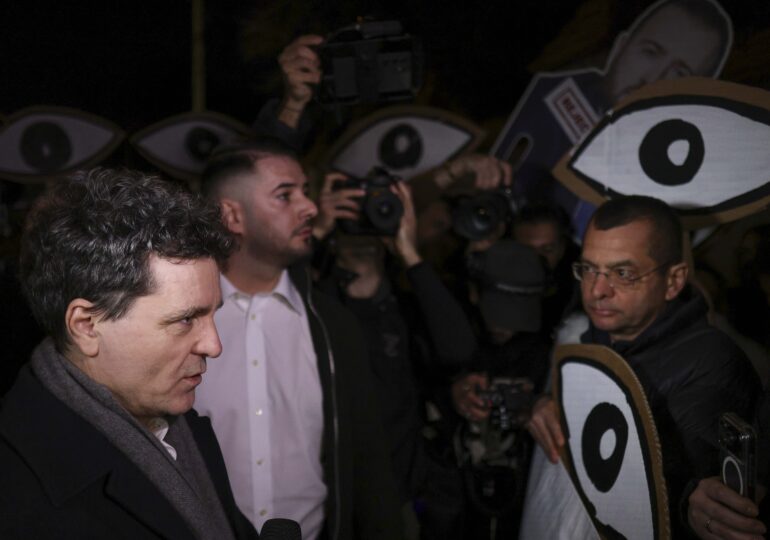
During a protest organized by the civic platform Declic at the Cotroceni Palace, attendees argued that the aforementioned appointments resemble the "rotation of cadres" from the communist era, accusing an unjustified extension of the mandate for two former chief prosecutors.
Scandalous Appointments
Furthermore, the proposal of Cristina Chiriac, chief prosecutor of DNA Iași, for the position of general prosecutor, has been considered inappropriate by several voices, including politicians and former ministers.
"Selecting individuals surrounded by major controversies, such as Ms. Cristina Chiriac — who has been alleged to have hidden evidence at one point in a case of rape involving minors — or Mr. Gill Iacobici from Constanța, with clear ties to the PSD and relatives convicted of fraud with European funds, seems absolutely scandalous," stated Stelian Ion, USR deputy, former Minister of Justice, in a post on his Facebook page.
USR is the party that unconditionally supported Nicușor Dan in last year's electoral campaign, which led to his presidency.
"What I can tell you is that the appointments I will sign, I will take responsibility for, meaning the prosecutors I will appoint will have my endorsement... I have a hundred times more information than you do about the situation in the judiciary," stated Nicușor Dan, who came out to talk to protesters in front of the Cotroceni Palace during a rally organized last week.
Attack on the President
Although, at the public opinion level, after the assault by Liviu Dragnea and the PSD on the presidential institution, the justice system, and the Parliament, in the context where the Social Democrats won the 2016 parliamentary elections by a large margin, the idea has solidified that the head of state has lost much of the power to influence the appointment of prosecutors, an interesting legislative evolution, less discussed, shows the opposite.
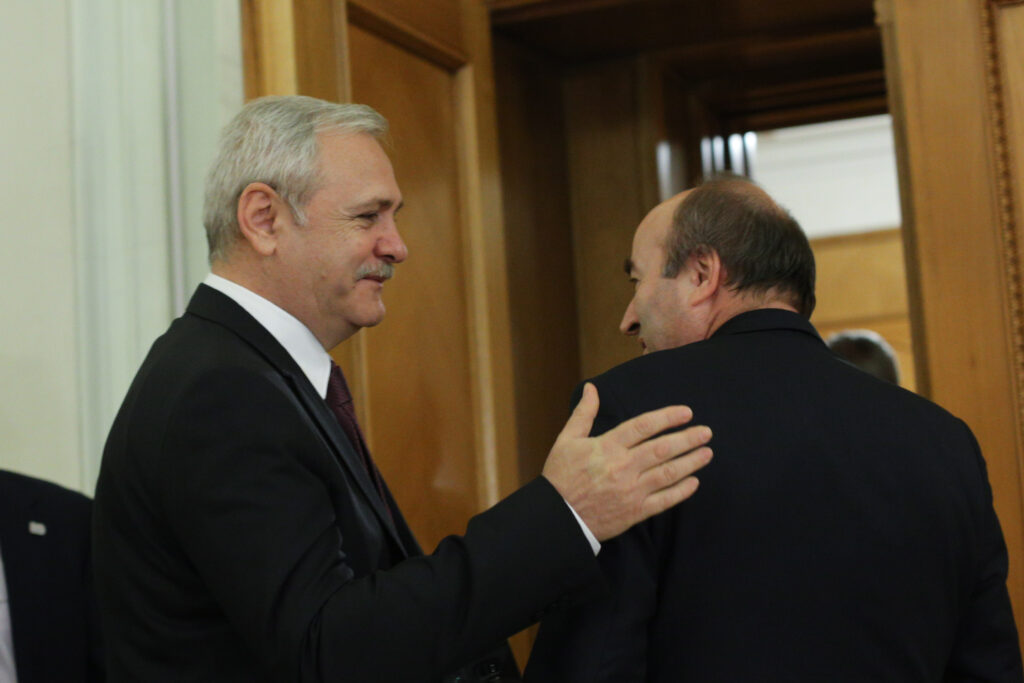
Tudorel Toader, Minister of Justice between 2017 and 2019, under the guidance of Liviu Dragnea, leads a veritable institutional assault to erode Iohannis's power and for the PSD to take total control of the judiciary, aiming to neutralize the investigations conducted by the DNA prosecutors, led by Laura Codruța Kovesi.
In January 2018, the parliamentary majority voted on a law amending the status of prosecutors and judges, and before promulgation, the law reached the CCR, being challenged by liberal parliamentarians, as well as by the High Court of Cassation and Justice.
At the CCR, led at that time by Valer Dorneanu, a close associate of Dragnea and former PSD parliamentarian, the decision was made that the President of Romania would no longer have the possibility to reject the appointments of prosecutors made by the Minister of Justice.
A majority of constitutional judges decided that the head of state can reject a proposal once, with justification, and then must accept the names coming from the Government.
"The legislator opted for a procedure in which the Government and the President collaborate. However, the central role in this equation is held by the Minister of Justice, under whose authority prosecutors in the prosecutor's offices operate. The President of Romania has no express constitutional attribute justifying a veto in this matter. Therefore, if the organic legislator has chosen such a nomination procedure, maintaining a presidential veto limited to refusing a single appointment proposal to the leadership positions provided for in art. 54 para. (1) of the law, it has respected the constitutional role of the Minister of Justice in relation to the prosecutors, the President being granted the appointment role considering the solemnity of the act and the need for constant collaboration and consultation within the bifocal executive," states the reasoning from January 30, 2018 of the Constitutional Court.
A Step-by-Step Change
Four years later, after the disappearance of Liviu Dragnea and Tudorel Toader from Romanian politics, in the new package of justice laws aimed at removing Romania from the CVM monitoring, the law is once again amended, and the President of Romania regains the lost powers regarding the ability to repeatedly reject proposals from the Government, provided they are justified.
"The President of Romania can refuse, with justification, the appointment to the leadership positions provided for in art. 144 para. (1), making the reasons for refusal public. The decree of the President of Romania for appointment or his justified refusal is issued within a maximum of 60 days from the date of the proposal transmitted by the Minister of Justice," states article 148, paragraph 4 of Law 303/2022.
Four years later, after the Dragnea - Toader - Dorneanu operation, the new parliamentary majority of PSD-PNL, created by Klaus Iohannis, grants him significant power in relation to the judiciary, a power from which he had been stripped following Liviu Dragnea's actions.
Due to the pandemic and the war in Ukraine, during that period, the issues in the judiciary disappeared from the public opinion radar, leading to the current crisis. Thus, the legislative change went unnoticed, with neither Klaus Iohannis nor the parliamentary majority interested in discussing it.
It should be noted that, for the first time on this subject, Epoch Times publication covered it, with journalist Loredana Diacu publishing a legal opinion on this matter from Judge Daniela Panioglu.
Clear Intention of the Legislator to Restore the President's Powers
"The amendments were drafted in the first form during Cătălin Predoiu's tenure. This point remained unchanged in terms of eliminating that express limitation from the law... It was a clear intention of the legislator at that time. The law was voted on by everyone. It's true, in the explanatory memorandum, if you look, the change from 2018 was not expressly mentioned. This means it was not accidental and it was not a mistake," explained Stelian Ion, USR deputy, former Minister of Justice, to spotmedia.ro.
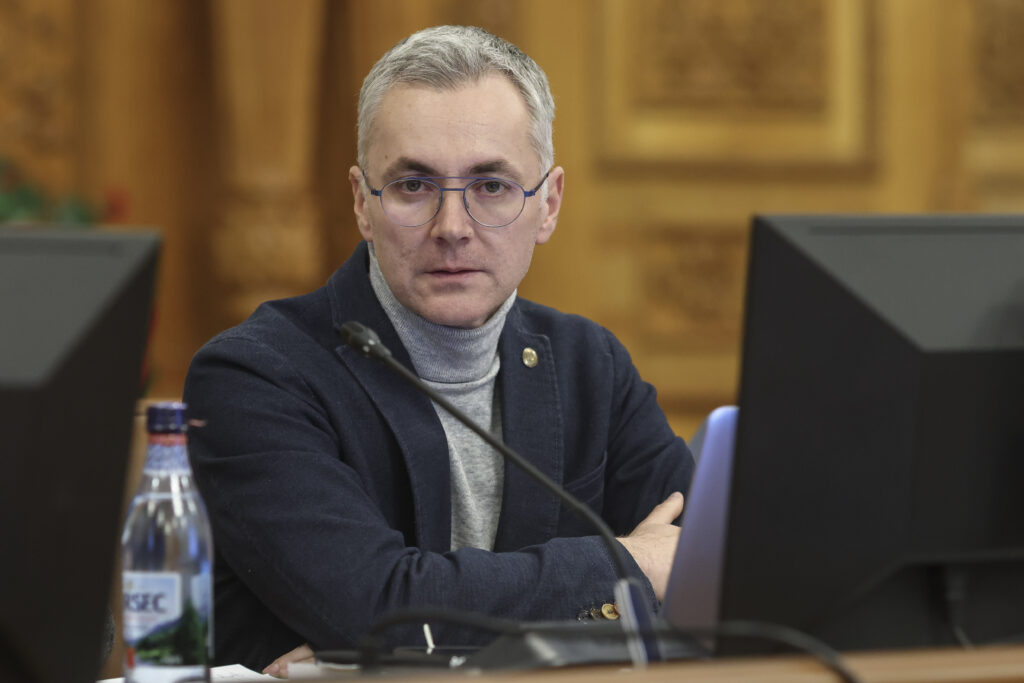
"The President of Romania cannot have a decorative role in the prosecutor appointment procedure. There were two options. An extreme one: not being able to refuse in this matter even once. The other, maximal variant would be to be able to refuse as many times as desired. The law no longer mentions anything, but from how the 2018 Constitutional Court decision is worded, it would appear that even that would not be quite right, for the President to block appointments indefinitely, until he convinces the minister to propose whoever he wants," explained Deputy Stelian Ion to spotmedia.ro.
"An equilibrium was sought. That is, the President can refuse multiple times. Who decides if he has overstepped? The Constitutional Court, because it leads to a constitutional legal conflict," added the former Minister of Justice.
Amid the interviews taking place at the CSM these days, and the growing interest of a part of the public opinion in the negotiations and appointments of chief prosecutors, at least from a legal standpoint, the President of Romania has stronger levers than he did during Liviu Dragnea's time.
Whether he will use them remains to be seen, but certainly Nicușor Dan can project his own vision in the selection and validation procedures of the heads of the major prosecutor's offices. Thus, the statement of the President in front of the Cotroceni Palace, "the prosecutors appointed by me will have my endorsement," gains a new weight.