
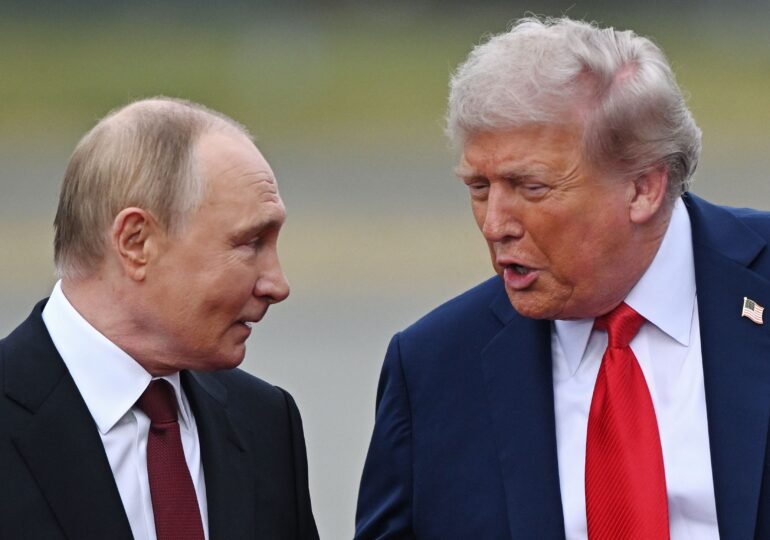
The increasingly harsh statements by US President Donald Trump regarding the utility of NATO and American commitments within the alliance are causing concern in Europe, amidst a context of war and global tensions.
Experts warn that Washington’s messages risk undermining collective security and providing a direct advantage to Russia, as shown in an analysis by Kiev Independent.
Trump questions NATO's role
After failing to convince European allies to join the US-Israel war against Iran, Trump resumed criticism of NATO and suggested that the United States no longer has the same obligation to its European partners.
"We would have always been there for them, but now, based on their actions, I guess we don't have to be, right?" the American leader declared at an investment forum in Miami.
The message was reinforced by Secretary of State Marco Rubio, who stated that Washington "will have to reevaluate" its relationship with NATO after the conflict ends.
Subsequently, Trump revisited, describing the alliance as a "paper tiger" and suggesting he is considering a potential withdrawal.
For many allies, these statements confirm fears that have arisen since Trump's reelection - that the US may relinquish its role as guarantor of European security.
"It is very serious"
Security experts say the risks are real and immediate.
"Article 5 is now in great danger. It is very serious," stated François Heisbourg, a security specialist at the Foundation for Strategic Research in Paris.
In the same vein, former US ambassador to Russia Michael McFaul warns that such messages directly aid the Kremlin.
"President Trump's comments are deeply disappointing. They are yet another gift to Vladimir Putin," McFaul said.
The moment is considered highly sensitive, as Russia continues its war in Ukraine, and the risk of a direct confrontation with NATO is increasing.
NATO seen as "transactional"
The Middle East war has deepened the rift between the US and Europe.
The Trump administration has asked European allies for concrete military support - including warships - to reopen the blocked Strait of Hormuz by Iran. However, European states, not consulted before the operation and not obligated to participate in offensive wars, have refused direct involvement.
Some countries have gone further and closed their airspace to American aircraft involved in the operation.
European leaders have made it clear that the Iran war "is not Europe's war." In response, Rubio invoked the support provided to Ukraine: "Ukraine is not America's war, and yet, we have contributed more than any other country in the world."
Jamie Shea, former NATO official and security expert, says this approach fundamentally changes the alliance's logic.
"Trump and Marco Rubio see NATO purely in transactional terms. NATO has never been about automatic support for every US foreign policy adventure, but that is what it is becoming now," he explained.
Ukraine, a possible collateral victim
Experts warn that tensions within NATO could have direct effects on support for Ukraine.
François Heisbourg says that in a scenario of political escalation, the Trump administration could redirect weapons purchased by Europeans to Kiev, or reduce existing support.
Although the US has largely halted new aid, it continues to provide essential information and hard-to-replace equipment, such as interceptor missiles for Patriot systems.
"Trump is escalating an old pattern with which other NATO leaders should already be familiar," said Jörn Fleck, an Atlantic Council expert, advising European leaders to avoid impulsive reactions to challenges.
Dangerous signals for Russia
Trump's relationship with NATO has been tense for years. In the 2024 election campaign, he said he would let Russia do "whatever the hell it wants" with allies that do not meet their defense budget commitments.
Meanwhile, NATO countries have increased spending - all reaching the 2% of GDP threshold, with the goal raised to 5%.
Nevertheless, tensions have persisted, including after Trump's pressures on Greenland and discussions about restricting voting rights for states that do not meet the new targets.
Additionally, the US administration is considering withdrawing troops from Germany again.
Although some analysts say Trump's positions can change rapidly, others warn of the immediate impact.
"Even if he frequently changes his messages, they send wrong signals to Russia and encourage the Kremlin in its attempts to undermine NATO," Shea warned.
G.P.