

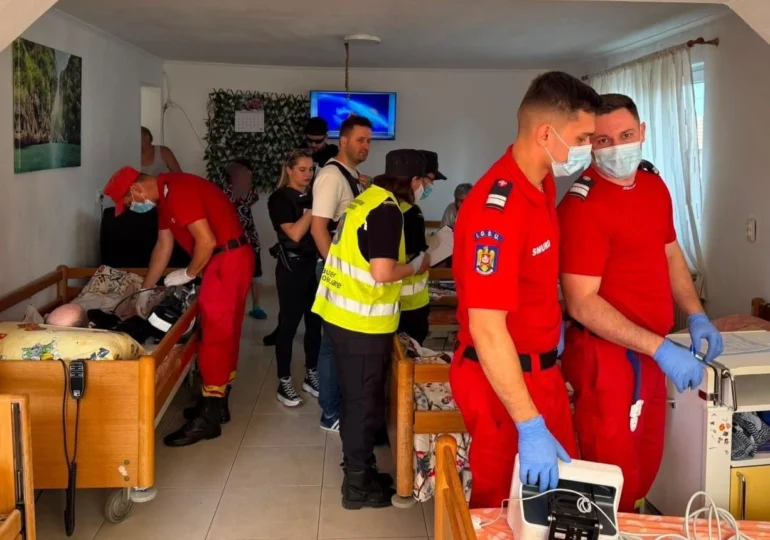
The strange and spectacular descent of prosecutors in Dumbrava, Bihor, has removed the political crisis from the agenda, although in reality, it has deepened it even more.
The compromising operation against Ilie Bolojan, launched by the PSD, magistrates, and associates of the president, has severed all ties between PNL-USR and PSD regarding a future collaboration for the formation of a new government.
As with all previous machinations orchestrated by the social democrats, Nicușor Dan remains silent, distancing himself from events, but this very lack of involvement infuriates people even more, increasing suspicions regarding his relationship with the PSD.
"...public institutions were the ones that facilitated the beneficiaries' access to the locations managed by the defendants, the vulnerability of the persons allegedly exploited being known to the public authorities, without them identifying or providing, concretely, viable protection alternatives...," as stated in the reasoning published by the judge who released Viorel Pașca and his family members from custody, placing them under judicial control.
Why did DIICOT intervene forcefully in Dumbrava?
In a future criminal trial, DIICOT prosecutors will struggle to overcome this court finding, one that jeopardizes the entire prosecution.
"This finding does not lead to the conclusion that the activity carried out by the defendants was, in itself, lawful or justified and neither does it exclude the possibility that, taking advantage of this social reality, the defendants may have sought to obtain patrimonial benefits through the modality described in the indictment. However, it demonstrates that the present case cannot be analyzed exclusively in light of the abstract gravity of the offenses investigated, without evaluating the essential circumstance that the activity carried out by the defendants developed and persisted over time in a context where even state institutions turned to the defendants to resolve situations that they were unable to manage through their own institutional mechanisms...," the court's reasoning further states.
The judge's exposition focuses on the prosecutors' arrest request in light of the presented evidence. However, at Dumbrava, other extremely serious events occurred, including the use of false information to alert the government and emergency services.
The activity carried out by the defendants developed and persisted over time in a context where even state institutions turned to them to resolve situations that they were unable to manage through their own institutional mechanisms
Court reasoning in Viorel Pașca's preventive arrest case
If Romania had a functional and independent justice system, the prosecutors from the General Prosecutor's Office, led by Cristina Chiriac, whom Nicușor Dan praised for 10 minutes on television, stating how perfect a professional she is, would self-seize, just as DIICOT did, and would try to find out why such a massive show of force was needed in Dumbrava, humiliating and endangering vulnerable individuals, and based on what evidence the ministries and emergency services were alerted to intervene?
It is crucial to note the following aspect: DIICOT acted forcefully in Dumbrava following a self-seizure procedure, claiming that the residents there were in imminent danger.
Therefore, that specific action is not based on the public alerting the authorities, not on calls to 112 made by residents, or on complaints addressed by them to the authorities, social services, DSU, or the police.
If, a day or two before the intervention, there were no such complaints and reports demonstrating urgency, then DIICOT's forceful action is unjustified.
An Unjustified Urgency
If the prosecutors had conducted a lengthy investigation with undercover agents and had gathered sufficient evidence, they could have intervened quietly, without a spectacle and without the massive show of force, using various public services, distressing elderly people, relocating them across the country without any plan.
"We urgently started transferring vulnerable individuals to authorized centers. I thank my colleagues in the field for their prompt intervention," wrote Dragoș Pîslaru, the interim Minister of Labor, on June 30, during DIICOT's intervention in Dumbrava.
"We have medical supervision and constant assistance for all identified individuals. A triage was conducted, and we have a clear record of options to help them," he further wrote, although it was later proven not to be the case.
"It is not my role to comment on DIICOT's decision. It is an investigation that has been ongoing for several months, following its course. And in the end, guilt will be decided in court, not on social media," Minister Pîslaru added.
Therefore, the government official had learned that DIICOT's investigation was a lengthy one, indirectly acknowledging that an urgent request for assistance was made to find solutions to transfer the residents from Dumbrava.
Justice Returns to Television
With each passing day, more evidence emerges that DIICOT's descent was politically orchestrated, with a clear target: Ilie Bolojan, former mayor of Oradea and former president of Bihor County Council.
Otherwise, if it were not a staged event, a prosecutor, a police officer, and a few social and medical assistants would have been needed to take over the care and supervision of the residents on-site, while Viorel Pașca was being interrogated and charged at the nearest police station, and then taken into custody.
But the shadow beneficiaries wanted a spectacle, the application of the law live on television and social media to create excitement and outrage.
Thus, the prosecutors "leaked" photos, testimonies from the case file, wiretaps to the in-house press, most taken out of context, to capture attention and fuel debate.
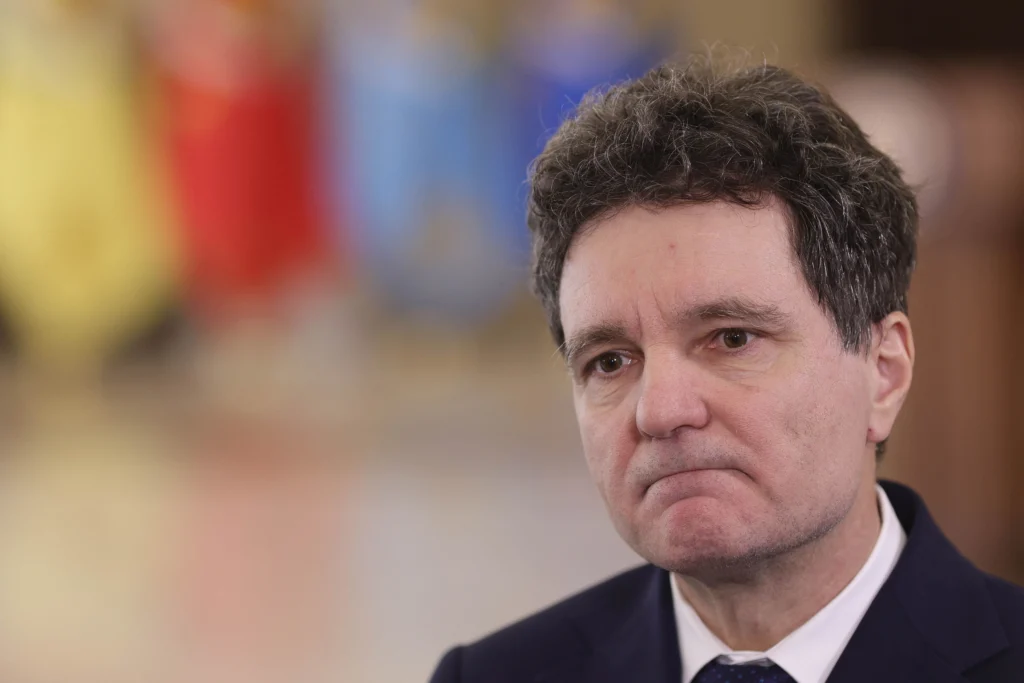
This occurred just a week after Nicușor Dan congratulated prosecutors and police officers for not leaking the "wiretaps" from the DNA investigation of Ciprian Ciucu, the mayor of Bucharest, to the press.
At that time, no one managed to understand what the president meant - whether he had read the transcripts, subtly conveyed to the prosecutors that it would have been politically beneficial to leak them, or that there were wiretaps and they might be released later, in other words, a subtle threat to the mayor.
But nothing created more confusion among the public than the contrast between the images publicized by DIICOT, with the massive intervention, rescues, police vehicles, dozens of police officers, prosecutors, emergency service personnel, and the images from the center, which appeared civilized compared to those from the "horror asylums" in Voluntari.
The above contradiction sparked the first suspicions that something fishy was going on, which, later on, was confirmed.