
Just a few months ago, she was finishing high school and had never touched a weapon. Today, Ella Adman, a 19-year-old from the Swedish island of Gotland, carries an assault rifle and prepares for her first official mission: guarding the royal family in Stockholm.
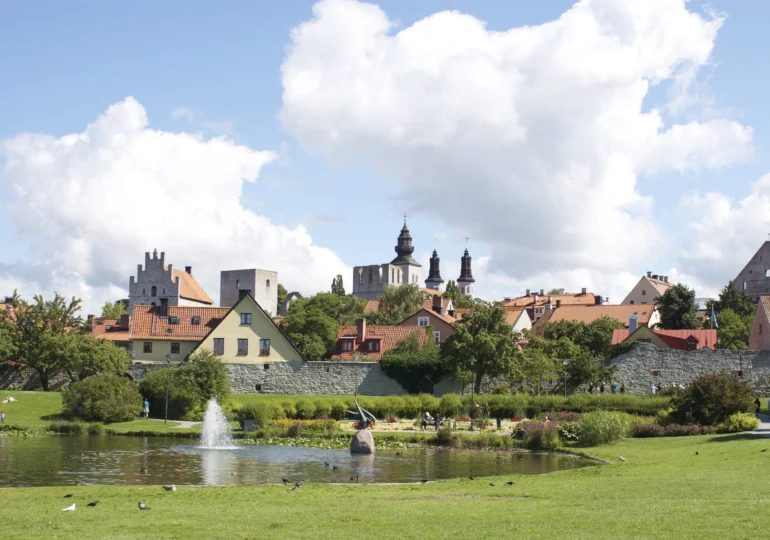
Her story reflects the rapid transformation that Gotland is undergoing, the Baltic Sea island that Sweden considers one of the most important strategic positions in Europe and aims to turn into a true fortress, amid the threat posed by Russia.
According to an analysis published by The Guardian, the remilitarization of the island goes hand in hand with preparing the civilian population for potential crisis situations, from sabotage to a possible military conflict.
The Island that Can Control the Baltic Sea
Located just 275 kilometers from the Russian exclave of Kaliningrad and 87 kilometers from the Swedish coast, Gotland is considered essential for NATO's security in the region.
"If you can control Gotland, you can control the Baltic Sea," explains Colonel Andreas Gustafsson, the commander of the Swedish ground forces on the island.
For this reason, Sweden's defense plans for the period 2025-2030 include the scenario of a surprise attack on Gotland, either from the air or sea, with the aim of Russia establishing an air and naval control zone in the central Baltic Sea.
According to the Swedish military, whoever controls the island can influence aerial and maritime operations throughout the region and can affect the arrival of NATO reinforcements to the Baltic states.
From Disarmament to Rearmament
At the end of the Cold War, Gotland hosted four regiments and could mobilize around 25,000 soldiers.
However, in 2005, the last permanent regiment was disbanded, as the Russian threat seemed to have vanished.
The situation changed dramatically after the annexation of Crimea in 2014, and since 2018, Regiment P18 has been reestablished. Following the large-scale invasion of Ukraine, the process of rearmament has accelerated, and the island now frequently hosts NATO exercises.
Meanwhile, Sweden has increased its defense spending to 2.8% of GDP in 2026 and aims to reach 3.1% of GDP starting in 2028. Additionally, it has expanded conscription to train more recruits.
"The Risk Is That Russia Becomes Desperate"
Colonel Gustafsson says that currently, there are no indications of an imminent conventional military attack on the island, but threats in the form of espionage and sabotage are considered much more likely.
At the same time, he warns that the situation could change rapidly if the war in Ukraine were to end, as Russia could redeploy its forces towards Finland and the Baltic states.
"The risk always exists that Russia could become desperate. The greater the pressure on Russia, the more desperate it can become," the Swedish commander asserts.
In the event of an attack, Sweden intends to defend the island without evacuating the population. The task force dedicated to defending Gotland could reach approximately 4,500 soldiers in case of mobilization.
Not Only the Military Is Preparing
In Gotland, it's not just the military training. Authorities have also launched an extensive civil resilience program, encouraging residents to be prepared for emergency situations.
Eva Rinblad, a 49-year-old medic, has expanded her own household, where she raises birds and grows vegetables, and last year, she started a local group with neighbors to prepare the community for a crisis.
Residents have begun to inventory the available resources in their neighborhoods - water, electricity, and communication means - and identify all alternative water sources. This measure is crucial, especially because Gotland frequently faces periods of drought and water consumption restrictions.
For the Swedish authorities, Gotland has become more than just a strategic island. It is the place where not only the army's ability to deter a Russian aggression is tested but also how the entire society can withstand a potential crisis.
G.P.