

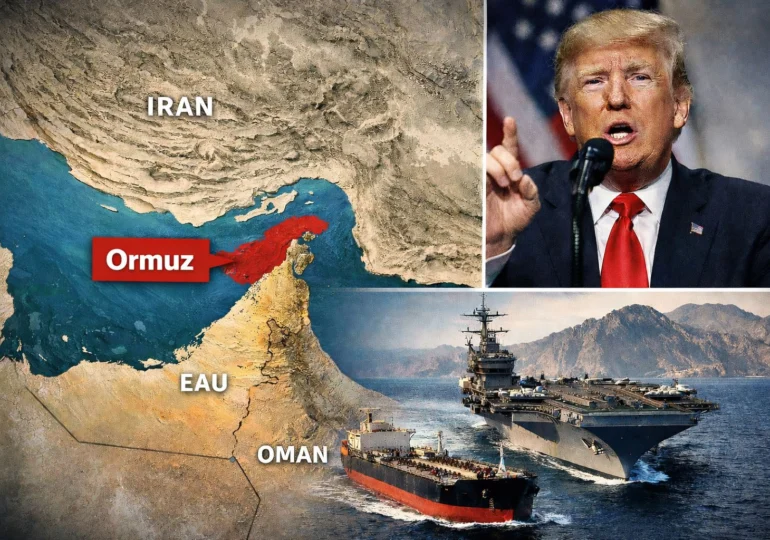
When the United States and Israel attacked Iran on February 28, Donald Trump was speaking of a short intervention. The American president claimed that the war would last only a few weeks and described it as a „little excursion.” Six months later, Iran has not capitulated, traffic through the Strait of Hormuz remains severely disrupted, and Washington does not seem to have a clear way out.
Meanwhile, the conflict has become deeply unpopular in the United States, has increased energy prices worldwide, and has consumed a significant portion of the American arsenal. However, the repercussions are felt far beyond the Middle East: Ukraine has fewer missiles to stop Russian attacks, military exercises in South Korea have been reduced, and the United States has temporarily been without an aircraft carrier in the western Pacific.
Two analyses published by Reuters and CNN show that the war, which was supposed to address the Iranian threat, risks weakening America's position in other hotspots around the world.
Objectives have changed, Iran has not yielded
The targets announced by Washington have become less ambitious as the war has dragged on.
The Trump administration initially demanded Iran's complete surrender, regime change in Tehran, and the abandonment of the nuclear program. More recently, the demands have focused on reopening the Strait of Hormuz and slowing down the Iranian nuclear program, as noted by CNN.
However, even these objectives have not been achieved. Traffic through Hormuz, where about a fifth of the world's energy is consumed, remains severely disrupted. Iran continues to possess drones and missiles and is capable of attacking American ships and military installations in the region.
Washington seems to have concluded that new bombings will not compel Iran to make enough concessions and is reverting to economic pressure. Secretary of State Marco Rubio told allies that it is unlikely for the U.S. to launch "for the time being" new attacks, according to Reuters.
Iran is seriously hit, but not defeated
The damages suffered by Iran are considerable. U.S. forces commander in the Middle East, Admiral Brad Cooper, stated in May that the U.S. military had destroyed 161 Iranian ships and rendered 82% of the country's anti-aircraft systems inoperable.
The Iranian air forces, which were conducting up to 100 missions per day before the war, were no longer operational. However, the United States could confirm with certainty the destruction of only about a third of Iran's vast missile arsenal. The status of another third was unclear, as some missiles could have been damaged or buried in tunnels and bunkers hit by bombings.
The war has killed thousands of people and deepened the Iranian economic crisis. In July, food prices were 128% higher than in the same period last year, according to Iran's Statistical Center.
However, the conflict has also had a favorable effect for the regime: it has pushed internal political disputes into the background and has been used to intensify repression against critical voices.
Nuclear program has been delayed, but not eliminated
American and Israeli attacks severely damaged three known uranium enrichment facilities and other targets suspected of being involved in activities related to nuclear weapons manufacturing. Several Iranian scientists involved in the program were killed.
American intelligence services estimated in May that Iran could need up to a year to produce enough fissile material for a nuclear bomb, compared to a maximum of six months before the war.
However, the true status of the program remains unknown. UN inspectors have not returned to nuclear facilities, and the International Atomic Energy Agency has been unable to verify the whereabouts of approximately 440 kilograms of enriched uranium at 60%.
The material could be further enriched to the level required for a weapon in a secret facility. Iran maintains that it is not seeking to manufacture an atomic bomb.
Costs have reached the population, and Trump is losing support
The war has been unpopular in the United States from the start, but opposition has increased with fuel prices.
Donald Trump's approval rating has dropped from 40% to 33% since the conflict began, according to a Reuters/Ipsos poll. Only 31% of Americans approve of the war, a lower level than that recorded for other American military interventions after a similar period. For example, the war in Afghanistan maintained support of over 50% for several years.
The price hikes are making Trump vulnerable ahead of the November parliamentary elections, where Republicans must defend fragile majorities in both chambers of Congress.
The conflict has also deepened the rift within the party. Isolationist Republicans are calling for a quick end to the war, while other congressmen want the military pressure on Tehran to continue.
Global economy has resisted better than expected
The blockade of the Strait of Hormuz has led to a significant increase in oil prices and fueled fears of a global recession.
The damages are significant but smaller than economists anticipated in the early weeks of the war. The International Monetary Fund has lowered its growth forecast twice and now estimates that the global economy will advance by 3% this year, compared to the 3.3% it anticipated in January.
Major economies today consume less energy to produce the same amount of goods as during the oil crises of the 1970s. Strong spending and investments, including those in artificial intelligence, have cushioned some of the shock.
However, the problems are not limited to oil. The closure of the strait has disrupted trade in gas and fertilizers, increased transportation and insurance costs, and affected supply chains.
Ukraine left with fewer missiles
As the United States and their allies consumed ammunition to repel Iranian attacks, some of the weapons prepared for Ukraine were redirected to the Middle East, according to CNN.
Volodymyr Zelensky stated that Ukraine has only a tenth of the interceptor missiles it urgently needs to stop the increasingly intense ballistic attacks by Russia.
The consequences are already visible. This summer has been the bloodiest period for Ukrainian civilians since May 2022.
The oil crisis has also weakened the economic campaign waged by the Trump administration against Moscow. Faced with rising gasoline prices in the United States, the American president lifted some of the sanctions imposed on Russian oil exports to ease pressure on the market.
The decision helped Russia to obtain more funds for financing the war in Ukraine. Moscow also took advantage of the disruption in energy and fertilizer trade to find new customers.
Alexander Gabuev, director of the Carnegie Russia-Eurasia Center in Berlin, says this was evident at a meeting organized by Vladimir Putin in Kazan in June. Nine out of the 11 leaders of ASEAN countries participated in the meeting, attracted especially by discussions on energy and fertilizers becoming more expensive due to the war.
The conflict has brought an unexpected advantage to Ukraine: it has shown other countries the experience Kiev has accumulated in the drone war and has led to new cooperation agreements and promises of ammunition.
US military depleting reserves
The war has killed 18 American military personnel and injured over 750. The United States has lost drones and planes, shot down by Iran or destroyed in accidents. A report by Congress estimated in May that 42 American military aircraft had been lost in the conflict.
An even bigger problem is the consumption of ammunition. The American military has used almost the entire global stockpile of certain types of precision missiles, according to Reuters.
An estimate by the Center for Strategic and International Studies shows that by July, the United States had used about 65% of the Patriot interceptors and had reduced its THAAD interceptor stock by at least 38%.
Washington has moved fighter planes, ships, and other resources from Europe and the Asia-Pacific region to the Middle East. Missions have been extended, and the ability of the American military to respond to another crisis is being questioned.
The USS Gerald R. Ford aircraft carrier has spent over a year on a mission, the longest deployment of an American military ship since the Vietnam War. Meanwhile, congressmen have reported on the conditions aboard the USS Abraham Lincoln, after spending over 200 consecutive days at sea.
South Korea's defense is also affected
The effects are also felt in the Korean Peninsula, where approximately 28,500 American troops are stationed in South Korea.
Donald Trump significantly reduced the scale of the annual Ulchi Freedom Shield military exercises conducted with Seoul. One of the reasons cited was South Korea's lack of support for the war in Iran.
A second exercise, which was to include amphibious landings in September, was canceled. U.S. Marines stationed in Okinawa were supposed to participate in the maneuvers, with their units being involved in blockading Iranian ports.
Some American interceptors in South Korea have also been moved to the Middle East. The Pentagon did not specify the quantity, but analysts cited by CNN expect a prolonged shortage of essential systems, such as Patriot missiles.
The reduction in exercises could impact troop readiness in case of a resurgence of war on the Peninsula. In the long term, it could also delay the transfer of control over their own troops to Seoul in wartime.
A dangerous gap in the Pacific
The deployment of the USS George Washington aircraft carrier from Japan to the Arabian Sea to replace the USS Abraham Lincoln left the United States without any aircraft carriers in the western Pacific for an indefinite period.
With the exception of a few weeks' break in 2024, the U.S. military had maintained an uninterrupted presence in the region for over two decades.
The situation is particularly concerning in the Philippines, amidst China's increasingly intense activities in the South China Sea. Beijing effectively controls Scarborough Reef in the Philippines' exclusive economic zone, and Chinese and Filipino forces have repeatedly clashed in the area of Second Thomas Reef.
The United States and the Philippines have a mutual defense treaty. If tensions with Beijing escalate, the absence of an aircraft carrier and a shortage of ammunition could put American forces in a difficult position.
Emily Harding, Vice President of the Defense and Security Department at the Center for Strategic and International Studies, says that America's adversaries are watching how Washington reacts and will use this information in their own plans.
While no other crisis has erupted yet, the pillars of American deterrence are weakened. The main concern is what would happen if a conflict with China were to arise at a time when the U.S. lacks the necessary ammunition for such a confrontation.
For Iran, mere survival can be a victory
The risks increase with each month the war continues. Blocking the Strait of Hormuz could set a precedent for other states controlling strategic points of maritime trade.
The Trump administration must decide what outcome it can present as sufficient. Complete destruction of the nuclear program and turning Iran into a divided state incapable of posing a threat would require a long-term commitment, with human losses and huge expenses.
A more realistic option would be to keep the nuclear facilities in an unusable state and attack them whenever Tehran attempts to rebuild them. Washington would then need to find a solution for reopening the Strait of Hormuz.
Neither option, however, offers the quick victory promised by Trump. Tehran's calculation is much simpler: the Iranian regime just needs to endure. And after six months of war, that's exactly what it's doing.