

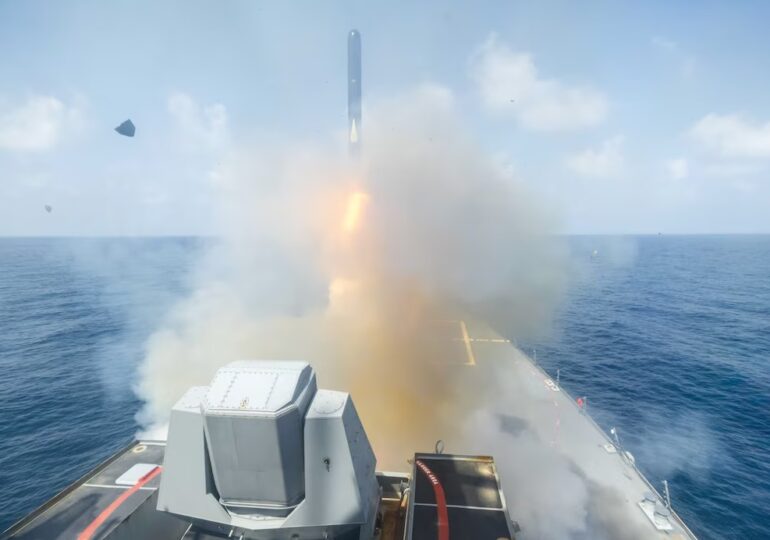
Shortly after the Romanian Parliament voted to support American military forces in the conflict in Iran, the President and the Ministry of Defense announced that we could send military personnel to participate in demining operations in the Strait of Hormuz.
The Supreme Council of National Defense (CSAT), led by President Nicușor Dan, decided that Romania will respond favorably to the United States’ request to use Romanian military bases.
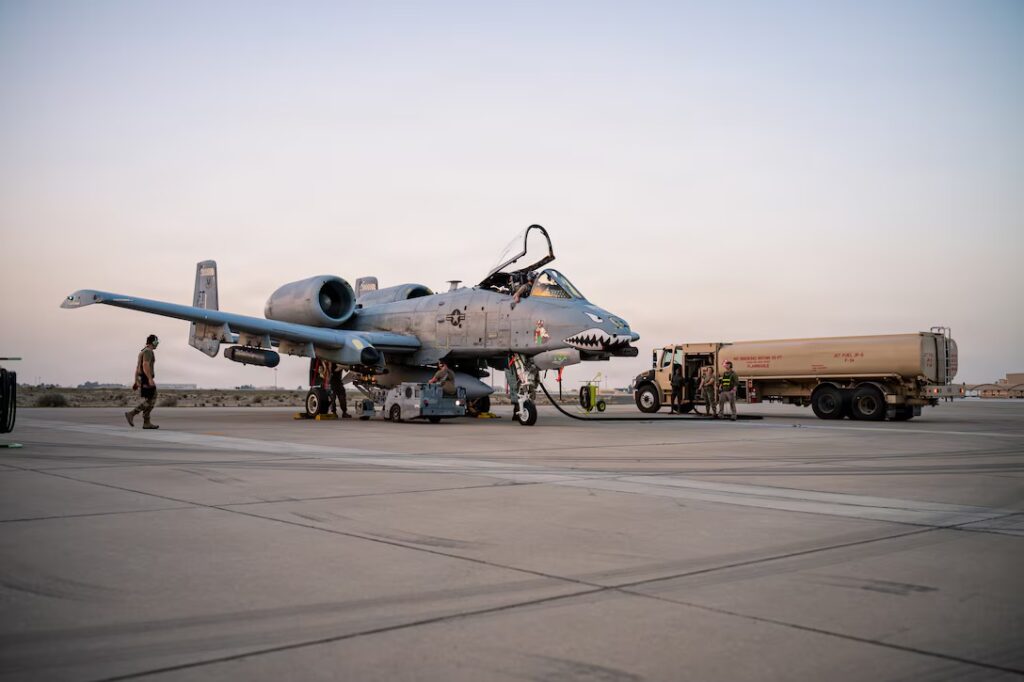
Following the CSAT decision, the Romanian Parliament approved the request. Thus, American and NATO military bases in Romania have begun to be used by the United States forces in the conflict with Iran. The most important is Mihail Kogălniceanu base, where tanker aircraft have been stationed for in-flight refueling of bombers. These aircraft take off and refuel the planes carrying out missions over Iran.
Another key component of this defensive system is the shield at Deveselu.
Deveselu, a small town south of Caracal and southwest of Bucharest, has hosted since 2011 an air base with a high-performance radar. The installation operates under the authority of the United States Navy and NATO. The base has a medium and long-range ballistic missile detection system.
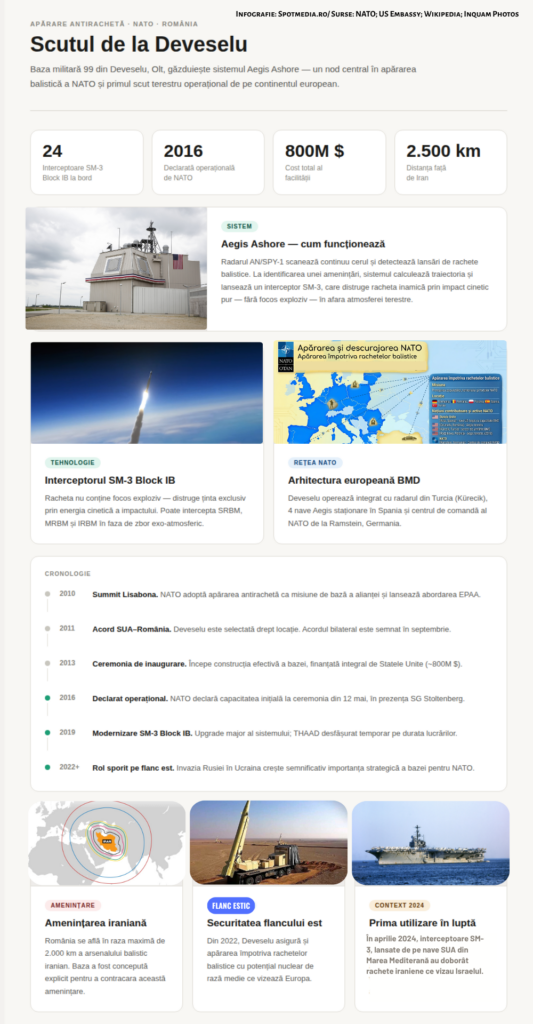
Since its construction, the Deveselu shield has aimed at detecting ballistic missile launches from Iran. NATO and the United States consider Iran a potential adversary due to its destabilizing influence in the Middle East.
It should also be noted that Vladimir Putin has seen the shield from the beginning as a threat to Russia and a strengthening of NATO's influence in the Kremlin's sphere.
The military attack by the United States and Israel on Iran has had a significant economic impact. Fuel prices have sharply risen, as the Strait of Hormuz, through which over 20% of the world's oil passes, is blocked. Over 100 oil tankers are also blocked in the Persian Gulf as a result of military actions.
Romania in the Strait of Hormuz
When the Romanian Parliament voted in favor of supporting the United States in the military conflict with Iran, several important consequences emerged.
Diplomatic relations with Iran suddenly tensed, with Tehran announcing that Romania will face legal and political repercussions, without issuing a direct military threat.
President Nicușor Dan and several members of the Government stated that Romania is not an active participant in the conflict, primarily offering logistical support.
However, the actual situation is a bit more complex. The document presented to Parliament was secret to the general public, being consulted by approximately 100 deputies before the vote.
It is important to mention that the CSAT decision and the Parliament's vote were based on a long-term cooperation agreement between Romania and the United States, and our country's commitments are considerably more extensive regarding support for the USA.
Thus, shortly after the legal decision to support the USA, Romania joined an international force that supports the United States in military operations in the Strait of Hormuz.
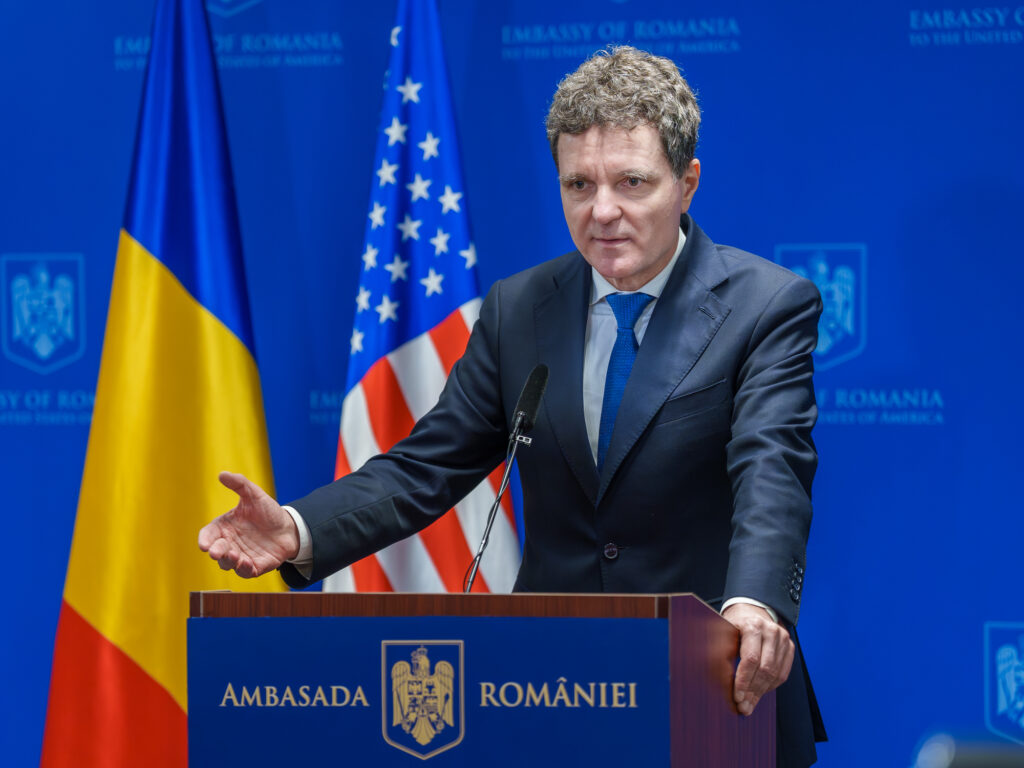
"We have decided to join the statement of the United Kingdom, France, Germany, Italy, the Netherlands, and Japan on ensuring freedom of navigation in the Strait of Hormuz, a fundamental principle of international law," announced Nicușor Dan, the President of Romania, on March 20.
"Romania's joining this initiative comes against the backdrop of the serious implications that the closure of the strait has on global energy markets, as well as on the world economy," added the head of state.
Experience in the Black Sea
The involvement has already exceeded the initial logistical support, extending to active participation in the Persian Gulf region.
Romania has developed expertise in demining operations over the past four years, especially in response to Russia's hostile activities in the Black Sea in the conflict with Ukraine, which required the intervention of Romanian armed forces.
The President and the Minister of Defense announced that several Romanian military personnel could help secure navigation in the Strait of Hormuz. They did not provide specific details about participation.
"We are analyzing, depending on the availability and that of other partners, what is needed in relation to our availability. We have gained some experience with demining in the Black Sea over the past few years; we can participate with staff officers, possibly with information exchange that can help in such situations, including personnel who have gained experience in demining in recent years," stated Radu Miruță, the Minister of Defense.
One day after the above statement, in a televised show, the Romanian official reiterated, stating that our country will not send troops to the Persian Gulf region.
Official statements show reluctance regarding active involvement in the conflict with Iran, but the situation on the ground is fluid. Officials say Romania does not have an active role, as neither the USA nor Israel have deployed troops on Iranian territory.
Donald Trump, Without Allies
The developments in recent weeks regarding Romania's position on the Iran conflict confirm the rekindling of the strategic partnership with the USA.
The Deveselu radar now plays the most crucial role in its operational history. Since May 2016, when it became operational, it has not been used with such intensity.
Defense Minister Radu Miruță confirmed active alerts regarding the Deveselu radar. It comes into action whenever there is a risk of Iran launching a ballistic missile towards NATO states or Europe.
The support provided by Romania to the American administration comes at a time when Donald Trump does not have many allies. The US President launched the attack on Iran only alongside Israel. In military terms, the losses of both countries were limited, while the damage inflicted on Iran was significant.
However, Iran's reaction has generated global instability. The fundamentalist regime in Tehran attempted to escalate the conflict, involving Arab states in the region, such as the United Arab Emirates, Saudi Arabia, Oman, Qatar, Kuwait, Iraq, among others, with some even having cooperative relationships, such as Qatar.
Due to the security crisis in the region, fuel prices have risen by over 30% in just a few days. The situation has created great nervousness in financial markets and put governments in a difficult position, as they were not consulted regarding the conflict. The UK, France, Germany, and Spain refused to support the USA even logistically in the Iran conflict, sparking Donald Trump's anger.
Gains and Risks
Romania announced its support for the USA early on, sending a positive signal to Washington. The decision passed through Parliament without much political turmoil, although pro-Russian influence networks in Romania are quite vocal.
Romania has managed to revive its relations with the USA, which had been in the shadows since Donald Trump's return to the White House. The support now provided to the United States and Israel is substantial. It will not go unnoticed at the political leadership levels of the two states. However, this support does not come without risks. In addition to those already mentioned - Iran's hostile position - there is also a real security risk.
Romania is within the range of Iran's medium-range ballistic missiles.
The probability of one of these missiles reaching Romanian territory, bypassing NATO's anti-aircraft systems, is, however, low. But the risk should not be completely ruled out. So far, Iran has launched three ballistic missiles towards Europe and NATO, none of which hit their target, all being destroyed in the air.