

Europe is strengthening its security after Iran warned that it could target European cities in countries supporting the military operation led by American President Donald Trump in the Middle East.
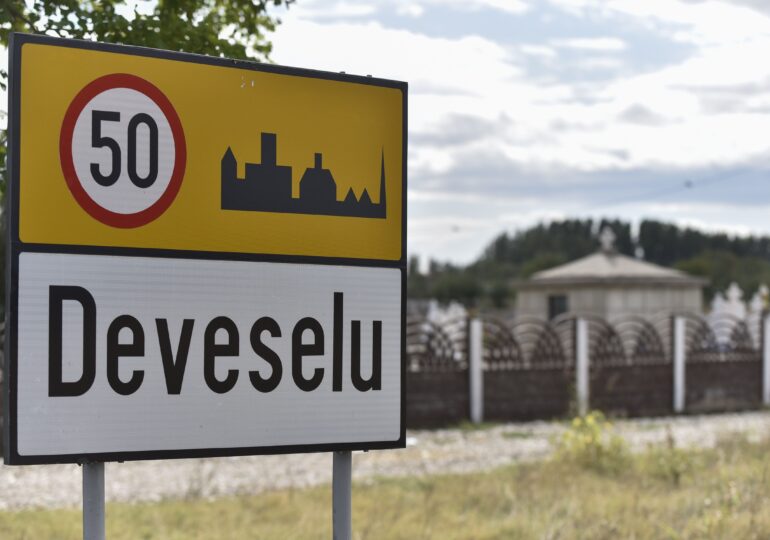
In an analysis published by Politico, Romania is explicitly mentioned: the missile defense shield at Deveselu is considered a potential target in case of escalation. Besides ballistic missiles, experts warn that Tehran could use drones, cyber attacks, or even networks of agents for operations on European soil.
Iran's Threat: European Cities Could Be Targeted
The Iranian regime warns that it will target European cities in any country that joins the American military operation against Iran. In response, European governments are enhancing their security measures.
The first incidents have already occurred in the eastern Mediterranean. Iranian drones targeted Cyprus, with one hitting a Royal Air Force base on the island, while others were intercepted before impact. Following these attacks, the United Kingdom, France, and Greece deployed fighter jets, warships, and helicopters to defend the island.
Given that British, French, and German leaders state they are prepared to engage in defensive military actions in the Middle East, Tehran has threatened retaliatory actions even on European soil.
The spokesperson for the Iranian Ministry of Foreign Affairs, Esmail Baghaei, warned in a statement to Iranian state media that any involvement by European states would be considered "an act of war."
- Authorities Provide Assurance: There Is No Military Threat to Romania. The Role of the Deveselu Base
Mark Rutte: Iran Is an "Exporter of Chaos"
NATO Secretary-General Mark Rutte warned that the Iranian threat is not limited to the Middle East.
He stated that Iran is close to acquiring both nuclear capabilities and ballistic missiles that could pose a direct threat to Europe.
Rutte cautioned that Iran is an "exporter of chaos," responsible over decades for terrorist plots and assassination attempts, including against individuals living in European territories.
Missiles That Can Reach Southeast Europe
Iran has been developing long-range ballistic missiles for years. According to analyses cited by Politico, Tehran is even working on an intercontinental ballistic missile with a range of approximately 10,000 kilometers.
However, experts indicate that it is unclear whether Iran could rapidly produce or deploy such a weapon in the current military context.
On the other hand, the Iranian arsenal already includes medium-range missiles of about 2,000 kilometers, such as Sejjil and Khorramshahr. These could target parts of southeast Europe, including Greece, Bulgaria, and Romania, depending on the launch location.
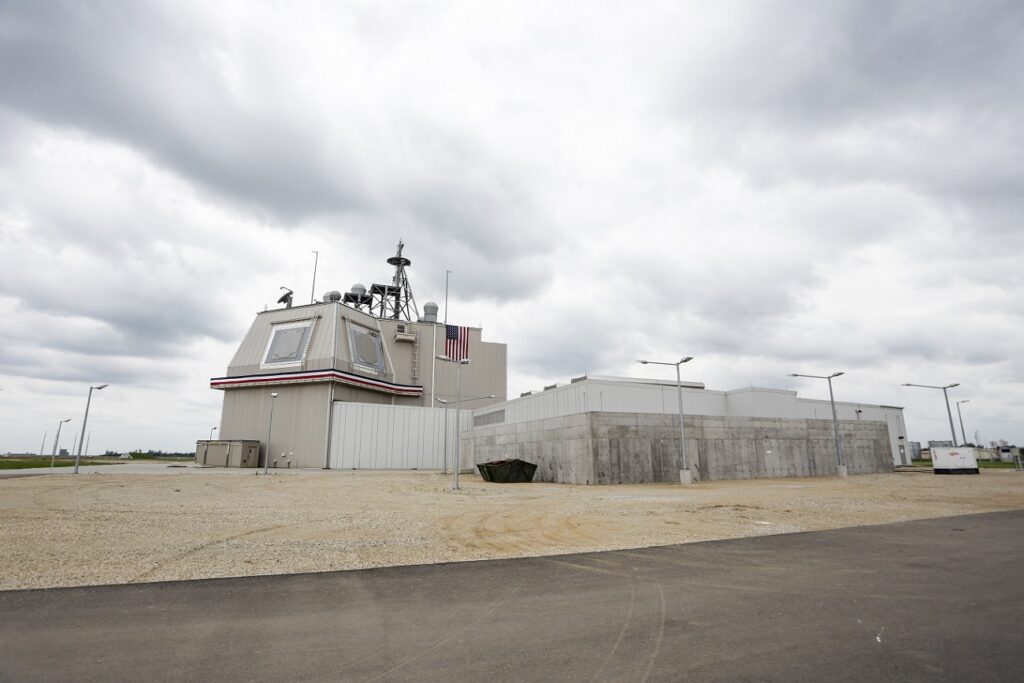
Deveselu, Mentioned in Analysis Regarding Potential Targets
In Romania, the American missile defense shield at Deveselu is located, built precisely to intercept potential missiles launched from Iran.
According to Politico, military security around the base has been reinforced this week amid tensions in the Middle East.
Iran has long claimed that its ballistic missile program has a self-imposed limit of about 2,000 kilometers, which would leave much of Europe out of range. However, some analyses suggest that certain versions of the Khorramshahr missile could reach up to 3,000 kilometers if equipped with lighter warheads, bringing cities like Berlin or Rome within range.
Shahed Drones – Iran's Preferred Weapon
A more flexible threat comes from drones, especially the Shahed model, extensively used by Russia in the war in Ukraine.
These kamikaze drones have an estimated range of up to 2,500 kilometers. To strike targets in Europe, they would need to pass through the airspace of countries like Turkey or Jordan, but Cyprus is already within their range.
Analysts believe that the drone that hit the British base RAF Akrotiri in Cyprus was likely a Shahed type and could have been launched from Lebanon by the Hezbollah group, an ally of Iran.
However, experts warn that simpler attacks could be carried out even with commercial drones or improvised devices.
Agent Networks and Assassination Attempts
In recent years, Western intelligence services have observed that Iran focuses mainly on intimidating and eliminating critics of the regime, especially among the Iranian diaspora in Europe.
Iran has a long history of assassination plots and attacks on European soil. In many cases, operations are carried out through organized crime networks, allowing Iranian authorities to deny any direct involvement.
A well-known case is that of Iranian diplomat Assadollah Assadi, sentenced to 20 years in prison for providing explosives intended for an attack against an Iranian opposition rally in Europe.
Attack attempts or plots attributed to Iran have been reported in recent years in Belgium, France, Germany, Sweden, the Netherlands, Cyprus, and the United Kingdom.
Cyber Attacks, Another Major Risk
In addition to military and terrorist threats, experts also warn of the risk of cyber attacks.
Iran is considered one of the West's main adversaries in the digital space, alongside Russia, China, and North Korea.
Executive Vice President of the European Commission, Henna Virkkunen, stated to Politico that European states must carefully monitor cybersecurity and protect critical infrastructure.
Security industry officials say that if European states more clearly express support for US and Israeli military operations, there is a high probability that they could become targets of cyber attacks.