

While Western warnings about a possible Russian attack on NATO focus mainly on the Baltic states, a former Norwegian military attaché in Ukraine draws attention to a much more distant and, in his opinion, more vulnerable point of the Alliance.
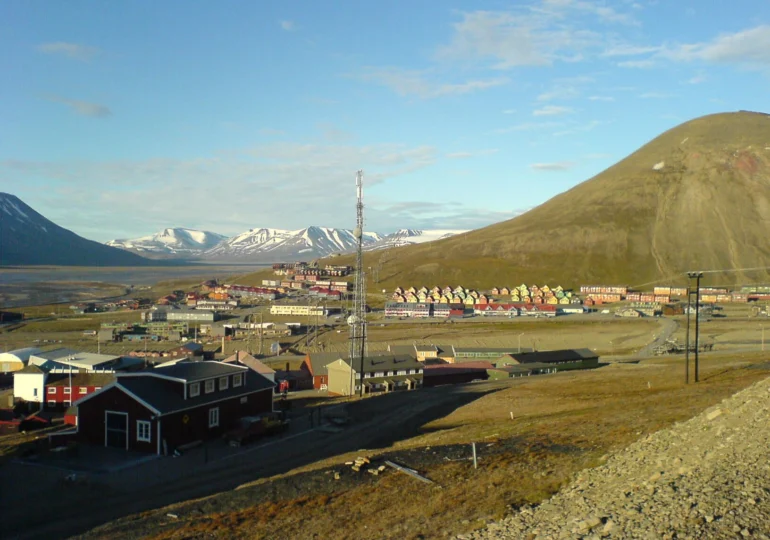
This concerns Svalbard, the Norwegian archipelago in the Arctic Ocean, where NATO does not have permanent troops and where Russia could attempt to put the Alliance in front of a fait accompli.
The scenario is presented by the Norwegian Hans Petter Midttun, a former Defense attaché in Ukraine and currently an analyst specializing in hybrid warfare, in an analysis published by Euromaidan Press.
Midttun does not claim that there is information from Western services indicating that Russia has decided to attack Svalbard. On the contrary, he specifies that no intelligence service has placed the archipelago ahead of the Baltic states in terms of the risk of an attack.
His argument is strategic: precisely the peculiarities of Svalbard could allow Moscow to test NATO's Article 5 with lower risks than in the case of an attack on Estonia, Latvia, or Lithuania.
Warnings about a possible NATO test are increasing
The analysis starts from the visit of the CIA director, John Ratcliffe, to Moscow, which fueled speculations about Washington's concerns regarding Russia's intentions.
According to sources cited by Wall Street Journal, Ratcliffe reportedly warned Moscow not to attack NATO states. Estonia, Latvia, and Lithuania were separately mentioned in a Politico article from August 26, citing two sources familiar with the situation.
In early August, Wall Street Journal reported, based on new assessments by U.S. intelligence services, that Russia could try in the coming years to testz NATO's resolve through a limited attack on a member state. The timeframe considered would extend from this fall to 2029.
Midttun also points out the unusual nature of the CIA director's visit. Citing an assessment by the Institute for the Study of War (ISW), he shows that the personal visit of the agency's chief to convey a message is usually reserved for highly sensitive issues.
The last such visit took place in November 2021. At that time, William Burns, the then CIA director, went to Moscow in a final attempt to deter Russia from invading Ukraine.
In the author's view, all these suggest that Washington may be concerned about a closer time horizon than previous warnings indicated.
Russia is already testing NATO's limits
The analysis recalls that Russia has been conducting hybrid operations against Western states for years: attacks on critical infrastructure, sabotage and cyber attacks, influence operations, violations of NATO airspace with missiles and drones, and surveillance missions over allied territory.
On August 23, The Telegraph reported, citing Western intelligence sources, that Moscow had launched a new wave of attacks on European arms factories, including by recruiting members of local criminal groups.
However, these actions have not forced NATO to respond militarily.
From here stems Midttun's central thesis: if Vladimir Putin truly wants to test NATO's collective defense guarantee, Russia should move from hybrid warfare to a military action clear enough to raise the issue of activating Article 5.
The window of opportunity could be narrowing, as Europe is trying to address its military vulnerabilities and strengthen its defense.
NATO has identified integrated air defense and missile defense as one of its priorities and has called for a 400% increase in these capabilities.
Why an attack on the Baltic countries would be much more complicated
Estonia, Latvia, and Lithuania have long been considered among the most exposed NATO states. But precisely for this reason, they are also much better prepared.
NATO has permanent battle groups in all three countries: the UK leads the force in Estonia, Canada in Latvia, and Germany in Lithuania.
The Alliance has further strengthened its presence in the region in response to Russian incursions into airspace, drone challenges, GPS jamming, and attacks on submarine infrastructure.
In addition, the Suwałki Corridor, the approximately 60-kilometer strip between Belarus and the Russian exclave of Kaliningrad connecting Poland to Lithuania, is heavily defended and constantly featured in NATO military exercises.
The consequence is crucial: an attack on the Baltic states would hit forces from multiple NATO countries on the first day. Russia would also need a significant troop concentration before such an operation, which could betray its intentions.
However, Svalbard is much more exposed from this point of view.
The archipelago without a permanent garrison
Svalbard belongs to Norway but has a special status established by the Svalbard Treaty of 1920.
Article 9 of the treaty prohibits naval bases, fortifications, and the use of the archipelago for war purposes. Norway retains sovereign rights to defend the territory, and ships from the Coast Guard and the Norwegian Navy reach Longyearbyen, but there is no permanent military garrison.
For Midttun, this is where the vulnerability lies. Russia could try to quickly occupy the archipelago and create a fait accompli before NATO manages to deploy sufficient forces in the area.
The Russian Northern Fleet already operates in the region, and Moscow's Arctic forces number, according to the data presented in the analysis, approximately 15,000-20,000 military personnel. Svalbard is also within the range of Russian tactical aviation operating from the Kola Peninsula.
But Moscow's advantage would not only be military.
Political trap for NATO
Norway considers that Article 5 of the North Atlantic Treaty applies to Svalbard.
Midttun argues that, legally, Norway's sovereignty over the territory is not really ambiguous. However, Russia disputes the Norwegian interpretation and could use the demilitarized status of the archipelago to argue that a NATO military response would violate the Svalbard Treaty.
It is precisely this constructed ambiguity that could become a political weapon.
Instead of an attack on a Baltic country, where allied troops would be immediately involved in combat, Moscow could create a crisis around a remote Arctic territory and force the 32 NATO states to decide how to respond.
For Russia, the author argues, the goal should not necessarily be to win a war with NATO. It might be enough to demonstrate that the Alliance fails to reach a common response when one of its members is attacked.
Such a failure would directly impact the credibility of Article 5 and, implicitly, the entire logic of collective defense.
What would Russia gain by controlling Svalbard
There are also considerable military advantages. The Kola Peninsula hosts Russian strategic submarines equipped with ballistic missiles, an essential component of Russia's nuclear capability. Controlling Svalbard would help Moscow turn the Barents Sea into a better-protected area for these submarines.
Anti-ship and anti-aircraft batteries placed in the archipelago could hinder the access of NATO ships and anti-submarine forces to the Barents Sea and protect the routes of the Northern Fleet towards the Atlantic.
Svalbard could also become an advanced base for the Russian aviation.
Another important target would be SvalSat, one of the world's largest commercial ground stations for satellites. Controlling it could give Moscow the opportunity to disrupt a crucial node for Western operations with civilian, environmental, and dual-use satellites.
Moreover, the archipelago is strategically positioned at the western entrance to the Northern Sea Route, whose importance grows with the retreat of Arctic ice.
Russia is already building its narrative about the "NATO threat" in the Arctic
Midttun sees another clue in the recent messages coming from Moscow. On August 31, Russian Foreign Minister Sergey Lavrov accused NATO of militarizing the Far North, describing this development as a "direct threat" to Russia's security and an attempt to turn the Arctic into a "new front" against Moscow.
On the same day, Russia's ambassador to Norway, Nikolai Korchunov, accused Oslo of gradually abandoning its principles regarding foreign military presence and warned of a "slide towards direct military conflict."
For the analysis author, such statements would lay the groundwork for presenting any potential Russian action as defensive.
NATO has repeatedly promised to defend "every inch of allied territory."
"Svalbard is where Russia intends to demonstrate that this commitment is devoid of substance," concludes Midttun.
In his assessment, the Baltic states are defended, already hosting allied forces, and an attack there would require military preparations that are hard to conceal. Svalbard lacks any of these characteristics.
"If Russia makes a move, logic points north," is the analyst's conclusion.