
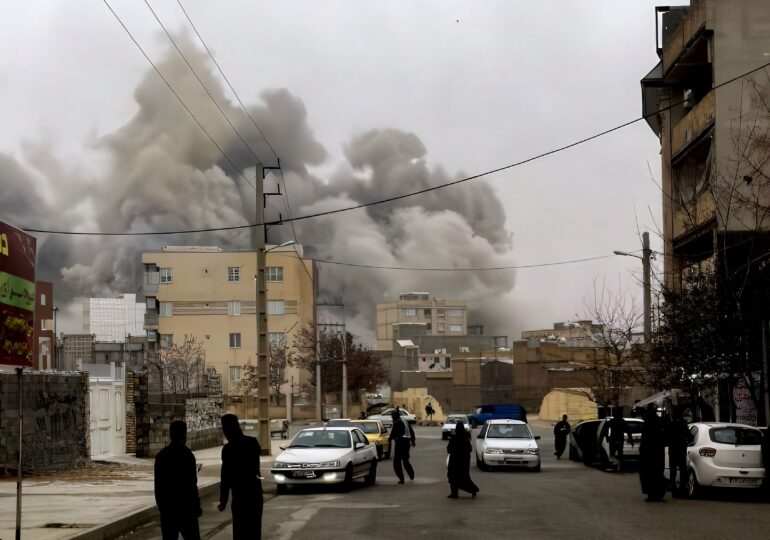
Iran is increasingly clear that it is not willing to accept a ceasefire without firm guarantees that it will not be attacked. Leaders in Tehran reject Washington’s messages about stopping the conflict and suggest they are ready to continue the confrontation, including through pressure on maritime transport in the Persian Gulf.
According to an analysis published by Patrick Wintour, a specialist editor in foreign policy at The Guardian, the Iranian leadership believes it is not losing the war and that the administration of U.S. President Donald Trump faces increasing internal political pressures.
Washington's Messages Rejected by Tehran
Iran has rejected two messages sent by Donald Trump's special envoy, Steve Witkoff, who was trying to achieve a ceasefire.
Iranian Foreign Minister Abbas Araghchi stated that a possible unilateral declaration by Trump that the U.S. had won the war would not automatically mean the end of the conflict.
The signal from Tehran is that even if Washington decides to stop its attacks, Iran could continue its military or economic pressure on its adversaries. A major tool remains control over maritime transport through the Strait of Hormuz, one of the world's most important energy routes.
Iran Seeks Guarantees of No Further Attacks
Iranian officials insist that any ceasefire must be accompanied by a clear commitment from the U.S. that they will not launch attacks against Iran again.
"If a ceasefire is to be established or the war is to stop, there must be a guarantee that aggressive actions against Iran will not be repeated. Otherwise, if a new attack occurs in a few months, such a ceasefire would be meaningless," explained Kazem Gharibabadi, Deputy Foreign Minister.
For the Iranian leadership, the objective is for Washington to feel the economic, political, and military costs of the conflict at a level high enough to prevent such actions from being repeated.
Iranian Regime Says It Will Resist
The tone adopted by Iranian officials is much more combative than in the early days of the conflict, when the regime seemed mainly concerned with its own survival.
The President of the Iranian Parliament, Mohammed Ghalibaf, wrote on social media that Iran is not seeking a ceasefire at all.
"We are absolutely not seeking a ceasefire at all. The enemy must know that whatever they do, there will certainly be a proportional and immediate response. We fight eye for an eye, tooth for a tooth, without compromise or exception," Ghalibaf said.
Even the more moderate President of Iran, Masoud Pezeshkian, has adopted a defiant tone: "The destroyers came and went. Iran remains."
Threat to the Strait of Hormuz
One of Iran's most important pressure tools remains control over the Strait of Hormuz, through which approximately 20% of the world's oil and a similar amount of liquefied natural gas pass.
The Islamic Revolutionary Guard Corps (IRGC) has warned that ships associated with states attacking Iran will not be able to transit this route.
"At the beginning of the war, we announced and announce again that no ship associated with aggressors against Iran has the right to pass through the Strait of Hormuz. If you have doubts, approach and you will find out," announced the IRGC.
They also suggested that ships of certain states could gain access if those countries expel their U.S. and Israeli ambassadors.
Diplomatic Pressure at the UN
Meanwhile, Iran faces increasing diplomatic pressure. The UN Security Council is set to discuss a resolution supported by over 80 countries, initiated by Bahrain, condemning Iran's attacks on Gulf states. The document, however, does not include criticism of the U.S. or Israel.
At the same time, Russia may propose a separate resolution calling for a ceasefire.
Iranian diplomats say that two previous rounds of negotiations were interrupted by U.S. and Israeli airstrikes, making it difficult to resume dialogue.
A War That Could Strengthen the Regime
Some analysts believe that the war could even strengthen the Iranian regime.
Alex Vatanka, an expert at the Middle East Institute, says that Tehran's leaders believe they can withstand the conflict. "The regime, overall, believes it can stay in this war and that it could even provide legitimacy because otherwise it has been a disaster for the country," Vatanka argues.
He states that Israeli attacks on energy infrastructure have changed the population's perception. "Within 24 hours, you could feel the change in the Iranian public opinion: from a war against the regime to a war against Iran," the expert pointed out.
Resource Issue
However, Iran faces a major problem: resources.
Emile Hokayem, an expert at the International Institute for Strategic Studies, warns that sanctions and economic isolation could become a major obstacle for the regime.
"The regime still resists, but it faces a huge resource problem. Where do resources come from when you have lost your export capacity, when Hormuz is closed due to your own threats, when the region no longer wants to trade with you, and the United Arab Emirates is considering freezing your assets?" Hokayem questions.
G.P.