
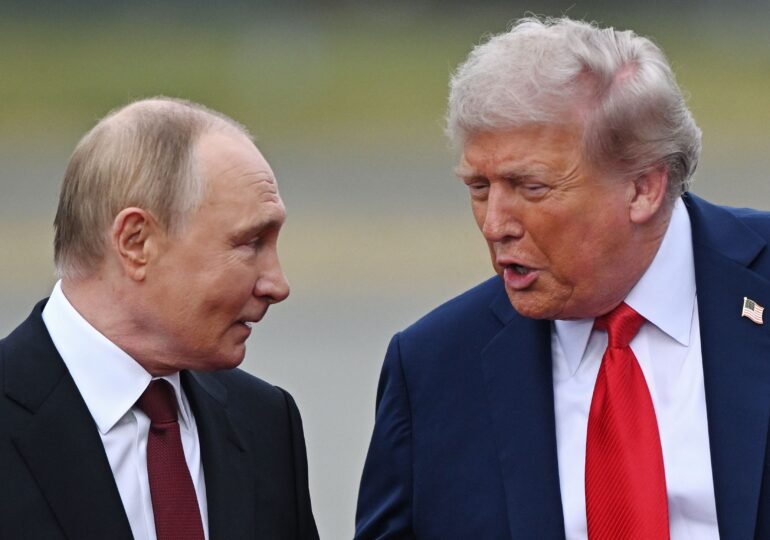
Faced with record diesel prices and the upcoming Congressional elections less than two months away, Donald Trump directed his criticism towards Ukraine. The American president is urging Volodymyr Zelensky to stop attacks on Russian refineries, claiming that they are causing a shortage affecting the entire world.
The timing could not be worse for Kiev and more advantageous for Moscow, as indicated by a CNN analysis.
"Mr. Zelensky has to do one thing: stop destroying diesel fuel from Russia. This affects the whole world," Trump declared on Sunday.
However, his position is contradictory. Less than a year ago, sources told CNN that the United States had expanded intelligence sharing with Ukraine precisely so that it could target Russian energy assets. At that time, oil prices were low.
Furthermore, just a week before his statements about Ukraine, Trump claimed that fuel prices would drop after the end of the war with Iran, without mentioning the Russo-Ukrainian conflict.
How much do Ukraine's attacks weigh in the diesel crisis
The assertion that stopping Ukrainian attacks would solve the price issue is contested by analysts.
Andy Lipow, from the Texan company Lipow Oil Associates, estimates that Russia's decision to ban exports in response to Ukrainian attacks has removed approximately 800,000 barrels of diesel per day from the market.
However, the closure of the Strait of Hormuz affected a larger volume: about 1.2 million barrels per day.
For Ukraine, attacks on Russian refineries represent one of the few remaining levers. Kiev is thus trying to target Russia's war machine and the energy resources that fuel it, especially as the anti-aircraft defense faces critical shortages.
The pressures coming from Washington are all the more painful for Kiev as Russia carries out nearly uninterrupted drone and missile attacks and prepares to once again turn winter into a weapon against the Ukrainian population.
Trump announced an agreement that did not yet exist
Donald Trump claimed on Monday, in a post on Truth Social, that Russia and Ukraine had agreed not to attack each other's energy infrastructure. In reality, no such agreement had been reached.
The Kremlin swiftly seized upon the American president's statement. Spokesperson Dmitry Peskov called the proposal "a very good idea" and noted that Moscow is in contact with the American side. He also asserted that Russia always favors "peaceful solutions."
However, Moscow tried to portray Ukraine as the aggressor, without acknowledging the significant impact of the attacks on Russian refineries. "Such a truce would allow us to fully supply the domestic market, which is already approaching full supply," Peskov stated. He argued that the issue is not production but the unrestricted access of Russian petroleum products to global markets.
Thus, the Kremlin shifted the focus from the targeted refineries to the escalation of Ukrainian attacks on Russian oil tankers. Peskov did not mention Russia's attacks on Ukrainian commercial vessels and ports.
Kremlin calls for the lifting of sanctions
Peskov then linked the resumption of fuel exports to the lifting of Western sanctions. "The second necessary step is, of course, the lifting of sanctions. Only then will the world be properly supplied with these petroleum products," stated the Kremlin spokesperson.
Moscow may view Trump's statements as a new opportunity. Earlier this year, the United States temporarily lifted some sanctions imposed on Russia as the war with Iran threatened global oil supply.
At the same time, the Kremlin may seek to avoid further punitive measures. The Trump administration sanctioned one of Russia's largest banks this week due to its ties with Iran. The House of Representatives is also nearing a vote on a comprehensive sanctions bill against Russia, initiated with Senator Lindsey Graham before his death in July.
From embraces to new pressures on Kiev
Washington's change in tone gives Volodymyr Zelensky reasons to worry. A week ago, Trump's foreign policy envoys embraced him in central Kiev during their first visit to Ukraine and discussed reviving diplomatic efforts.
Warning signals were already present. American representatives had first visited Russia, and Trump later spoke with Vladimir Putin on the phone but not with Zelensky.
The delivery of Patriot interceptor missiles to Ukraine remains under discussion, but Trump stated this week that Washington is considering a "less sophisticated version" for Kiev.
Beyond Trump's preference for Putin and the contradictions in his explanations regarding diesel prices, the issue that has accompanied the war from the beginning remains: how can Russia, one of the world's major oil producers, be sanctioned without Western states bearing the costs themselves.
And, most importantly, how long will the resolve to pressure Moscow last when fuel prices start to rise.
G.P.