
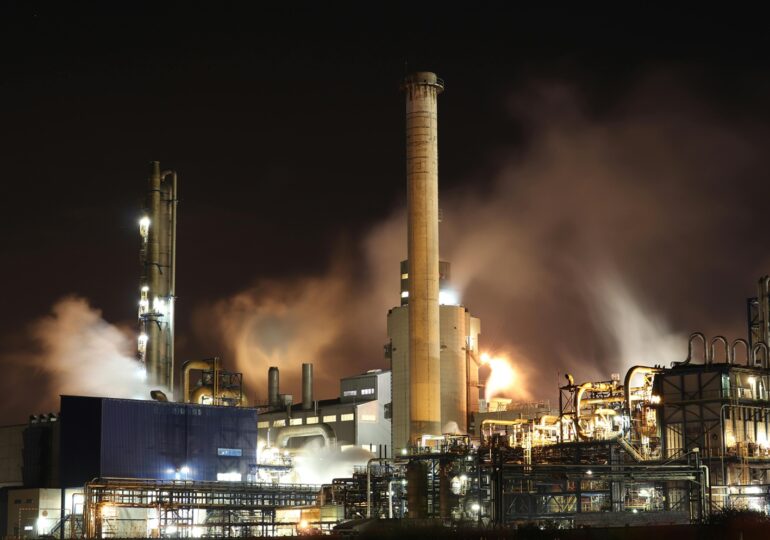
Repairs at the world’s largest LNG plant in Qatar, hit by Iran, will take between three and five years and cost $26 billion. Experts fear an energy market apocalypse will follow.
Traders and analysts warn of long-lasting disruptions following the damage to the Ras Laffan complex in Qatar, a facility that supplies a fifth of the world’s LNG volume.
In normal times, a fifth of the world's liquefied natural gas (LNG) reserves come from Ras Laffan, a vast industrial center, nearly three times larger than the one built by France over three decades, costing hundreds of billions of dollars, reports Financial Times.
A Nightmare Scenario
LNG terminals are among the largest and most complex constructions in human history, and Ras Laffan is the largest of them all, turning Qatar's huge gas reserves into super-chilled fuel that can be transported worldwide. At least that was the case before Iranian rockets fell.
"This has always been my nightmare scenario, my Armageddon scenario, the one I didn't want to happen," said Anne-Sophie Corbeau, former head of gas analysis at BP, now working at the Columbia University's Center on Global Energy Policy.
Gas prices in Europe have risen by 30% since markets reopened after the Iranian attack and doubled since the start of the war, while traders try to calculate the impact of months without Qatari gas reaching global markets.
Oil prices have also risen by 10% to nearly $119 per barrel, due to fears of further energy supply attacks.
The World Will Suffer Regardless of When the War Ends
QatarEnergy, the state-owned company and operator of Ras Laffan, confirmed "extensive damage" to Shell's Pearl GTL plant worth $18 billion, which converts gas into chemicals and fuels, and to "several of its LNG facilities."
Ras Laffan has 14 gas liquefaction units, and it is not clear how many were damaged. The total extent of the damage remains unclear, but satellites have detected a fire on the scale of a major industrial disaster, increasing the possibility that Ras Laffan could be out of operation for months.
The specialized equipment for super-cooling gas into LNG is highly complex and will need to be meticulously replaced, a task that will only begin once Qatar is confident that workers can safely operate without fear of further attacks.
"What we can immediately conclude is that, regardless of when the conflict ends, the resumption of normal production from Qatar will not happen in a matter of weeks," said Tom Marzec-Manser, an LNG expert at the energy consultancy Wood Mackenzie.
Qatar's plans to expand Ras Laffan, adding six more liquefaction units this year and next, would also be delayed, he said. "There is an element of uncertainty, but now we know that this is a supply reduction for several months."
Higher Gas Prices in Europe Until 2027
Production at Ras Laffan had already been halted "as a precautionary measure" last week, but traders assumed that LNG flows would resume once the Middle East conflict eased and the Strait of Hormuz was safe for oil tanker passage.
Prior to the attacks this week, gas prices had risen but had stabilized well below the peaks seen during Russia's invasion of Ukraine in 2022.
Some analysts cited by FT warned that returning to full capacity could take even years, depending on the extent of the damage.
A trader said that natural gas prices in Europe will be pushed up "until 2027" and that Europe will face many difficulties in refilling its gas storage tanks this summer as Asian buyers have purchased LNG from the US to offset supply losses.
Asia is already facing shortages and rationing due to the loss of supply from the Gulf.
And Europe, which has become more dependent on LNG after Russia reduced pipeline exports during its war with Ukraine, is set to compete directly with countries like Japan and South Korea for limited cargoes.
Apocalypse Now
Analysts point out that Qatar's total annual production was 110 billion cubic meters of gas, nearly equal to the decrease in pipeline supplies from Russia to Europe, with a volume of 115 billion cubic meters.
"It's apocalypse now. The next months for gas importers will be a bloodbath," Laurent Segalen, a clean energy investment banker, told the cited newspaper.
Traders fear a repeat of the 2022 situation when competition for goods drove natural gas prices into an upward spiral, eventually reaching the equivalent of over $500 per barrel in oil terms and requiring intervention from wealthy governments to mitigate the impact on consumers.
The World Will Divide Between Rich and Poor
If Qatar stops producing LNG this year, the world will have to revert to gas supply levels last seen in 2021, Corbeau said. "It's a step back of five years," she said.
Qatar's Energy Minister, Saad al-Kaabi, warned that the Middle East conflict could "collapse the world's economies". "Energy prices will rise for everyone. Shortages will appear for certain products, and there will be a chain reaction of factories unable to supply production," he said.
Meanwhile, many countries are already shifting to coal-based energy production, and some industrial centers in Southeast Asia are forced to ration production or shut down. "The energy world will split between the rich and the poor," Segalen said.