
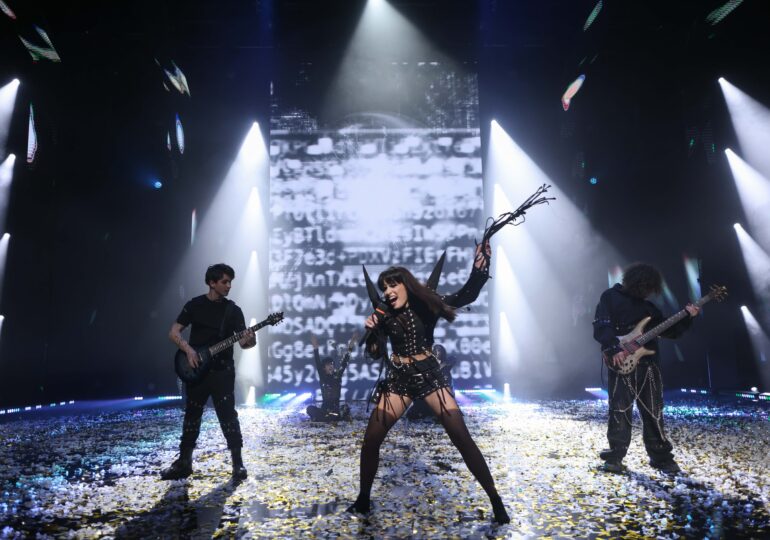
The song with which Romania is participating in Eurovision 2026, „Choke Me,” performed by Alexandra Căpitănescu, is being criticized in the British press after activists and experts have said that the lyrics present sexual strangulation in a positive light, a practice that doctors warn can cause brain injuries or even death.
The criticisms arose after the publication of an article in The Guardian, in which activists against sexual violence state that the song conveys a dangerous message, especially for young audiences.
"Playing with the Lives of Young Women"
Romania's song has drawn harsh reactions because the expression "choke me" is repeated approximately 30 times in the three minutes of the song.
The lyrics also contain phrases such as "I find it hard to breathe," "I want you to choke me," or "Make my lungs explode."
Activists quoted by the British publication say that such messages can contribute to the normalization of a risky practice.
Clare McGlynn, a law professor at Durham University and author of the book "The Rise of Extreme Pornography and How We Can Fight It," states that the repetition of these sexualized messages "shows a disturbing lack of concern for the health and well-being of young women."
She warns that the choice and promotion of the song "represent an irresponsible normalization of a dangerous practice."
"They are playing irresponsibly with the lives of young women. The medical evidence that emerges shows that frequent sexual strangulation causes brain injuries in young women," McGlynn said.

Reactions and Calls for Song Modification
The controversy has quickly spread on social media, where some Eurovision fans are calling for the disqualification of the song or the modification of the lyrics.
In the past, the European Broadcasting Union (EBU), the organizer of the competition, has intervened similarly in the case of songs considered problematic.
For example, last year, following a complaint from the BBC, the EBU requested a change in the title and lyrics of Malta's song, which contained a wordplay where "kant" – a word meaning "to sing" in Maltese – could be mistaken for a vulgar term in English.
In other editions, organizers have required artists to remove words like "shit" or "pussy" from songs.

Artist Says Lyrics Are a Metaphor
Alexandra Căpitănescu has dismissed the criticisms and explained that the imagery in the lyrics is metaphorical.
According to the artist, the song describes the feeling of being overwhelmed by strong emotions and "suffocated" by self-doubt, not a sexual practice.
A well-known commentator from the Eurovision community, the Norwegian YouTuber ESC Norway, who is a psychologist, believes, however, that the song uses the topic to generate controversy.
"They know what they are doing and are using a subject that has become popular and normalized through the culture of pornography, which is very dangerous," he said.
Studies: Serious Health Risks
The article also cites recent research indicating that more than half of individuals under 35 say they have experienced strangulation, and almost a third mistakenly believe there are safe ways to strangle someone.
Several studies have identified brain changes in women who have been repeatedly strangled during sexual activity, including indicators of brain injuries and disruptions in areas associated with depression and anxiety.
Almost half of women reported feeling anxiety during or after such episodes, and even a brief strangulation can have long-term health consequences.
Eurovision Under Political Pressure
Meanwhile, this year's Eurovision edition is also facing a partial boycott due to Israel's participation, accused by some critics of committing genocide against Palestinians in Gaza.
The competition was also criticized last year when the Israeli government ran paid advertisements on social media to encourage votes for their country's song.
Several European television stations, including those from Ireland, the Netherlands, Belgium, Spain, Iceland, and Finland, later called for an audit of the voting system amid suspicions that Israelis had voted tens or even hundreds of times using European cards.
G.P.