

Shortly after the Ilie Bolojan government was sworn in by Parliament in June 2025, the first measures were taken to reduce the huge budget deficit caused by the trio Iohannis, Ciuca, and Ciolacu during the three-year coalition government of PSD-PNL.
In the first phase, taxes were increased. VAT reached 22%, rising by 3 percentage points. People were told that this increase would come with a serious reform of the state, through the streamlining and restructuring of central and local administrations.
PSD had no problem with higher taxation of taxpayers, but when it came to restructuring central administration as well as municipalities, they started to obstruct.
"Restructuring is absolutely necessary where the schemes have been overloaded, but we could not agree with the cuts in a blanket way...", stated Sorin Grindeanu on February 10, 2026, at the national meeting of commune mayors.
After lengthy and tense negotiations within the governing coalition, two weeks later, an emergency ordinance was issued which effectively provided for a 10% reduction in staff schemes in municipalities dependent on budget funds.
The decision, although supported by PSD, led to a rupture between PNL and USR, on one hand, and the social democrats, on the other. That was the moment when Sorin Grindeanu began a campaign of criticism against Ilie Bolojan.
At that time, there was talk that the government's decision could be circumvented by mayors. They had the legal possibility to establish companies under the authority of the municipalities where they transferred those who were laid off.
Two days after the ordinance on restructuring local administrations was published, Rareș Hopincă (PSD), the mayor of Sector 2 in Bucharest, established a joint-stock company under the authority of the municipality to deal with parking, where he transferred the 130 people he had laid off as a result of restructuring.
"I believe that administrative reform should have been more profound. We are simply skimming the surface of this boil called central and local public administration. I'm telling you that the measure itself will not achieve its goal, because at the level of local councils, you have the legal possibility to evade this measure by creating a commercial company under the council's authority. Not only are you moving people from one place to another, but overall, the actual cost increases," stated Ionuț Pucheanu (PSD), the mayor of Galați, as quoted by spotmedia.ro, February 25, 2026, a day after the government adopted the ordinance.
Why has the number of state-owned companies increased?
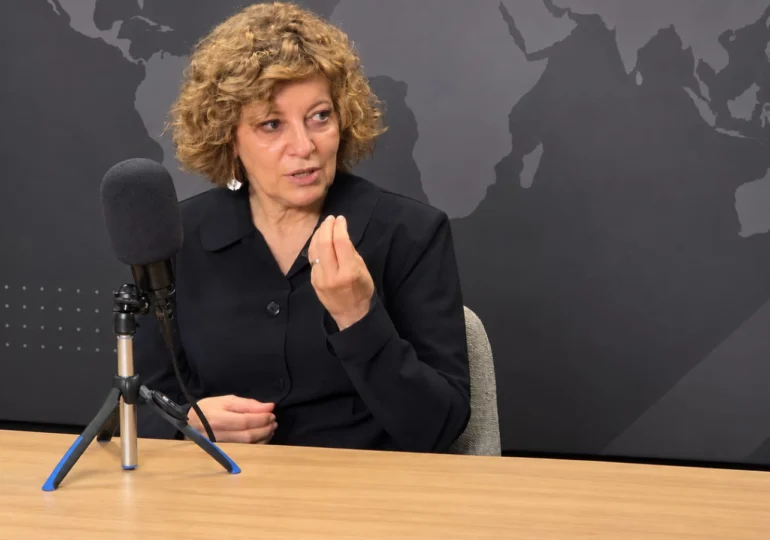
In the "Controversies" podcast, conducted by SpotMedia.ro, Deputy Prime Minister Oana Gheorghiu exclusively admitted that what was talked about at that time as a possibility to annul the local administration restructuring actually happened.
"What was decided in the Government and approved by PSD was a 10% reduction in staff in all institutions, entities, and UATs (administrative-territorial units). This did not happen everywhere," stated the official in the discussion with journalists Matei Udrea and Emilian Isailă.
"Not even those 10% were reduced everywhere. And there are municipalities that were supposed to lay off 10% of staff, but they created a state, municipal, or local company and transferred people there…," declared Oana Gheorghiu.
"We have observed this phenomenon. We have waste because every small town, every commune creates a local company. The respective municipality, instead of optimizing its costs, hides them and incurs the same loss, possibly even greater. And it requires even larger funds from the state budget than before," added Oana Gheorghiu.
No one has calculated the impact of the restructuring ordinance. The phenomenon of staff relocation was observed by the government following reports on the increase in the number of state-owned companies.
Instead of reducing their number and being better managed, they have become a tool to circumvent the restructuring and streamline of local administration.
Marcel Ciolacu and the Austerity Ordinance
"We are losing a lot of money through state-owned companies, we are losing a lot of money because we have countless small municipalities that only spend money from the budget... Every small town, every commune establishes a local company. The respective municipality, instead of optimizing its costs, hides them and incurs the same loss, possibly even greater," added Oana Gheorghiu (PNL), Deputy Prime Minister in the Ilie Bolojan Government.
In September 2023, Marcel Ciolacu, then Prime Minister and PSD leader, also issued an emergency ordinance announcing austerity measures, which in reality had no effect. The budget deficit continued to increase at a sustained pace.
In that ordinance, staff reductions were provided for, but they were cut from the institutions' organizational charts, mainly from unfilled positions.
In the end, the ordinance, ironically dubbed by journalists as "the austerity ordinance," had no effect.
The entire discussion with Deputy Prime Minister Oana Gheorghiu can be watched starting at 4:00 PM on SpotMedia.ro's YouTube channel. Subscribe to not miss any episode of the Controversies podcast, hosted by Matei Udrea and Emilian Isailă.