

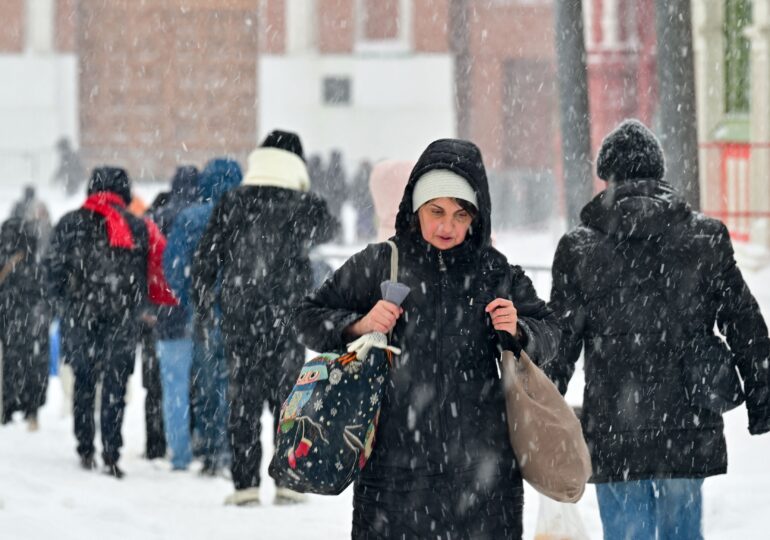
Four years after the large-scale invasion of Ukraine, Russia is starting to visibly feel the costs of the conflict.
In a report from Yelets, a city located 350 kilometers south of Moscow, BBC captures how war has permeated the daily lives of people – from recruitment panels and anti-drone shelters to suffocating bills and pensions eroded by price hikes.
The Kremlin launched the invasion on February 24, 2022, in an operation that the Russian leadership expected to be short and victorious. Outside of Russia, the intervention was perceived as an attempt to bring Kyiv back into Moscow's orbit and to rewrite the post-Cold War security architecture in Europe. Four years later, the conflict continues.
Portraits of slain soldiers and messages of "glory"
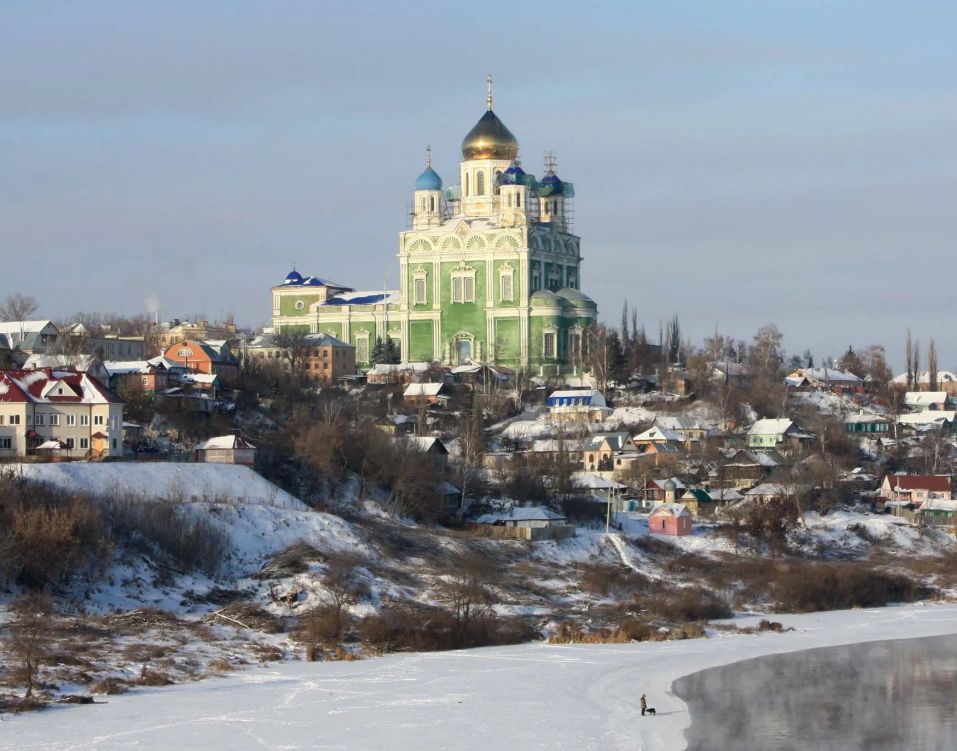
At first glance, Yelets seems like it's taken out of a Russian fairy tale, with Orthodox churches with golden domes and fishermen on the frozen river. But the idyllic atmosphere is only a facade, notes BBC journalist Steve Rosenberg.
By the water's edge, a recruitment panel promises the equivalent of £15,000 (around €17,000) to those who enlist to fight in Ukraine. Nearby, a poster featuring a Russian soldier aiming with a Kalashnikov conveys the message: "We are where we need to be."
On the facade of a nine-story building, a giant mural features the faces of five Russian soldiers, local residents killed in Ukraine. Above them is written: "Glory to the heroes of Russia!"
Authorities do not release official figures on losses from the "special military operation," but it is known that Russia has suffered massive losses on the front. Monuments dedicated to the fallen have appeared in numerous cities and villages, and cemeteries have new sections for war dead.
"In the Great War, we knew what we were fighting for. Now I'm not sure"
Irina, a ticket controller at the bus station, speaks to BBC journalists right in front of the mural. She has lost close relatives in the war.
"My friend's husband died there. And my cousin's son. And my nephew. Many people were killed. I feel sorry for these boys," she says.
Her life is becoming increasingly difficult. "Utility bills suffocate us. Prices crush us. It's very hard to get by," the woman says.
Although the financial situation is complicated, Irina contributes to aid packages for soldiers on the front lines. She does not criticize the war, but admits she does not fully understand it. "In the Great War for the Defense of the Fatherland, we knew what we were fighting for. Now I'm not sure what we are fighting for," the woman points out.
Drones, sirens, and shelters in bus stations
Although the border with Ukraine is approximately 250 kilometers away, the Lipetsk region has been targeted by Ukrainian drones. Concrete shelters have been installed in parks and bus stations in Yelets, and the blocks have basements designated as refuges.
"The sirens go off almost every night. But we don't leave the building. We just walk in the corridor, where there are no windows," says Irina.
War symbols have also entered the commercial space. A pancake shop uses the letters V and Z – associated with the invasion – in its name, and the slogan reads: "Have a pancake, then the whole world."
Vladimir Putin's statements seem to provide context for such messages. "Where a Russian soldier's foot steps, that is where we belong," said the Kremlin leader last year in St. Petersburg. In another quote displayed on billboards in Moscow: "Russia's borders never end anywhere."
Higher VAT and "war budget"
The war has an increasingly heavy economic cost. With the budget deficit growing and the economy stagnating, the Russian government raised VAT from 20 to 22%. The Ministry of Finance announced that the additional revenues would go towards "defense and security."
State television justifies the measure. "We are living in a time of war: a war imposed by the West. We must win it, and we cannot do that without a war budget," said presenter Dmitry Kiselyov.
Small businesses feel the pressure. Anastasia Bykova, the owner of a bakery in Yelets, says she had to raise prices.
"Utility bills, rent, and taxes have all increased. And the VAT hike means that ingredients are more expensive. Imagine if we all had to close: our bakery and the restaurant across the street. We are trying to make the town look good. But if we close, what's left? Just a grey and dark spot," the woman says.
"The operation is excellent. It's just that I don't gain anything"
In the regional capital of Lipetsk, a pensioner, Ivan Pavlovich, is dissatisfied with prices and the condition of the block where he lives. The lift is not working, a pipe burst, and the walls are frozen.
Asked if the war is to blame for the economic difficulties, he has a surprising answer. "If I were younger, I would go fight there. The special military operation is excellent. It's just that prices keep rising. Pensions increase, but then prices increase even more. So what do I gain? Nothing," Ivan says.
He adds, "Of course, we would live more comfortably if this special operation didn't exist. A lot of money is being spent on it. People give what they can. We have to help. I'm not complaining."
A society gritting its teeth
According to the BBC, a growing weariness is felt in Russia. Life is more expensive, uncertainty persists, and optimism is rare. Few believe they can influence the country's direction.
As the war enters its fifth year, many Russians seem to adopt a resigned attitude: they lower their expectations, grit their teeth, and wait for better times.