

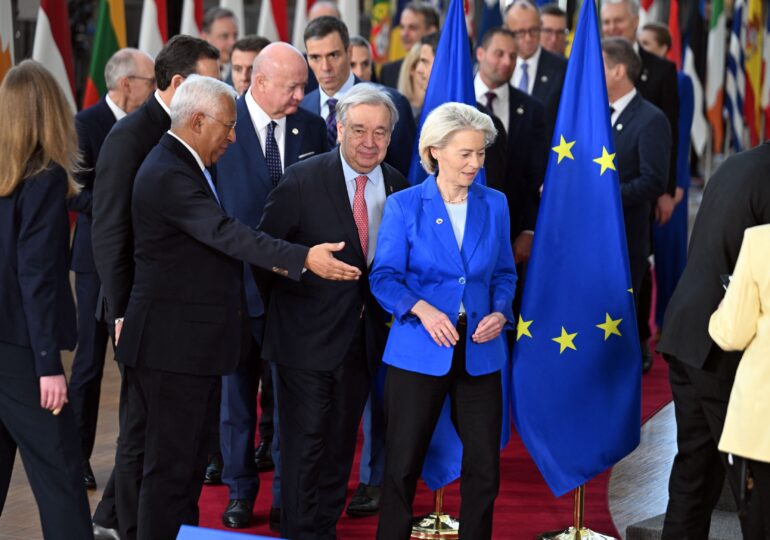
The European Union has proven unable to make major decisions at a critical moment, even though two wars – in Ukraine and the Middle East – are unfolding at its borders.
At a 12-hour summit in Brussels, European leaders remained stuck between a lack of influence in the conflict with Iran and their own internal divisions regarding support for Kiev, according to an analysis by Politico.
Much Rhetoric, Little Action
The EU leaders' meeting has perhaps shown more clearly than ever the limits of Europe as a geopolitical actor. While the conflict in Iran escalates and the war in Ukraine continues, the leaders of the largest European economies have failed to move beyond political statements.
European Council President, António Costa, emphasized the need to defend the international order, warning that the alternative is "chaos" and the spread of conflicts. However, beyond this message, the summit did not produce concrete decisions.
At the same time, leaders spent hours discussing adjustments to the ETS scheme, at a time when energy markets are directly affected by the Gulf war.
Iran - Europe Stands on the Sidelines and Avoids Involvement
Regarding the conflict with Iran, the EU has clearly positioned itself outside of any military involvement. European leaders have rejected Washington's calls to intervene to secure the Strait of Hormuz and have opted for a limited approach focused on calls for "de-escalation" and "restraint."
There were preliminary discussions about possible naval involvement, including French initiatives, but the summit's conclusions did not include any new missions.
Within the EU, the assessment was a realistic one: Europe is directly affected by the conflict but lacks both the tools and the political will to influence developments.
The EU's foreign policy chief, Kaja Kallas, summed up the situation vividly, warning that wars are easy to start and hard to end - a message interpreted by diplomats as a confirmation that the EU will not engage in conflict.
Ukraine: Total Standstill Due to Orbán
If the issue with Iran is lack of influence, in the case of Ukraine, the standstill comes from within.
European leaders failed to approve a €90 billion support package for Kiev after Hungarian Prime Minister Viktor Orbán maintained his veto, amidst a conflict related to the transit of Russian oil.
Tensions were extremely high in the room. Several leaders strongly criticized Orbán, and German Chancellor Friedrich Merz warned that this episode would leave "lasting marks" on European relations.
In the absence of an agreement, the EU could only offer general promises of support for Ukraine at a time when Kiev urgently needs funding.
Energy Crisis Deepens, but Decisions Delayed
The summit was also dominated by the economic effects of the Middle East war, which have led to significant increases in energy prices and major risks to supply.
Attacks on energy infrastructure in the Gulf have affected gas and oil exports, increasing pressure on European economies.
Although the European Commission announced emergency measures to reduce costs, EU leaders failed to adopt a rapid common response, preferring to debate long-term climate policies.
A European official summed up the situation ironically: it is "strange" for ETS to be a priority while "gas fields are burning."
Summit Conclusion: EU Does Not Make a Decisive Difference
After 12 hours of discussions, the assessment was modest: no major decisions were made on either Iran or Ukraine.
European leaders left Brussels without concrete solutions to the crises directly affecting the continent. Behind closed doors, the conclusion was a harsh one: the EU has economic and political impact but fails to translate it into real power of action.