

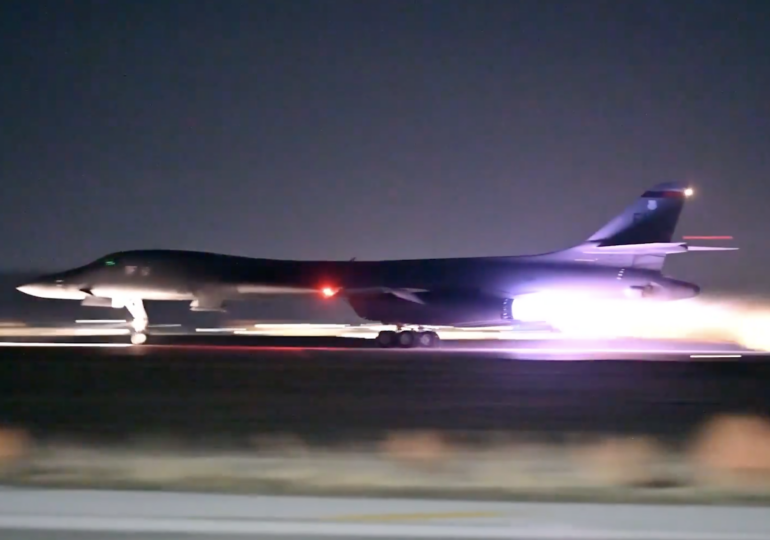
Almost a week after the attack on Iran by Israel and the USA, it can be said that the entire political and military system in Tehran has collapsed.
The Iranian airspace is controlled by Israeli and American aircraft, and the current raids aim to destroy the ballistic missile launchers to prevent attacks on Arab countries in the Persian Gulf region.
The difference in military technology, planning, weapon performance, and execution was so significant that the „war for which the fundamentalist regime in Tehran had been preparing for 50 years,” as stated by a political analyst, „collapsed within a few hours.”
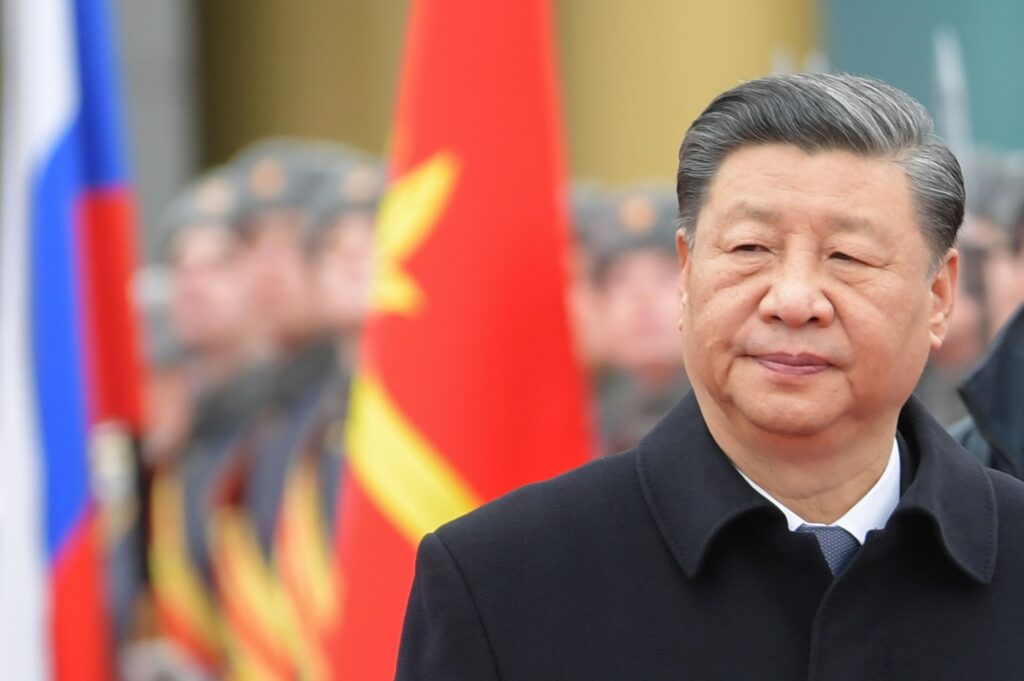
Operation "Epic Fury," as named by the American command, sent shivers down the spines of both Vladimir Putin and Xi Jinping. The speed and force with which any form of significant military response was neutralized, along with the decapitation of the political regime in Tehran, have given cause for concern to the authoritarian leaderships in Moscow and Beijing.
Russia and China lost their main ally in the Middle East within a few days. The main shock, expressed by officials in Beijing in a rare reaction on X/Twitter, points to how Israeli forces managed to infiltrate all layers of Iranian society, from political leadership to the military.
An Indirect Confrontation with China and Russia
China speaks of "the enemy from within," experiencing a second major military technology failure after the one in Venezuela. In both cases, there has been considerable discussion about the ineffectiveness of the defense elements supplied by China, swiftly rendered inoperative by American attacks.
"The United States military operation that led to the capture of Venezuelan President Nicolás Maduro in January 2026 revealed the inferiority of defense systems imported by Venezuela, including the radar produced in China and the anti-aircraft missiles and radar made in Russia," according to an analysis published by Info Pacific Defense Forum.
The issue persisted regarding the attack on Iran, with reports indicating that the lack of response from the anti-aircraft defense shocked the military leadership in Tehran.
Aside from the ongoing indirect conflict, with or without Donald Trump's consent, a broader confrontation between the USA and the China-Russia axis is taking place.
The paralysis of Iran in the face of the Israeli-American attack sends a clear and direct message of strength to Moscow and Beijing. Furthermore, it is evident that beyond diplomatic reactions, Iran's main allied countries have not been able to provide assistance and are keeping their distance from the conflict, commenting from the sidelines.
Since the first joint US-Israeli attack in June, where the air forces dominated the sky and targeted strategic locations, Russia and China's ability to enhance Iran's defense has remained insufficient, underscoring the military limitations of Moscow and Beijing.
France Opens the Umbrella
Ultimately, it's about money, military budgets, their size, but most importantly, how these funds are spent. A liberal, competitive, less corrupt society that encourages development will obtain more advanced technologies.
Currently, the USA dominates the world in terms of new technologies, boasting the largest military budget globally, exceeding $1 trillion.
Moreover, regardless of the deteriorating relationship with Europe, the alliance between the USA and the old continent globally dominates both in terms of military strength and technological development.
France has just announced a radical change in its nuclear military policy, offering protection to European states through expanding coverage areas and increasing firepower. Additionally, President Macron has proposed conducting joint nuclear defense exercises at the European level.
"...regarding deterrence and nuclear deterrence, I think it is important to reaffirm the basic principle of Article 5 of NATO and the fact that we are allied countries, therefore, each of us, through our own military capacity, acts as a deterrent for everyone's security, and I think this is very important to clarify. Regarding France's proposal, Romania is one of the countries invited to participate in these discussions," stated Oana Țoiu, Romania's Minister of Foreign Affairs.

Dangers in Case of Conflict Prolongation
Currently, it is unclear whether Israel and the USA will succeed in changing the fundamentalist regime in Iran. Mojtaba Khamenei, the son of the eliminated ayatollah on the first day of the conflict, seems to have been appointed as the successor to lead Iran, strongly supported by the Islamic Revolutionary Guard Corps, a security force that politically controls Iranian society.
If the appointment is confirmed, it is unlikely that the war will end.
Benjamin Netanyahu, the Prime Minister of Israel, cannot accept the perpetuation of the fundamentalist regime that poses an existential threat to the state he leads.
Even if it continues for a number of weeks, as Donald Trump claims, neither China nor Russia will intervene in the war in Iran, as the interests of these two states lie in a swift resolution.
An extension of the military conflict would put them in a difficult position, as it would further highlight the weaknesses of the military systems supplied to Iran and the fact that their influence in a global crisis situation is limited.
For Donald Trump, prolonging the conflict poses an internal danger. The majority of Americans do not support military intervention in Iran.
With midterm elections in early November, where the future of his presidency is at stake, Donald Trump has little room for maneuver and is compelled to withdraw as quickly as possible from Iran.
However, in war, it is known when it begins, but it is difficult to say when and how it will end. The Iranian military forces were swiftly defeated, but the crisis in the region has not ended, and its unfolding may lead to surprising events for all involved parties.
In a modern military conflict, it is relatively easy to inflict damage on the enemy, but it is very difficult to impose political regimes. The traumatic experiences of the USA and NATO member states in Iraq and Afghanistan are relevant in this regard.
The only realistic objectives that Israel and the USA can have at this point are to annihilate the Islamic Revolutionary Guard Corps, prevent the rise of a leader closely associated with Khamenei, and destroy Iran's nuclear facilities.
Moreover, this would mean prolonging the conflict and entering unknown territory with threats that could exacerbate the crisis in the Middle East.