
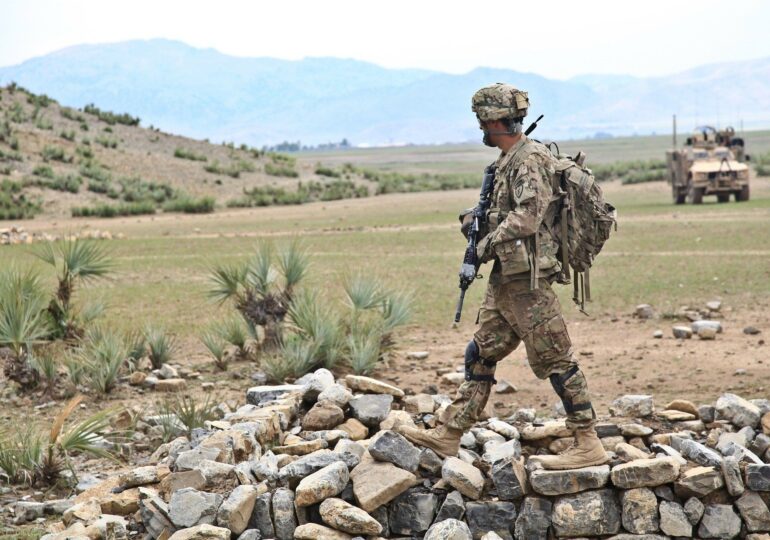
The Pentagon has been preparing for ground operations in Iran for several weeks, according to American officials.
This comes as thousands of American soldiers and marines are arriving in the Middle East for what could become a new dangerous phase of the war if President Donald Trump decides to escalate the conflict, writes the Washington Post.
Any potential ground operation would not reach the level of a large-scale invasion and could instead involve raids carried out by a combination of special operations forces and conventional infantry troops, officials said. They all spoke on the condition of anonymity about highly sensitive military plans that have been in development for weeks.
Such a mission could expose American personnel to a range of threats, including Iranian drones and missiles, ground fire, and improvised explosives. On Saturday, it was unclear whether Trump would approve any, some, or none of the Pentagon's plans.
The Trump administration has oscillated in recent days between declaring that the war is nearing its end and threatening to escalate it. While the president has signaled a desire to negotiate an end to the conflict, White House spokesperson Karoline Leavitt warned on Tuesday that if the Tehran regime does not abandon its nuclear ambitions and cease threats against the United States and its allies, Trump is "prepared to unleash hell" upon them.
"It is the Pentagon's task to make preparations to provide the commander in chief with maximum options. That does not mean that the president has made a decision," Leavitt said.
Discussions within the administration in recent weeks have addressed the possible capture of Kharg Island, a key hub of Iranian oil exports in the Persian Gulf, and raids in other coastal areas near the Strait of Hormuz to locate and destroy weapons that could target commercial and military shipping, officials said. One of them stated that the objectives under consideration would likely take "weeks, not months" to accomplish.
The Pentagon did not respond to requests for comments on Saturday.
On March 20, Trump told reporters in the Oval Office: "I am not sending troops anywhere. If I were, I certainly wouldn't tell you, but I am not sending troops."
Secretary of State Marco Rubio stated on Friday in France, after a meeting of U.S. allies concerned about the escalating economic costs of the war, that "it will not be a prolonged conflict". He repeated a frequent, albeit vague, assessment of the administration that the operation is ahead of schedule, and said that the United States "can achieve all objectives without ground troops."
Rubio's comments followed a report by Axios indicating that the Pentagon is preparing for a "final strike" against Iran, which could include both ground forces and a massive bombing campaign.
Axios and the Wall Street Journal have also reported in recent days that the administration is considering sending an additional 10,000 ground troops to the Middle East to supplement those already in the region. The Washington Post could not verify these reports.