
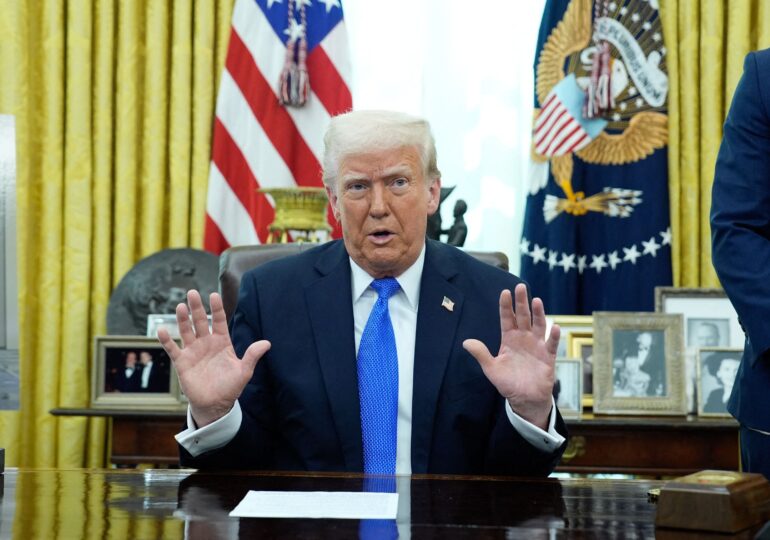
The U.S. Secretary of Defense, Pete Hegseth, on Tuesday refused to reaffirm the U.S. commitment to NATO’s collective defense, saying that such a decision „will be left to the discretion” of President Donald Trump, according to Reuters.
The statement is unusual, as Article 5 – which stipulates that an attack on a member state is considered an attack on all – represents the cornerstone of the alliance.
When directly asked if the U.S. remains committed to collective defense, Hegseth avoided a clear answer. "I will only say that many things have been revealed," said the Pentagon chief.
He suggested that recent tensions with European allies weighed in on this position.
Harsh criticism towards European allies
Hegseth accused several European states of not adequately supporting the U.S. in the war against Iran.
"When we request additional assistance or simply access, base, and overflights, we get questions, obstacles, or hesitations. You don't have a very strong alliance if you have countries that are not willing to stand by you when you need them," he said.
The message comes against the backdrop of concrete refusals: France, Italy, and Spain have restricted U.S. access to airspace or military bases for operations related to the conflict with Iran.
Trump's message: Learn to fight on your own
In turn, Donald Trump sent an even harsher message to allies, suggesting that the U.S. will no longer automatically intervene in their support.
"You will have to start learning how to fight on your own, the U.S. will no longer be there to help you, just as you were not there for us. (...) Go and get your own oil!" Trump wrote on Truth Social.
The statement also targeted the United Kingdom, one of the closest allies of the U.S.
Warnings: Russia could take advantage
Experts warn that any ambiguity regarding Article 5 could have serious consequences.
Signals that the U.S. may hesitate to defend its allies risk encouraging Russia to test NATO's cohesion, at a time when European security is already fragile.
Growing tensions between the U.S. and Europe
The war in Iran has deepened the rift between Washington and European capitals, amid longstanding divergences.
From trade relations to the position on the conflict in Ukraine, where some European officials fear that Trump may favor Moscow, the transatlantic relationship is going through one of the most tense periods in recent decades.