

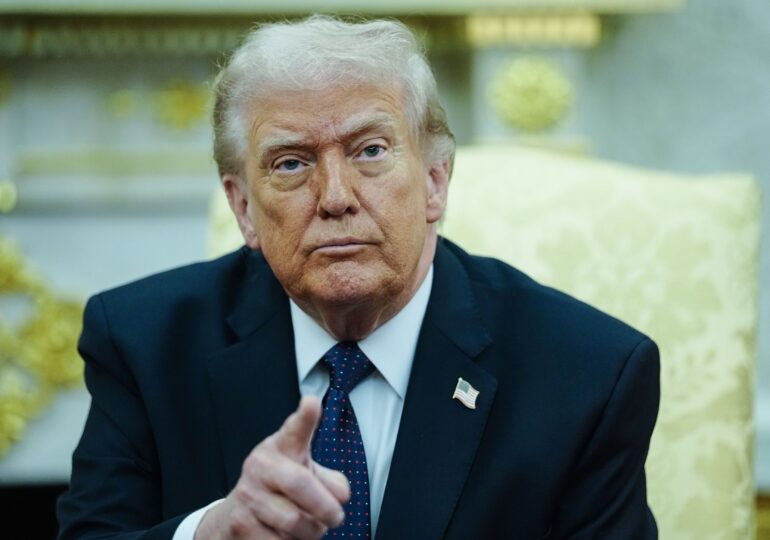
One month after the start of the war with Iran, Donald Trump is trying to convince a world increasingly weary of conflict that the end is near. In a carefully calibrated speech, full of promises and threats, the president talks about „crushing victories” and a war that is almost over, but avoids clearly stating when and how it will end.
In short – what Trump said
- The war in Iran is "close to an end," but with no clear deadline
- The US will continue attacks "for another two to three weeks"
- Iran would have been "close to a nuclear weapon"
- The US could target power plants if there is no agreement
- The Strait of Hormuz will open "naturally" after the war
- Trump urges other countries to secure the oil route
- The war is presented as "an investment" for the future
- No mention of NATO, despite previous criticism of the alliance

In the approximately 20-minute speech, Trump insisted that the US military objectives are almost achieved.
"Tonight, I am pleased to say that these essential strategic objectives are on the verge of being accomplished," Trump said, according to CNN.
He then continued: "We will get the job done and we will get it done quickly. We are very close."
Despite this optimistic tone, the president did not provide a clear answer to the central question: when will the war end.
Threats and Escalation
Trump conveyed that the military offensive will continue and may even escalate. "We will hit them extremely hard in the next two to three weeks. We will bring them back to the Stone Age, where they belong," emphasized the American leader.
He warned that the US could target Iran's energy infrastructure if negotiations fail.
"If an agreement is not reached during this period, we have our eyes on key targets."
Describing the War Results
The president presented an extremely favorable picture of the military operation: "The Iranian navy has disappeared. The country's air forces are in ruins, and their leaders, for the most part, are now dead."
He talked about "quick, decisive, and crushing victories" and a "dramatically reduced" capacity of Iran to launch missiles and drones.
"America is winning, and winning more than ever," boasted the Washington leader.
War Presented as Necessary
Trump justified the intervention by the nuclear risk: "I will never let this happen."
He claimed that Iran was "on the brink" of developing a nuclear weapon and was developing long-range missiles.
At the same time, he described the war as a reaction to decades of violence.
In an attempt to convince the public, Trump presented the conflict as a strategic investment: "This is a true investment in the future of your children and grandchildren."
He emphasized that the war has only lasted 32 days, compared to much longer conflicts in the past.
Strait of Hormuz: Allies to Intervene, US to Withdraw
A sensitive point remains the Strait of Hormuz, blocked for weeks and essential for global oil transport.
Trump suggested that other states should take responsibility for securing the route: "Go into the strait and just take it. Protect it."
At the same time, he argued that the issue will resolve itself. "When this conflict ends, the strait will naturally open."
"More Reasonable Leaders"
Trump stated that the new Iranian leaders are "less radical and much more reasonable," but did not offer concrete signs of progress in negotiations.
"Meanwhile, discussions are ongoing."
In parallel, he claimed that the regime change has already occurred. "I have never talked about regime change, but it has happened... They are all dead," Trump said.
No Mention of NATO in Speech, but Tensions Behind the Scenes
Although he had previously harshly criticized NATO and even suggested a possible US withdrawal, Trump did not mention the alliance at all in his speech.
According to Reuters, this omission comes amid tensions with European allies who have refused to engage militarily in the conflict and secure transport through the Hormuz.
A Speech for the Domestic Audience Amid Decreasing Support
The speech took place at a difficult time for Trump, amid declining popularity and rising fuel prices.
According to a CNN poll, the majority of Americans believe the president does not have a clear plan for managing the war.
In this context, the intervention was seen more as an attempt to regain public support rather than an announcement of a clear exit strategy.